Fully inspected, certified second-hand tower cranes and top-tier industrial lifting systems ready for multi-modal global shipping directly from our certified yard.
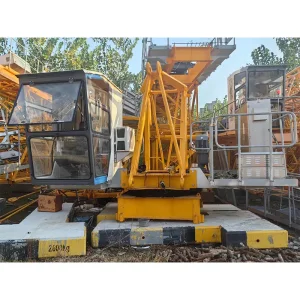
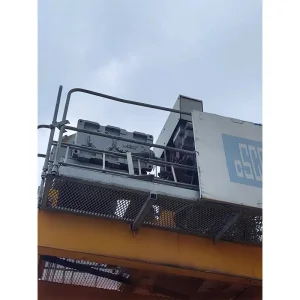
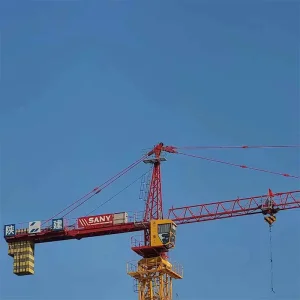
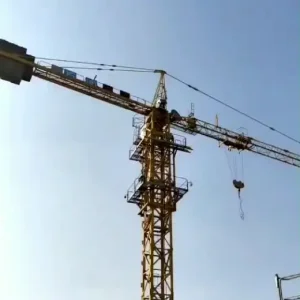
Navigating structural steel availability, rising interest rates, and urgent EPC infrastructure timelines through high-integrity used tower crane factory allocations.
Tier-1 construction consortia face stringent financial hurdles. Acquiring high-performance used tower cranes from factory-grade yards delivers between 40% to 65% upfront CapEx savings relative to brand-new units, radically accelerating internal rate of return (IRR) on long-cycle civil undertakings without forfeiting mechanical lifting integrity.
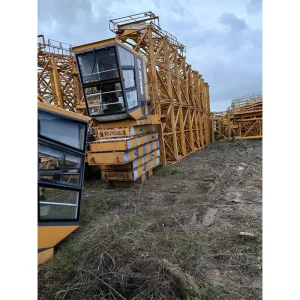
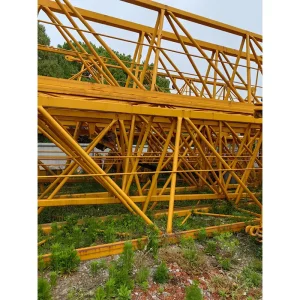
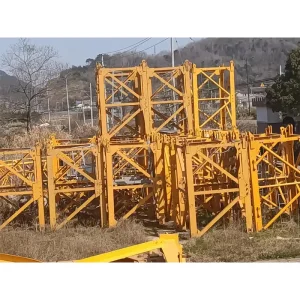
Factory lead times for new heavy-tonnage topkit or flat-top configurations often span 6 to 14 months due to global supply bottlenecks. Zhongqiang maintains an operational 30+ acre inventory of late-model units (YOM 2018–2023) ready for immediate deployment, reducing mobilisation lead time to mere weeks.
Structural steel fabrication constitutes one of construction’s heaviest embodied carbon footprints. By refurbishing, testing, and recirculating proven heavy tower crane frames, EPC contractors satisfy ESG and scope-3 sustainability mandates, conserving hundreds of tons of embodied carbon per crane unit deployed.
Zhongqiang executes non-destructive testing (NDT), metallurgical examination, and torque endurance testing before issuing any unit for international bill-of-lading processing.
Pin connection ears, mast chords, and critical jib cross-members are inspected using digital ultrasonic flaw detectors. We detect subsurface voids, stress micro-cracks, and fatigue points caused by historical cyclic load dynamics.
Dial indicators evaluate axial play and radial deflection across inner and outer ring tracks. Bearings showing backlash beyond OEM engineering tolerances are re-bored or swapped with original manufacturer replacements.
Frequency conversion systems (Schneider, ABB, or OEM equivalents) are bench-tested. Dynamic load simulations verify brake response times, torque limiter sensitivity, anemometer calibration, and electronic hoisting deceleration curve margins.
Magnetic flux leakage (MFL) monitors cross-sectional reduction and core strand corrosion in hoisting and trolley cables. Polymer and steel sheaves undergo laser groove alignment to avert accelerated rope fatigue in service.
De-rusting via SA 2.5 blast cleaning, accompanied by epoxy zinc-rich primer and polyurethane anti-corrosion topcoats, safeguards structural segments intended for corrosive marine environments and humid tropical project zones.
Every exported machine leaves our Jiangsu yard accompanied by complete manufacturing nameplates, third-party inspection certifications, maintenance histories, and electrical connection schematics.
Engineering configurations adapted to regional seismic requirements, extreme wind corridors, high-density metropolitan spaces, and remote industrial plants.
Utilizing flat-top designs (such as Zoomlion QTZ250 or Yongmao models) where overlapping slewing radiuses exist across dense city centers without interfering with air-rights constraints.
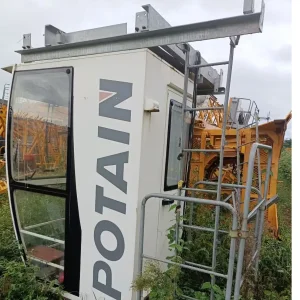
Deploying heavy-capacity Potain MC series hammerheads mounted on reinforced concrete anchorages, configured to endure marine salt spray corrosion and seasonal gale loads.
Providing high-tonnage lifting profiles (12-ton to 16-ton capabilities) for cooling tower builds, turbine house construction, and modular hydro-electric power assemblies.
Heavy-duty, robust structural models operating reliably in remote, dust-intensive environments, coupled with simplified relay-electrical backups for ease of remote regional maintenance.
Managing customs protocols, port of entry compliance, and destination-specific engineering sign-offs worldwide.
Complete bilingual (English/Chinese) documentation: Certificate of Origin, Form E/FTA declarations, packing breakdowns detailing weight/center-of-gravity markers, original OEM declarations, and commercial clearances to ensure tariff advantages.
Verification conforming to national standards: OSHA 1926.1400 (North America), EN 14439 (Europe), MOM crane safety directives (Singapore), and regional EAC verification profiles for Central Eurasian corridors.
Professional dismantling and lashing: Jib sections nested, slewing frames balanced on heavy flat racks (FR), counter-jib elements crated in open-top containers, and ballast blocks secured to mitigate transit maritime shift damage.
Integrating artificial intelligence, IoT structural telemetry, and predictive maintenance kits onto mechanical crane skeletons.
Retrofitting used tower cranes with wireless strain gauges, dual-axis inclinometers, and vibration accelerometers transmitting live load cycles directly to cloud platforms for real-time deflection alerts.
Upgrading legacy control cabs with AI camera pods and blind-zone edge computing modules, rendering ultra-precise 3D point clouds of job-site airspace to avert multisite jib overlaps autonomously.
Integrating super-capacitor regenerative braking modules into hoisting winches, converting gravimetric downward load energy into auxiliary site electricity, cutting overall power draw by up to 28%.
Authoritative answers addressing operational life expectancy, maintenance diagnostics, export shipping parameters, and commercial validation.
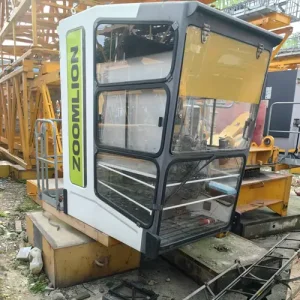
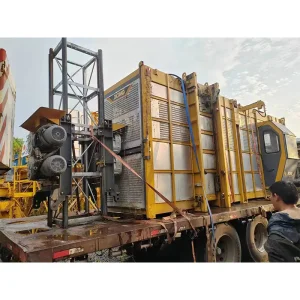
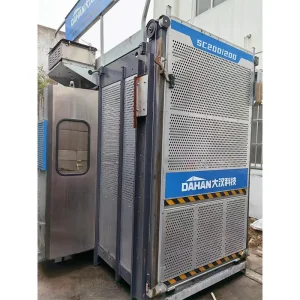
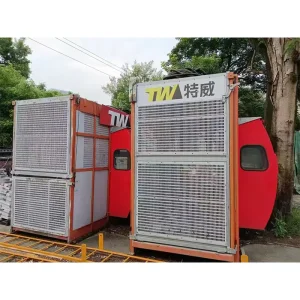
Certified construction machinery including twin-cage hoists and high-moment tower cranes inspected for structural resilience and operational readiness.