Strictly inspected twin-cage construction elevators configured for rapid transit and vertical logistics across Mumbai, Navi Mumbai, and Thane construction corridors.
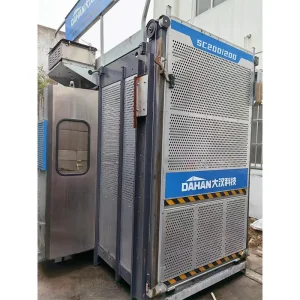
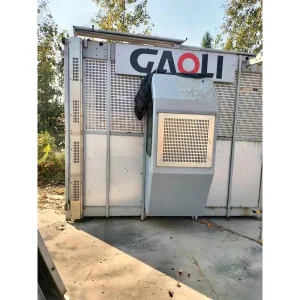
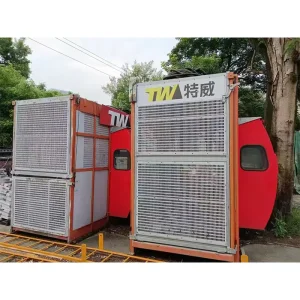
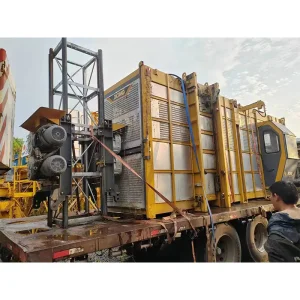
The Mumbai Metropolitan Region represents one of the dense vertical architectural ecosystems globally. Constrained by peninsular geography, urban development in locations such as Worli, Lower Parel, Prabhadevi, Wadala, and the Bandra-Kurla Complex (BKC) demands upward building design rather than lateral sprawl. With developers frequently exceeding 50 to 80 physical residential and commercial storeys, the reliance on vertical builder hoists (passenger and material elevators) has ceased to be a simple material handling choice—it has become the structural backbone of construction timelines, safety compliance, and labour transit efficiency.
Procuring brand-new vertical construction hoists often places excessive capital burdens on Indian developers and class-A general engineering contractors. High import tariffs, extended OEM lead times (ranging between 16 to 26 weeks), and volatile steel pricing have systematically driven leading EPC firms—including subcontractors operating for Shapoorji Pallonji, L&T Construction, Lodha Group, and Runwal—to look toward wholesale certified used construction hoist manufacturers and factories capable of exporting turnkey, late-model (YOM 2019–2023) equipment directly to the Nhava Sheva (JNPT) port terminal.
Operating rack-and-pinion machinery in Mumbai exposes lifting equipment to environmental wear mechanisms rarely encountered in dry inland territories:
Acquiring late-model used hoists from certified Chinese export hubs lowers equipment acquisition costs by 45% to 60% compared to new units, enabling faster project cash flow break-even.
Stocked inventory in our 30+ acre yard ensures pre-shipment inspection, containerization, and maritime transit from East China ports (Shanghai/Taicang) to Mumbai in under 20 total days.
Every hoist is pre-tested under static and dynamic overload parameters (125% rated capacity), fully satisfying Indian safety norms IS 12466 and international CE standards before packing.
From space-constrained brownfield redevelopments to massive infrastructural expressways, each Mumbai sector presents mechanical and geometric demands on vertical access gear.
| Mumbai Sub-Market / Zone | Structural Typology | Predominant Hoist Architecture | Mechanical & Logistical Requirements |
|---|---|---|---|
| Worli & Lower Parel | Ultra-Luxury Towers (60–85 Floors) | Twin Cage VFD (SC200/200, 0–63 m/min) | High-velocity shifting of finishing trades, dynamic tie-in brackets attached to jump formwork, floor call management. |
| Bandra-Kurla Complex (BKC) | Grade-A Commercial IT & Financial Hubs | Dual-Bay Material-Heavy Hoist (SC200/200, 3.2m Cage) | High floor plates; bulk transit of structural facade glass panels, HVAC ducting assemblies, dry-wall plasterboards. |
| Dharavi & Chembur | SRA (Slum Rehabilitation) High-Density Clusters | Compact Single or Twin Hoist (Standard Speed 36 m/min) | Restricted perimeter setbacks, mast footprint under 2.2 m × 1.8 m, zero foundation disturbance to adjacent structures. |
| Thane-Belapur & Navi Mumbai | Industrial Warehousing & High-Rise Hubs | Dual Purpose Mast Climbers & SC200 Hoists | Rapid vertical mobility across multi-tower developments, interchangeable mast columns compatible with regional tower cranes. |
| Mumbai Coastal Road & Trans Harbour Link | Bridge Pylon & Interchange Infrastructure | Inclined / Custom Guided SC100/100 Hoists | Corrosive marine spray resistance, inclined mast guidance, heavy safety factor anti-drop arrestors for civil engineering crews. |
In mature city clusters like Girgaon, Dadar, and Byculla, redevelopment projects operate on microscopic site footprints. There is minimal tolerance for large foundation pads. Our engineering department supplies curved and modular tie-in assemblies capable of anchoring used hoists directly into concrete shear walls or composite steel columns without requiring structural modifications.
Furthermore, our SC200/200 twin-cage units feature modular mast designs with high-tensile hot-dip galvanized steel bolts (Grade 8.8 and 10.9) and self-erecting boom hoists atop the cage roof. This allows field crews in Mumbai to erect 100 meters of mast height in under 48 working hours, drastically minimizing crane hook time on congested job sites.
How our 30+ acre facility in Huai'an, Jiangsu systematically de-risks second-hand machinery acquisition through rigorous mechanical and structural refurbishment.
We source exclusively from top Chinese national brands—DAHAN, Zoomlion, XCMG, Gaoli, and Tewei. Every used hoist arrives with full metallurgical traceability and original manufacturer serial data.
Every welded joint on mast pipes, rack mounting tabs, and cage chassis undergoes ultrasonic flaw detection or magnetic particle inspection to eliminate metal fatigue risks before overseas shipment.
The anti-fall progressive safety device is tested on our dedicated vertical drop-test stand. We re-calibrate and certify trip velocities (1.2 to 1.4 m/s) with sealed documentation signed by accredited engineers.
Purchasing second-hand machinery without institutional safeguards exposes construction projects to catastrophic site downtime. At our Huai'an yard, the refurbishment process follows a standardized 5-phase protocol:
Integrating modern industrial automation into reconditioned construction hoists to enhance site safety, reduce energy consumption, and provide predictive telematics.
Switching from conventional DOL (direct-on-line) starters to micro-controlled Variable Frequency Drives (VFD) cuts starting current surges by 75%. Optional regenerative braking units convert downward kinetic descent back into site AC power, saving up to 28% operational electricity.
We equip exported hoists with 4G wireless sensors monitoring real-time load cells, vibration frequencies of motor pinions, trip counters, and brake pad clearance. Contractors in Mumbai can view hoist diagnostics via smartphone dashboards.
Eliminating unauthorized operation through facial recognition or RFID access controls for licensed hoist operators. Integrated dual-axis load sensors prevent cage departure when payload exceeds 100% of calibrated limits.
In traditional Mumbai skyscraper construction, manual communication via radio or shouting causes significant vertical transit dead-time, with hoists sitting idle at intermediate floors. Our advanced retrofit packages support automated wireless calling systems. Floor sensors and touch-screen kiosks at each building level queue cage stops systematically, matching vertical velocity (up to 63 m/min) with peak worker movement at shift changes.
Navigating Indian import tariffs, customs valuation, DGFT compliance, and safety inspections with documentation handled end-to-end.
Importing capital construction equipment into Maharashtra requires stringent compliance with Indian Directorate General of Foreign Trade (DGFT) mandates and the Bureau of Indian Standards (BIS) parameters corresponding to vertical human passenger lifting (IS 12466: Code of practice for construction hoists). Our dedicated logistics wing ensures zero border clearance friction.
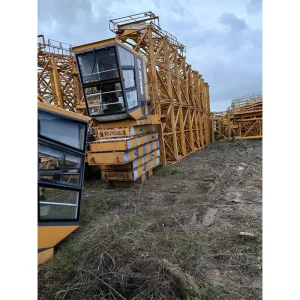
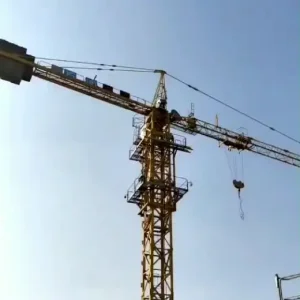
Additional premium used construction hoists and certified tower cranes (QTZ, MC series) available for consolidated fleet shipping to JNPT.
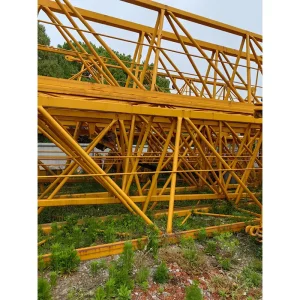
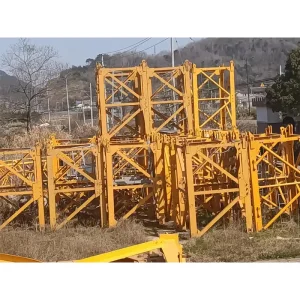
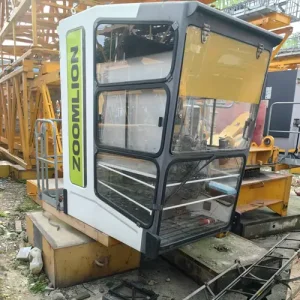
Essential technical, regulatory, and maritime engineering guidelines for project directors and fleet managers in the Mumbai construction zone.
We measure tooth flank thickness using depth-micrometer gear gauges across multiple mast sections. Under Indian standard IS 12466, chordal thickness depletion must not exceed 10% of nominal baseline thickness. Any rack showing excessive backlash or uneven wear is discarded and fitted with new high-strength steel racks before shipment.
Direct container vessels operating from Shanghai or Taicang to Jawaharlal Nehru Port (JNPT) typically register sea transit times of 14 to 18 days. Factoring in pre-shipment Chartered Engineer inspection, container packing, and export customs clearance (3–5 days), equipment arrives in Mumbai within 25 calendar days from order finalization.
Yes. Major components on our DAHAN, XCMG, and Zoomlion hoists—including standard 650×650×1508 mm mast sections, Mod 8 pinions, safety device models (SAJ30/SAJ40), and Schneider/ABB electrical switchgear—are globally standardized and 100% cross-compatible with components stocked by equipment rental firms across Mumbai, Pune, and Ahmedabad.
Absolutely. Indian buyers frequently dispatch appointed third-party engineering representatives (e.g., SGS India, Bureau Veritas) to our 30+ acre facility in Huai'an. Alternatively, we facilitate multi-camera high-definition live streaming sessions covering electrical load testing, ultrasonic weld checks, and drop tests prior to signing off the commercial invoice.
The domestic Chinese industrial standard operates at 380V/50Hz, whereas standard Indian job site temporary power supplies supply 415V/50Hz (±10%). We recalibrate motor thermal overloads and configure our Variable Frequency Drives with dual-voltage input taps to guarantee stable operation and prevent nuisance tripping on Mumbai generator sets.
The progressive anti-fall safety governor is the most critical component of any rack-and-pinion hoist. Every unit shipped to Mumbai comes with a fresh dynamic drop-test calibration certificate valid for 12 months, complete with factory lead seal intact, satisfying the requirements of Maharashtra Directorate of Industrial Safety and Health (DISH).
Direct access to complete inspection dossiers, high-resolution test videos, and real-time inventory sheets for wholesale used passenger & material construction hoists. Guaranteed JNPT delivery within 25 days.