As Japan’s commercial epicenter in the Kansai region undergoes a historic structural transformation—driven by the Osaka Bay Area Development, the infrastructure legacy of World Expo 2025, and the high-density re-developments of Umekita Phase 2—the demand for high-capacity, space-efficient, and structurally certified tower cranes has surged exponentially.
Osaka’s tight metropolitan construction corridors require cranes with minimal tail-swing radius, exceptional slewing accuracy, and flat-top or luffing-jib geometry to avoid airspace infringement over surrounding transit systems and commercial structures.
Procuring new heavy machinery in Japan faces lead times exceeding 12 to 18 months. Certified second-hand units from Tier-1 Chinese manufacturers provide a 40% to 60% CAPEX saving with immediate ocean shipping readiness to the Port of Osaka.
Equipment deployed along Osaka Bay must withstand coastal typhoons (Category 4 wind speeds up to 60 m/s) and comply with Japanese seismic displacement safety factors, requiring strict structural stress-relieving and structural testing.
Factory-inspected, low-hour models with full maintenance history, optimized for Japanese site safety protocols.
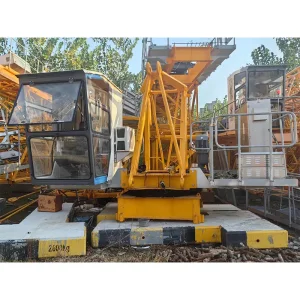
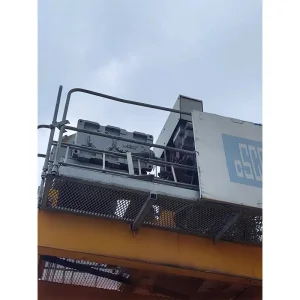
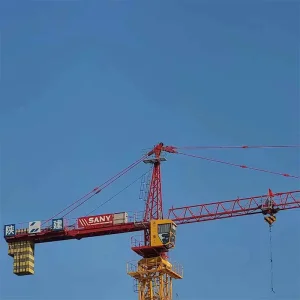
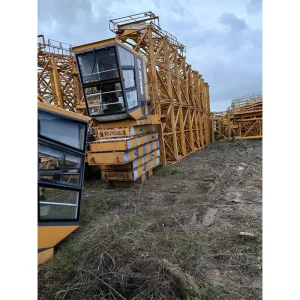
Importing pre-owned heavy equipment into Japan demands strict engineering alignment with localized electrical, mechanical, and safety specifications.
Japan is divided into two power frequency zones: Eastern Japan (50Hz) and Western Japan (60Hz, including Osaka and the Kansai region). Standard Chinese machinery operates at 50Hz. Huaian Zhongqiang executes complete frequency conversion and VFD (Variable Frequency Drive) engineering adjustments, swapping motors or configuring dual-frequency control cabinets to prevent torque degradation and motor overheating when connected to Osaka's 200V/440V 60Hz supply.
For high-rise residential projects near Osaka’s Namba and Umeda hubs, precise material placement is essential. Our refurbished units are retrofitted with modern PLC control modules and closed-loop anti-sway sensors, allowing millimeter-level accuracy during pre-cast concrete panel installation even during gusty winds off Osaka Bay.
| Technical Parameter | Flat-Top Tower Crane (QTZ Series) | Luffing-Jib Tower Crane (STT / MC Series) |
|---|---|---|
| Optimal Osaka Application | Multi-crane overlapping urban sites, commercial complexes | Ultra-narrow plots, skyscrapers, tight boundary limits |
| Airspace Infringement | Requires clearance height adjustment for jib overlap | Jib can be raised to 85° to remain within site boundaries |
| Assembly/Dismantling | Fast pin-connection system, lower mobile crane cost | Requires higher-capacity auxiliary crane for erection |
| Wind Load Resistance | Standard aerodynamic profile (Up to 42 m/s operational) | Enhanced out-of-service stability for coastal typhoons |
| Kansai Grid Adaptation | Integrated 60Hz VFD Hoisting & Slewing controls | Heavy-duty inverter modules with dynamic braking |
How Huaian Zhongqiang leverages a 30+ acre testing facility and direct maritime access to deliver uncompromised reliability to Japanese contractors.
Every pre-owned unit entering our Huai'an yard undergoes Non-Destructive Testing (NDT), Magnetic Particle Inspection (MPI), and Ultrasonic Weld Testing on structural pins, slewing rings, and chord members to eliminate stress fracture risks prior to export.
Located in Jiangsu Province, our close proximity to Shanghai, Ningbo, and Qingdao ports enables short-sea containerized or Ro-Ro shipping to the Port of Osaka within 3 to 5 sailing days, minimizing logistics overheads.
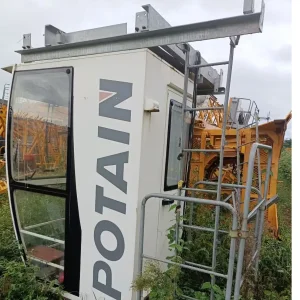
We source exclusively from top-tier original manufacturers including Zoomlion, SANY, XCMG, Potain, Dahan, and Yongmao. All replacement parts—from contactors to hoisting wire ropes—are 100% authentic OEM components.
A detailed financial breakdown of why importing late-model used equipment outclasses domestic leasing and new machinery purchases in terms of ROI.
*Estimates include ocean freight, NDT certification, export customs clearance, and 60Hz grid adaptation.
Late-model Chinese tower cranes (YOM 2018–2023) maintain strong residual value across the Southeast Asian and East Asian secondary markets. Upon project completion in Osaka, contractors can either redeploy the asset to secondary projects across Japan or liquidate the equipment through our buy-back and trade brokerage network, recovering up to 65% of the purchase asset value.
Request Financial Feasibility ReportNavigating Japan’s Ministry of Land, Infrastructure, Transport and Tourism (MLIT) rules and Osaka Customs documentation effortlessly.
We supply exhaustive technical dossiers required for Osaka customs declaration and jobsite registration: original OEM nameplates, structural material test certificates, electrical schematics, maintenance logbooks, and certified weight charts.
Components are systematically disassembled into 40ft High Cube (HC) or Open Top (OT) containers. Jib sections, mast frameworks, counter-weight frames, and cabs are wire-lashed with heavy-duty corrosion prevention wrap to resist salt air during maritime travel.
Upon request by Japanese general contractors (Kajima, Obayashi, Takenaka, etc.), we facilitate third-party inspection certifications via international bodies such as SGS, TÜV Rheinland, or CCIC prior to vessel loading.
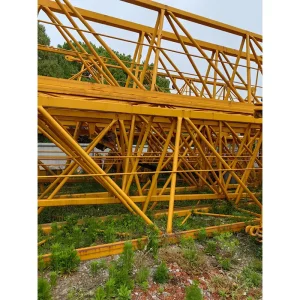
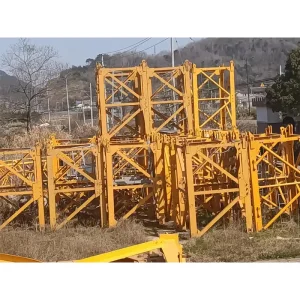
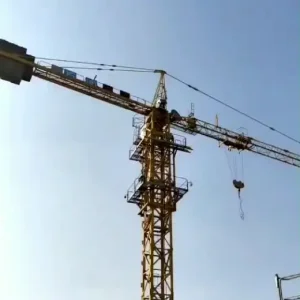
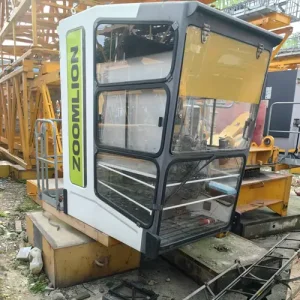
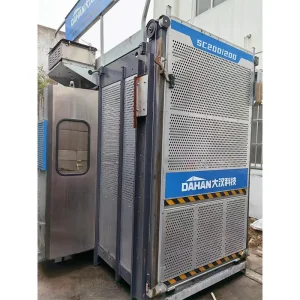
Select from our tested inventory of global brand models available for immediate booking and shipment to Osaka Port.
Direct answers to technical, legal, and operational inquiries from Japanese construction firms and machinery importers.
Standard tower cranes built for the Chinese domestic market operate on 380V/50Hz power. For export to Osaka and the surrounding Kansai area (which runs on a 60Hz grid), Huaian Zhongqiang executes electrical retrofitting. We reconfigure VFD inverter drives, modify hoisting/slewing motor parameters, or supply custom transformers to guarantee 100% rated motor torque without thermal overload.
Every single crane undergoes Non-Destructive Testing (NDT) at our 30+ acre Huai'an yard. We provide Ultrasonic Flaw Detection reports on primary pin joints and main mast chords, Magnetic Particle Inspection (MPI) reports on high-stress weld seams, and clearance measurement certificates for slewing ring bearings. Video records of pre-disassembly test run operations are provided to buyers.
After order confirmation and final quality inspection (typically 3-5 days), equipment is loaded into 40ft OT/HC containers and transported via inland logistics to Shanghai or Ningbo ports. Port-to-port ocean voyage time to Osaka Port takes approximately 3 to 5 sailing days. The total end-to-end turnaround from contract execution to Osaka port arrival is usually within 14 to 21 days.
Yes. We encourage full transparency and welcome third-party inspectors appointed by Japanese buyers—such as SGS, TÜV, Intertek, or CCIC. Inspectors are granted full physical access to our Huai'an testing facility to perform structural audits, electrical verification, and functional testing before dismantling.
We maintain an extensive spare parts inventory—including electrical contactors, limit switches, slewing pinions, brake linings, and remote control sets. Because we work directly with original OEM supply networks, spare parts can be dispatched via express air freight (DHL/FedEx) to Osaka within 48 hours.
Connect directly with Huaian Zhongqiang’s senior engineering and export team. Get personalized advice on model selection, 60Hz grid adaptation, NDT reports, and CIF Osaka freight rates.