Verified structural fatigue analysis, tested slewing assemblies, and factory-standard load moments matched to current ASEAN project requirements.
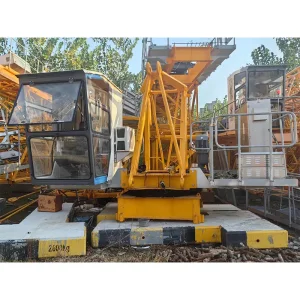
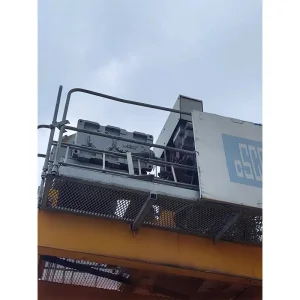
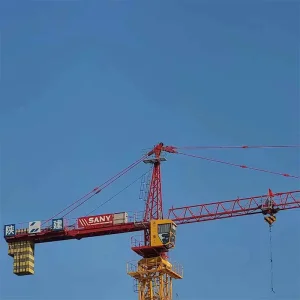
Understanding the confluence of hyper-dense urban civil projects, tropical climate challenges, and the capital efficiency dynamics of secondary heavy lifting machinery.
The Federal Territory of Kuala Lumpur and its broader conurbation, the Klang Valley, represent one of Southeast Asia's most dynamic construction environments. Fueled by transit-oriented developments (TOD), mass transit infrastructure upgrades like the MRT 3 Circle Line, logistics hubs expanding around Port Klang, and high-density residential towers in Mont Kiara and Bukit Bintang, contractors face aggressive completion schedules alongside tight margins.
In this market, the procurement cycle of brand-new tower cranes presents substantial friction: lead times exceeding 6 to 9 months, rapid currency-denominated capital depreciation, and high capital expenditure (CapEx) lockup. Consequently, Tier-1 and Tier-2 general contractors across Malaysia are shifting procurement strategies toward vetted, late-model used tower cranes (YOM 2018–2023) from industry-recognized manufacturers such as Potain, Zoomlion, SANY, XCMG, and DAHAN. By sourcing verified used machines, construction firms reduce primary machinery acquisition expenses by 45% to 65% while deploying cranes on site within weeks through direct maritime routing to Port Klang.
Kuala Lumpur’s equatorial climate features intense UV exposure and heavy tropical rainfall. Every export unit undergoing preparation receives specialized non-destructive weld testing (NDT), corrosion inhibition, IP65-sealed control cabinets, and tropicalized motors designed to endure ambient temperatures surpassing 40°C without thermal tripping.
Deploying tower cranes in Malaysia requires stringent regulatory clearance from the Department of Occupational Safety and Health (DOSH / JKKP). We provide traceable factory design calculations, third-party structural certifications, and comprehensive maintenance logs to facilitate local Professional Engineer (P.E.) approvals.
Navigating dense urban corridors like KL Sentral requires precision flat-top or compact topkit designs to mitigate jib over-sailing disputes with adjacent structures. Our models feature frequency-converted slewing drives that eliminate structural backlash during gusty thunderstorm seasons.
Addressing structural load distribution, multi-crane anti-collision systems, and IoT telematics retrofits for legacy and modern crane fleets.
Across emerging construction epicenters in the Middle East, Latin America, and Southeast Asia, contractors no longer rely on unverified machinery auctions. Modern project timelines do not allow for onsite mechanical troubleshooting or unexpected fatigue failures. International buyers now demand full asset provenance: verified operating hours, structural ultrasonic thickness reports on chord members, pin-and-bushing clearance measurements, and complete electrical rewiring where necessary.
Furthermore, standardizing lifting equipment across large projects minimizes downtime. Contractors working on mixed commercial complexes frequently request multiple units sharing standardized mast sections (such as 1.6m x 1.6m or 2.0m x 2.0m panels) and identical hoist winches. This allows cross-site interchangeability of parts, simplified inventory management, and uniform safety training for crane operators.
| Evaluation Parameter | Standard Market Resale | Zhongqiang Export Standard (Kuala Lumpur Spec) |
|---|---|---|
| Structural Welds | Visual spot-check only | 100% Magnetic Particle & Ultrasonic Non-Destructive Testing (NDT) |
| Slewing Ring Tolerance | Unchecked clearance | Dial indicator play check; re-torqued grade 10.9/12.9 high-tensile bolts |
| Braking & Hoisting | Functional power test | Dynamic 110% load test, lining replacement, oil spectral analysis |
| Control Systems | Original relay control | Dual PLC / VFD retrofit with integrated Anti-Collision telemetry |
| Surface Protection | Touch-up paint over rust | Shot blasted to Sa 2.5, epoxy zinc-rich primer & polyurethane topcoat |
The tower crane sector is undergoing rapid technological convergence. For export to high-density hubs like Kuala Lumpur, Singapore, and Jakarta, cranes are transitioning from passive manual lift systems to intelligent, connected vertical logistics nodes. Our engineering retrofit program incorporates three pivotal forward-looking modules:
A. Cloud-Connected Load Moment Indicators (LMI) & Anti-Collision: Operating within tight urban plots where jibs overlap requires automated zone-exclusion technology. We configure real-time wireless mesh networks between cranes that automatically slow and stop trolley motion when jibs breach safety clearance limits.
B. Regenerative Braking & Hybrid Grid Adapters: Addressing escalating diesel fuel costs and urban carbon emission limits, our retrofitted cranes support regenerative frequency inverters that feed braking energy back into the power system, cutting electricity usage by up to 22% during hook-lowering cycles.
C. Predictive Structural Stress Monitoring: Strain gauges installed at critical transition masts and tie-in collars feed data to edge computing units in the cab, providing proactive alerts on wind-load stress spikes or anchor settlement before structural deformation can occur.
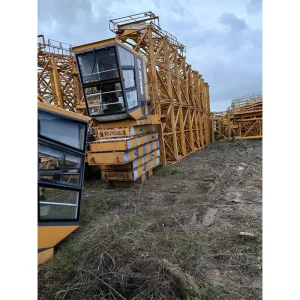
Complete selection of hammerhead, flat-top, and vertical passenger/material transport assets ready for disassembly, ocean lashing, and direct deployment.
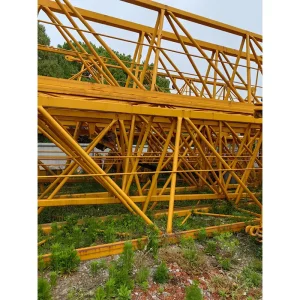
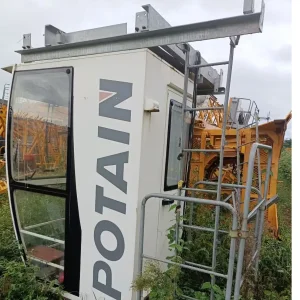
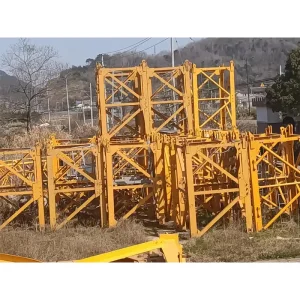
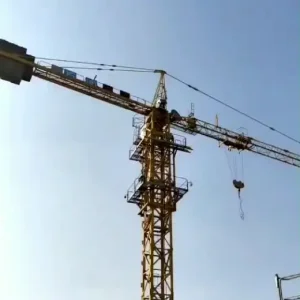
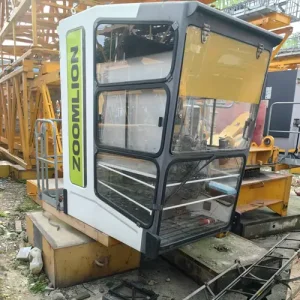
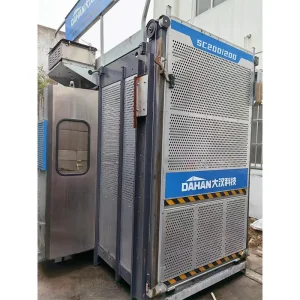
From systematic dismantling in our 30+ acre Chinese facility to Port Klang offloading and anchorage installation across Malaysia.
Tower crane sections, jibs, counter-jibs, and hoist winches require calculated breakbulk and open-top container stowing plans. Our experienced packing crews utilize custom steel transport saddles, heavy-duty sea lashing, and moisture-absorbing silica gel bags inside all mechanical gearboxes and electrical cabinets to prevent sea-spray corrosion.
We supply full documentation packets for seamless customs clearance at Northport and Westport (Port Klang). This includes the Certificate of Origin (Form E for ASEAN tariff exemptions), manufacturer original test certificates, bilingual operation manuals, electrical schematics, and previous maintenance records.
Proper foundation anchorage and telescoping procedures determine site safety. We provide foundation reaction load calculations tailored to local soil parameters (e.g., weathered limestone/piled raft foundations in Kuala Lumpur) and provide on-site or remote video supervision during initial erection and hydraulic climbing stages.
Clear, direct answers regarding equipment verification, certification procedures, shipping logistics, and aftermarket spare parts backing.
Save up to 60% on heavy lifting capital expenditure without compromising on structural reliability, safety certification, or project timelines. Request real unit inspection logs, YOM certificates, and freight quotations today.