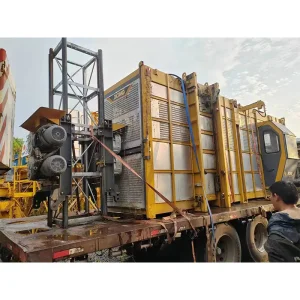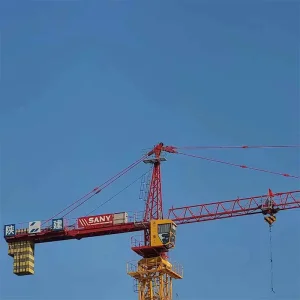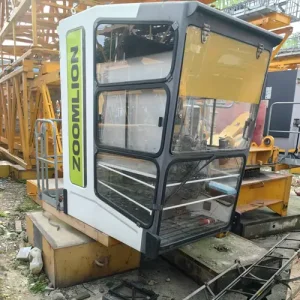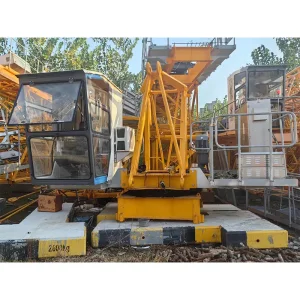
Nordic Market Verified Engineering Fleet

Used Construction Hoist Supplier & Suppliers in the Denmark Market

Precision-tested vertical access systems, certified SC200/200 twin-cage hoists, and heavy-duty building equipment strictly vetted for Copenhagen urban developments, Aarhus timber high-rises, and Nordic cold-climate safety standards.

Send Inquiry Now

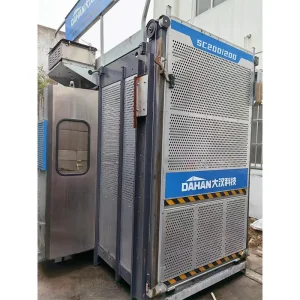
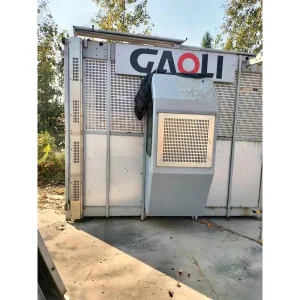
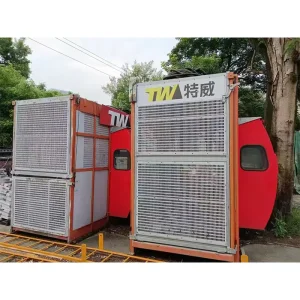
Featured Construction Hoists for Danish Job Sites

Premium late-model passenger and materials hoists rigorously selected from leading global manufacturers, pre-configured for rapid deployment in Danish metropolitan zones.
Denmark Construction Sector: Micro & Macro Industrial Landscape

Strategic analysis of vertical transportation demands within Denmark’s green transition, low-carbon building targets, and high-density municipal initiatives.

35-45%
Capex Savings vs New European Equipment
100%
EN 12159 Safety Compliance Pre-Inspection
< 14 Days
Rapid Baltic & North Sea Port Dispatch
128 Pts
Standard Mechanical & Electrical Audit

Capital Efficiency in High-Cost Zones

Danish contractors operating in Greater Copenhagen, Odense, and Aalborg face tight project margins fueled by high labor costs and stringent environmental mandates. Sourcing verified, late-model used construction hoists (YOM 2019-2023) eliminates the 9-month manufacturer backlog while freeing up up to 45% of equipment capex for sustainable material procurement.

The Nordic Timber & Prefab Surge

With Denmark leading the adoption of CLT (Cross-Laminated Timber) and modular building techniques, high-speed vertical material access has shifted from bulk aggregate handling to precise, moisture-sensitive prefabricated structural element delivery. Twin-cage hoists with oversized internal dimensions offer the high volumetric payload required for offsite components.

Strict Energy & Noise Abatement

Urban construction ordinances across Danish municipalities enforce strict acoustic thresholds and zero peak-surge electrical draw. Modern used hoists fitted with Variable Frequency Drives (VFD) ensure progressive soft-start mechanics, low power footprint compatible with localized microgrids, and quiet operations suited for metropolitan renewal sites.

Technical Roadmap & Nordic Environmental Adaptation

How our technical reconditioning program equips used construction hoists to deliver peak operational reliability through freezing Scandinavian winters.

ENGINEERING PROTOCOL I

Structural Integrity & Mast Re-Certification

Every mast section undergoes magnetic particle testing (NDT) to inspect weld beads, chord integrity, and rack wear tolerance. For the Danish maritime atmospheric environment, rack gears are precision-measured against ISO Grade 8 wear limits to eliminate vibration-induced microfractures.

  • Chord wall thickness ultrasonic gauging
  • Hot-dip galvanization assessment
  • High-tensile Grade 8.8 / 10.9 connection bolt audits
ENGINEERING PROTOCOL II

Progressive Fall-Safety Drive Overhaul

The anti-fall safety device (SAJ series progressive governor) represents the lifeline of vertical conveyance. In accordance with Danish Arbejdstilsynet directives, all safety devices on exported units undergo drop-testing and dynamic calibration on dedicated test rigs prior to overseas packing.

  • Factory recalibrated progressive brake drums
  • Mechanical centrifugal interlock verification
  • Automatic electrical trip circuit cutouts
ENGINEERING PROTOCOL III

Sub-Zero Electrical & VFD Modernization

Danish coastal construction experiences harsh winter freezes and salt-air corrosion. Drive systems are retrofitted with low-temperature synthetic industrial gear lubricants (VG 220/320), silicone heating elements inside central PLC control units, and IP65-rated stainless switchgear.

  • Schneider or ABB localized industrial control units
  • Regenerative braking energy feed units
  • Cold-resistant trailing flexible power cable suites

Global Procurement Patterns & Nordic Compliance Bridge

Bridging global industrial manufacturing surplus with the ultra-strict safety, environmental, and regulatory framework of Northern Europe.

Supply Dynamics: The Shift to Verified Second-Hand Fleets

Globally, general contractors and rental fleets face an extended ROI recovery timeline when buying new Western European hoisting gear. By acquiring tier-one verified machines from high-throughput infrastructure origins—where machines have operated under low-cycle, well-maintained tier-one projects—Nordic procurement managers reduce equipment balance sheet burdens without sacrificing on-site performance.

Our dedicated 30+ acre facility ensures complete disassembly, re-machining of wear points, and full English/Danish technical labeling before containerization.

Compliance Engineering: The Danish "Arbejdstilsynet" Standard

Operating machinery in Denmark requires strict alignment with the Danish Working Environment Authority (Arbejdstilsynet) executive orders and European Machinery Directive 2006/42/EC. We deliver machinery with full technical dossiers, third-party CE structural certificates, wiring schematics, and complete historical maintenance logging.

Units can be pre-inspected by accredited international surveying firms (SGS, Bureau Veritas, or TÜV) right in our export staging yard before customs departure.

Plan Your Machinery Delivery to Denmark Ports

Direct maritime routing to Copenhagen Malmö Port (CMP), Port of Aarhus, or Fredericia with turnkey customs documentation and technical dossiers.

Send Inquiry Now

Available Verified Cranes & Hoists Inventory

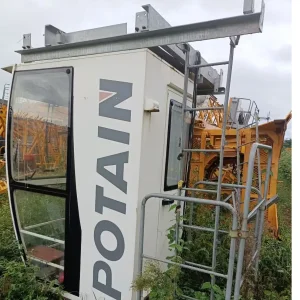
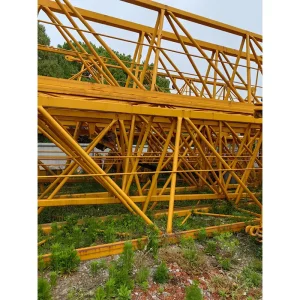
Explore our active catalog of inspected tower cranes and high-rise construction hoists ready for immediate port loading and export dispatch to Denmark.
Frequently Asked Questions for Denmark Machinery Importers

In-depth clarification on structural certifications, cold weather packages, customs clearance, and logistics to Danish maritime terminals.

Can used construction hoists from China legally operate on Danish construction sites?
Yes, provided the machines conform to EU Machinery Directive 2006/42/EC and EN 12159 standards for rack and pinion hoists. Units supplied by Huaian Zhongqiang originate from internationally recognized OEMs (XCMG, Gaoli, Dahan, Tewei) and undergo pre-shipment auditing to verify CE declarations, electrical fail-safe interlocks, and anti-fall governor calibration certificates accepted by Danish safety inspectors.
How do you protect equipment against rust and corrosion during long ocean transit to Denmark?
Maritime shipping through equatorial and northern waters exposes machinery to heavy salt fog. Prior to packing into standard 40ft HQ or Open Top containers, our yard team cleans structural members, applies vapor corrosion inhibitors (VCI) to all drive gearboxes and rack teeth, wraps sensitive control panels in vacuum-sealed moisture barrier films, and treats bare metal mating pins with heavy-duty preservation grease.
What are the shipping transit times and primary destination ports in Denmark?
Shipments are routed from East China deep-water ports (Shanghai, Ningbo, or Qingdao) directly or via European transshipment hubs (Rotterdam, Hamburg) to the Port of Aarhus, Copenhagen Malmö Port (CMP), or Fredericia. Typical ocean transit takes between 32 to 42 days. We coordinate full export bills of lading, phytosanitary treatment certificates for timber dunnage, and EUR.1 assistance.
How is spare parts availability handled once the used hoist arrives in Denmark?
Major wear components such as rack sections, guide rollers, pinion gears, limit switches, and safety drive brake discs follow standardized international dimensions. For each machine exported, we provide a recommended 2-year high-wear consumable package packed directly inside the hoist cage during shipment, with ongoing air courier dispatch for critical emergency components within 72 hours.
Can Danish contractors inspect the equipment prior to releasing final export payments?
Absolutely. We welcome in-person buyer visits to our 30+ acre facility in Huai'an, Jiangsu, or we can coordinate third-party independent technical audits via SGS, Bureau Veritas, or DNV. Furthermore, we facilitate high-definition live video functional trials—including loaded motor operation and safety device drop simulations—prior to container loading.