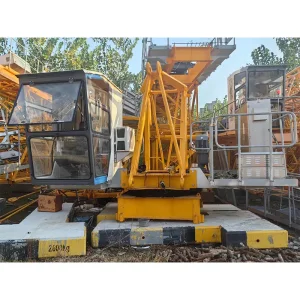
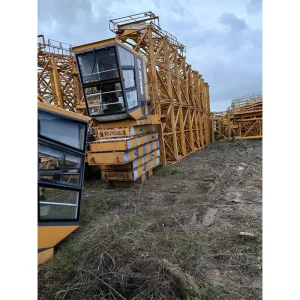
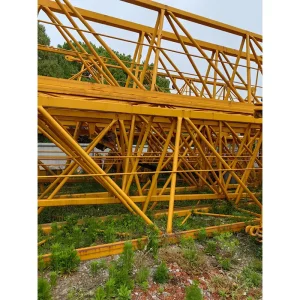
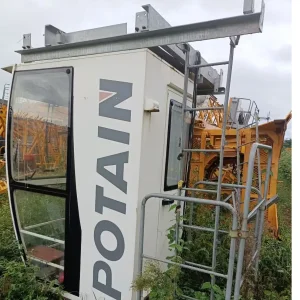
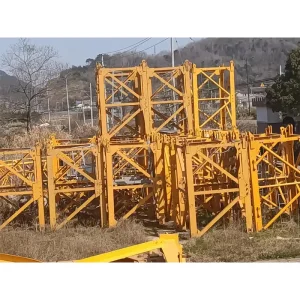
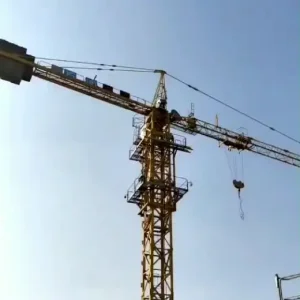
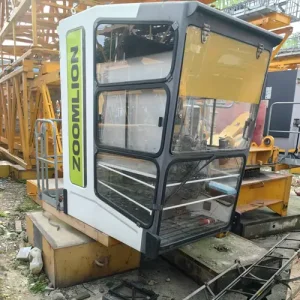
Pre-cleared, YOM 2018–2023 certified flat-top and hammerhead cranes optimized for arid Middle Eastern high-load cycles.
Navigating the intensive equipment utilization cycles driving Saudi Arabia's capital transformation.
The convergence of the New Murabba Development, King Salman Park, Diriyah Gate Phase II, and extensive metro connectivity expansions has created an unprecedented deficit in operational crane hours across Riyadh. Contractors require high-duty cycle equipment with verified metallurgical fatigue records to sustain double-shift rotations without site downtime.
Procuring new machinery directly from European and East Asian OEMs currently entails delivery horizons of 8 to 14 months. Late-model, secondary lifting assets (YOM 2018–2023) lower capital expenditure by 45% to 60% while mitigating long procurement lead times, empowering Tier-1 engineering firms to deploy assets within 25 days of financial close.
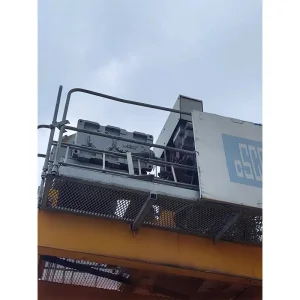
Riyadh’s harsh ambient heat (exceeding 50°C during summer peaks) combined with fine silica dust causes rapid thermal wear and electrical faults in standard equipment. Exporting to this corridor necessitates upgraded tropicalized electrical cabinets, independent hydraulic oil coolers, and IP65 dust-sealed mechanical brakes.
Enterprise contractors in the GCC demand transparency in wear degradation, certified non-destructive testing (NDT), and documented operational histories.
Calibrating radius capabilities, tip-load ratings, and base mounting foundations for targeted project profiles.
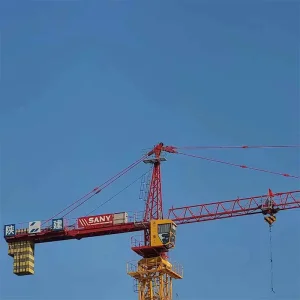
Deploying DAHAN and SANY 6013 models with 6-ton capacity for rapid floor-cycle assemblies. Featuring precision frequency-conversion inverters for millimeter-accurate positioning of pre-stressed concrete modules across northern Riyadh expansion blocks.
Positioning high-capacity Potain MC320 and Zoomlion QTZ250 platforms configured for heavy steel core installations. High-speed hoisting mechanisms minimize hook travel times over hook elevations exceeding 180 meters.
Hammerhead setups with 70m jibs configured for broad logistical yards and bridge deck placements. High free-standing heights limit the requirement for complex external wall anchoring during initial phases.
Overcoming the barrier between Chinese industrial manufacturing specifications and Saudi Arabian regulatory authorities.
Every structural assembly is certified under Saudi SABER platform frameworks, backed by traceable OEM certificate documentation and accredited inspection reports.
Prior to port dispatch, units undergo ultrasonic and magnetic particle weld inspections by international testing houses (SGS/TUV/Bureau Veritas) per client preference.
Direct roll-on/roll-off and flat-rack logistics handling via King Abdulaziz Port (Dammam) and Jeddah Islamic Port, supported by bonded transit direct to Riyadh Dry Port.
Delivery accompanied by structural climbing frames, calibrated torque wrenches, anchor stools, and certified engineering schematics translated for on-site riggers.
Upgrading secondary cranes into modernized, connected lifting assets for regional compliance.
Retrofitting secondary cabins with dual-band 4G/5G telematics, enabling Riyadh central safety managers to monitor load moments, hook heights, wind speeds, and slewing radius overlaps in real-time.
Integrating regenerative variable-frequency drive (VFD) converters on heavy-duty Potain and Zoomlion winches, harvesting kinetic braking energy to trim site generator fuel consumption by up to 22%.
Analyzing stress histories via hook sensor telemetry to forecast fatigue cycles in mast chord steel, ensuring preventative parts swaps before micro-fractures compromise operational site safety.
Technical, logistical, and commercial inquiries answered by our export engineering team.
Heavy tonnage configurations and dependable models available for regional export pipelines.
Connect with our technical engineering desk to request complete NDT inspection dossiers, SASO compliance sheets, and CIF Dammam/Riyadh freight schedules.