Top-tier inspected secondhand tower cranes configured specifically for tight urban footprints, high-rise residential complexes, and infrastructure projects across Gyeonggi and Seoul metropolitan zones.
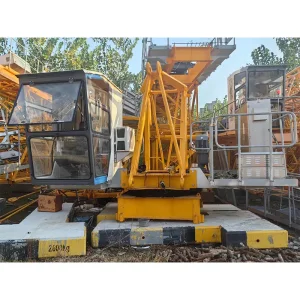
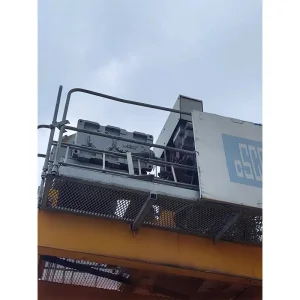
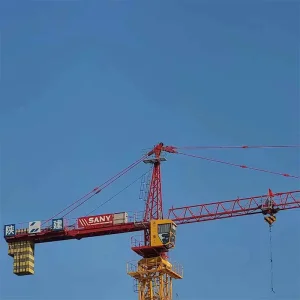
The global construction equipment market is undergoing a seismic paradigm shift driven by rising raw material prices, stringent carbon abatement mandates, and supply chain delays for newly fabricated equipment. In South Korea—and specifically within the dense urban geography of the Seoul Capital Area (SCA)—the capital expenditure (CapEx) required for tier-one construction machinery has escalated significantly. As Seoul expands its grand-scale infrastructure initiatives, including the Great Train eXpress (GTX) subterranean rail network, massive urban renewal projects in Yeouido and Gangnam, and the third-generation "New Town" housing clusters in surrounding Gyeonggi Province, EPC contractors face intense pressure to balance operational efficiency, structural safety, and capital deployment speeds.
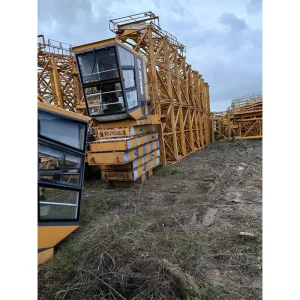
In response, tier-one Korean contractors (E&C firms) are increasingly turning away from capital-intensive factory-new machinery in favor of certified high-quality used tower cranes sourced from vetted Chinese OEM manufacturing conglomerates (such as Zoomlion, SANY, XCMG, Dahan, and Yongmao) as well as global engineering powerhouses like Potain. When rigorous Non-Destructive Testing (NDT) structural audits, full mechanical reconditioning, and safety system retrofits are executed prior to export, high-spec pre-owned lifting machinery delivers equivalent operational yield, tip load capacity, and safety reliability at 40% to 60% lower total cost of ownership (TCO).
The Seoul market demands machinery with distinct operational characteristics: compact base dimensions for constrained lot boundaries, high free-standing heights to minimize wall-tie structural penetrations, and ultra-smooth variable frequency drive (VFD) controls to safely navigate working within congested air spaces over public thoroughfares. Understanding these hyper-local requirements is essential when choosing a supplier able to bridge technical specifications between Chinese export yards and South Korean job sites.
Importing lifting machinery into South Korea requires navigating one of Asia’s most stringent regulatory environments. The Ministry of Employment and Labor (MOEL), alongside the Korea Occupational Safety and Health Agency (KOSHA), enforces rigorous construction equipment safety laws designed to eliminate job-site accidents, structural fatigue failures, and electrical hazards.
South Korea strictly regulates crane operational lifespan. In general, tower cranes older than 20 years are prohibited from commercial construction sites, while units over 10–15 years face rigorous annual non-destructive material stress inspections. Huaian Zhongqiang solves this challenge by exclusively exporting late-model units with a Year of Manufacture (YOM) between 2018 and 2023, ensuring full lifecycle viability under Korean law.
Unlike China’s standard 50Hz industrial grid, South Korea operates on a 380V/440V 60Hz power grid. Exported cranes must undergo motor coil rewinding or complete frequency-matched electrical cabinet retrofits. Our engineering team installs high-reliability Schneider/ABB VFD inverters and upgraded hoist/slewing motors calibrated specifically for 60Hz performance without risk of overheating or torque loss.
Crucial Compliance Note for Importers: Any second-hand lifting asset entering Incheon or Pyeongtaek ports must feature intact factory OEM nameplates, fully traceable metallurgical certificates for mast pin connections, and validated maintenance logs to pass South Korea's mandatory initial safety inspection (Safety Inspection Certificate for Industrial Machinery).
To guarantee that pre-owned machinery delivers factory-gate performance upon erection in Seoul, Huaian Zhongqiang executes an uncompromised 128-point inspection and reconditioning process at our 30+ acre facility in Huai'an, Jiangsu.
Ultrasonic Flaw Detection and Magnetic Particle Inspection (MPI) are performed on key load-bearing welds, tower mast chords, jib pivot connections, and slewing ring assemblies to identify micro-fractures, stress fatigue, or hidden corrosion.
Replacement of high-wear components including hoisting wire ropes (using high-tensile galvanized steel ropes), brake linings, trolley wheels, and slewing bearings. Gearboxes undergo oil analysis, flushing, and seal replacements.
Complete shot-blasting to SA 2.5 standard to strip oxidized paint and rust, followed by a double-coat epoxy primer and UV-resistant polyurethane finish engineered to withstand East Asia’s harsh coastal winter and summer humidity.
| Model Designation | Crane Type | Max Load (t) | Jib Radius / Tip Load | Free-Standing Height | Primary Seoul Application Field |
|---|---|---|---|---|---|
| POTAIN MC320-12 | Topkit / Hammerhead | 12.0 Ton | 70m / 3.2 Ton | 50.9 Meters | High-rise commercial towers, precast concrete structures |
| ZOOMLION QTZ250 (7025-12) | Flat-Top / Topless | 12.0 Ton | 70m / 2.5 Ton | 60.0 Meters | Overlapping multi-crane residential complex construction |
| SANY QTZ100 (6013-6) | Topkit / Hammerhead | 6.0 Ton | 60m / 1.3 Ton | 40.0 Meters | Urban infill, commercial redevelopments, public works |
| DAHAN QTZ100 (6013-6) | Topkit / Flat-Top Variant | 6.0 Ton | 60m / 1.3 Ton | 40.0 Meters | Mid-rise residential urban renewal, subway station hubs |
| YONGMAO STT153 (7015-10) | Flat-Top / Heavy Duty | 10.0 Ton | 70m / 1.5 Ton | 54.0 Meters | Heavy steel structure erection, bridge infrastructure |
Seoul’s complex urban topography—characterized by narrow street grids in historic districts like Jongno, ultra-dense sky-scraping financial centers in Yeouido, and expansive multi-block apartment redevelopments in Gangnam and Mapo—demands specific lifting solutions tailored to site geometries.
When multiple tower cranes operate within contiguous land parcels, traditional hammerhead cranes with tall tie-rod tops present collision risks. Flat-top (topless) models like the Zoomlion QTZ250 (7025-12) allow jib-over-jib slewing with minimal vertical clearance gaps, maximizing site coverage efficiency without raising mast height unnecessarily.
Modern South Korean residential construction relies heavily on prefabricated concrete (PC) modules and heavy steel framing to accelerate build cycles. Cranes like the Potain MC320-12 provide high load curves capable of picking heavy structural members at extended radii, reducing reliance on mobile auxiliary cranes.
Streamlined maritime freight, container lashing, and customs clearance protocols engineered for Korean contractors.
Tower crane jibs, counter-jibs, and mechanisms are securely packed into Open Top (OT) and Flat Rack (FR) containers. Mast sections are bundled using heavy-duty steel strapping and rubber vibration dampening to prevent transit damage.
Operating from our Jiangsu supply hub near Shanghai and Qingdao ports, ocean freight transit to Incheon Port or Pyeongtaek Port takes just 2 to 4 days, ensuring rapid equipment arrival for tight construction schedules.
We supply complete commercial invoices, packing lists, Bill of Lading, Certificate of Origin (Form R under China-Korea FTA for preferential tariff treatment), and factory original technical passports required by South Korean customs brokers.
As South Korea implements "Smart Construction Technology" mandates across major job sites, the lifting industry is transitioning toward digitalized monitoring. Pre-owned cranes sourced through Huaian Zhongqiang can be retrofitted with cutting-edge anti-collision systems, IoT load-moment indicators (LMI), and remote operational telematics.
Integration of wireless sensor networks that continuously track slewing angles, trolley positions, and hook heights across adjacent cranes, automatically soft-stopping movement if safety zone boundaries are breached.
Installation of digital operational data recorders logging wind speed, actual load versus rated load, motor temperature, and fault codes—providing safety directors with complete job-site audit capability.
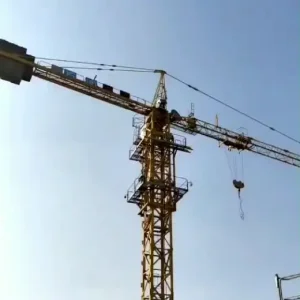
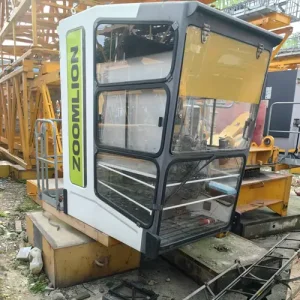
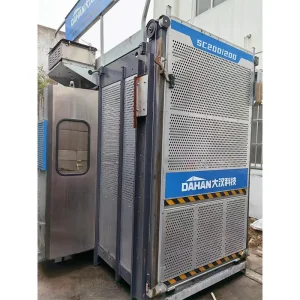
Explore our full line of pre-owned topkit cranes, flat-top cranes, and twin-cage construction hoists maintained to original manufacturer specs.
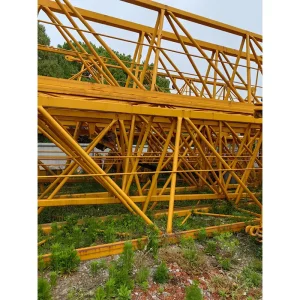
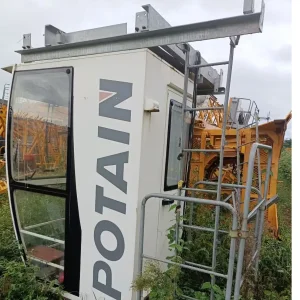
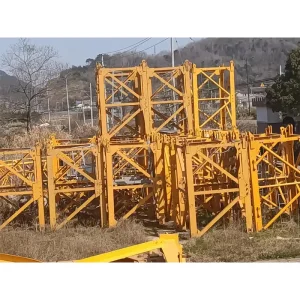
Contact our senior heavy machinery export engineers today. Receive detailed NDT inspection files, full equipment history logs, 60Hz power adaptation plans, and landed shipping quotes to Incheon Port.
Send Inquiry Now