Verified Fleet
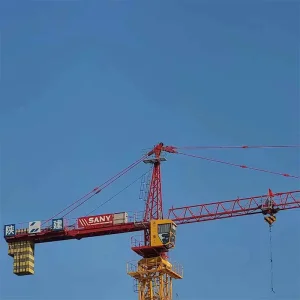
Pre-inspected structural integrity, origin-certified nameplates, and immediate containerized or breakbulk shipping availability.
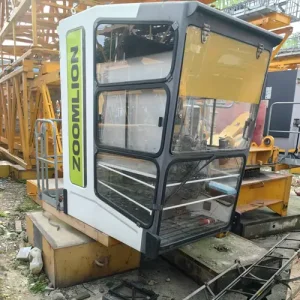
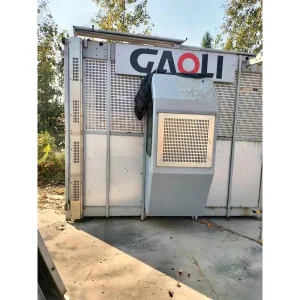
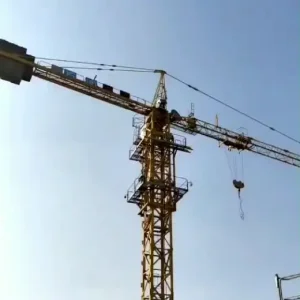
An authoritative engineering perspective on capital optimization, prefabricated precast adoption, and urbanization across expanding worldwide infrastructure zones.
Rapid demographic shifts toward metropolitan hubs in Southeast Asia, the Middle East, Latin America, and Sub-Saharan Africa demand compact yet high-capacity lifting apparatuses. Flat-top (topless) and luffing jib crane topologies have surged by over 34% in regional adoption, allowing multi-crane airspace overlapping without structural interference in tightly constrained skyscraper corridors.
The modernization of the construction sector toward Precast Concrete (PC) and Prefabricated Prefinished Volumetric Construction (PPVC) has shifted lifting profiles. Standard 3-ton tip requirements are frequently upgraded to 8-ton, 12-ton, and 25-ton hoisting limits. Heavy equipment buyers prioritize moment-rating torque curves (ranging from 100 t·m to 315 t·m) over purely horizontal jib reach to accommodate monolithic modular pods.
Rising interest rates and supply chain bottlenecks for raw steel have inflated brand-new OEM delivery cycles up to 8 to 14 months. General contractors and equipment rental consortia achieve superior Return on Invested Capital (ROIC) by acquiring verified, low-hour, high-grade used units (YOM 2018–2023) from China, yielding a 45%–65% reduction in initial capital deployment with zero wait time.
How China transformed into the planetary nexus of high-integrity heavy lifting machinery, delivering unbeatable engineering value, advanced metallurgy, and strict quality control.
Global Tier-1 Chinese manufacturers—including Zoomlion, XCMG, and SANY—utilize 100% digitalized Lighthouse Factories. From robotic plasma cutting of Q345B and Q460C structural steels to continuous submerged arc automated welding of mast chords, these factories eliminate manual seam variance, resulting in fatigue-resistant structures that surpass classical ISO 4301 and FEM standards.
Operating from our Huai'an, Jiangsu centralized hub, Huaian Zhongqiang eliminates transaction risk. Unlike unregulated digital brokers, our 30+ acre facility manages strict pre-export QA protocols: ultrasonic flaw detection across pin lugs, slewing ring axial play clearance calibration, megger insulation resistance tests on control cabinetry, and complete hydraulic torque test cycles.
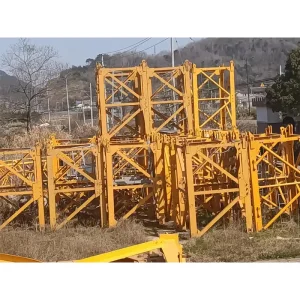
Exporting a disassembled crane requires nautical mastery. Every crane element—counter-jib ballast frames, modular fishplate pins, telescopic climbing cages, and hoist drums—is marked systematically. Components are lashed within 40ft High Cube (HC) containers, open-tops, or dedicated flat racks with anti-corrosion marine-grade wax coatings to resist ocean salinity.
| Evaluation Parameter | Direct Chinese Exporter Hub (Zhongqiang) | Local Overseas Broker | Brand New European OEM |
|---|---|---|---|
| Procurement Lead Time | Immediate (7-14 Days Packing & Port Dispatch) | Uncertain (Dependent on Third-Party Yards) | Extended (32 to 56 Weeks Lead Time) |
| Pre-Shipment QA Transparency | 128-Point NDT, Ultrasonic & Run-Testing Reports | Surface Visual Check Only | Factory Certificate (No Live Run Audit) |
| Total Cost of Acquisition | Optimal (40% - 60% Below Initial Factory List) | High Markups + Intermediary Fees | High Capex Investment + Capital Cost |
| Stock Verification & Traceability | On-Site Physical Audit in 30+ Acre Yard | Paper Brokered Stock (No Physical Yard) | Direct Build from Assembly Line |
Matching site-specific geological profiles, altitude, clearance, and operational duty cycles with optimal crane configurations.
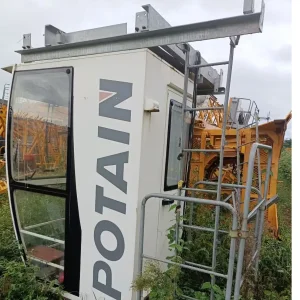
Exemplified by: Zoomlion QTZ250 (7025-12), Potain MC320
Equipped with tie-rod stabilized towers and robust cathead superstructures. Ideal for wide radius infrastructure projects including hydro dams, highway viaduct interchanges, and bridge pier placement. Their structural stiffening allows for maximum jib tips (up to 70m) while preserving hook stability under heavy crosswinds.
Exemplified by: SANY QTZ100 (6013-6), DAHAN QTZ100
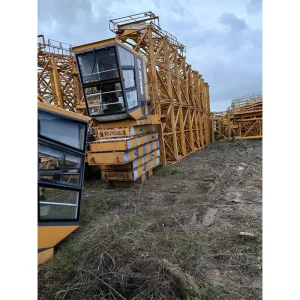
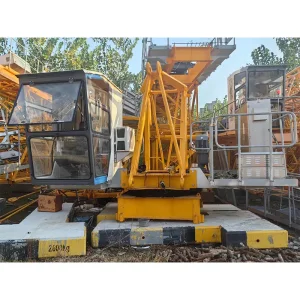
Engineered without a towering A-frame apex, topless cranes drastically simplify multi-crane airspace management where jibs sweep directly over one another. Modular boom pin connections allow for rapid climbing additions, shortening erection and disassembly cycles via small mobile cranes on tight downtown roads.
Exemplified by: XCMG, GAOLI, TEWEI SC200/200
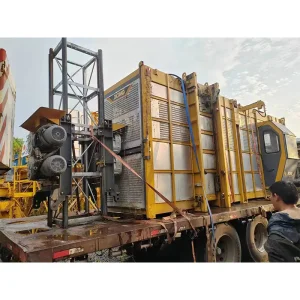
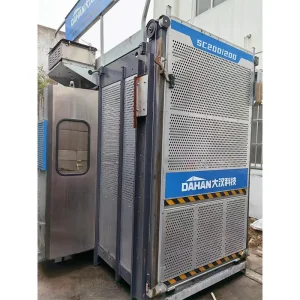
High-rise operations rely on rapid vertical personnel and cargo delivery. Dual-cage 2x2000kg load elevators feature progressive anti-fall safety devices (SAJ series), variable frequency drive (VFD) soft-start controls, and high-tensile mast ties to ensure safe transit up to 450-meter building heights.
Key technological innovations reshaping heavy construction machinery safety and operational efficiency over the next decade.
Edge IoT sensors mounted on slewing motors and hoist winches stream vibration data, brake wear metrics, and motor winding thermals in real time, preventing sudden operational failures.
Sensor-driven anti-collision systems dynamically map restricted airspaces over schools, rail corridors, and power grids, slowing slewing mechanisms as jibs approach virtual borders.
Modern tower cranes feature variable-frequency drive controls across slewing, trolleying, and hoisting motions, eliminating mechanical shock loads and reducing site energy draw by up to 25%.
Fiber-optic and wireless links allow crane operators to control machinery from climate-controlled ground stations using HD cameras, improving ergonomics and site coordination.
A structured approach for EPC contractors, plant managers, and equipment fleet directors acquiring heavy lifting machinery internationally.
Confirm the trading partner operates their own physical facility rather than brokering paperwork. Huaian Zhongqiang manages a dedicated 30+ acre facility with on-site inspection teams, verified import/export licenses, and direct title ownership, ensuring unencumbered bill-of-lading processing.
Never rely solely on exterior photographs. Request high-resolution videos of the slewing ring teeth, close-up records of pin connections, and full operational runs of the hoist mechanism under power to verify gear train integrity and brake responsiveness.
International imports require meticulous paperwork. Ensure your contract includes the original OEM Equipment Certificate, Commercial Invoice with verified HS codes, detailed Packing Lists with unit dimensions, Bill of Lading, and Country-of-Origin documentation for preferential tariff processing.
Explore our heavy lift fleet inventory, featuring certified hammerhead, topless, and hoist options from top global manufacturers.
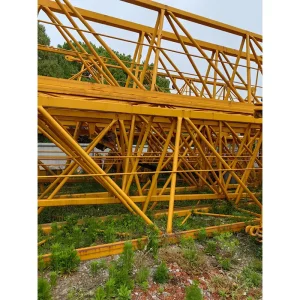
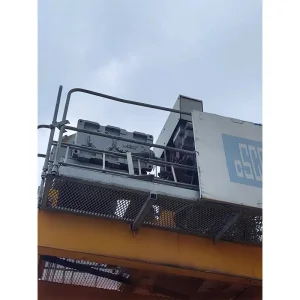
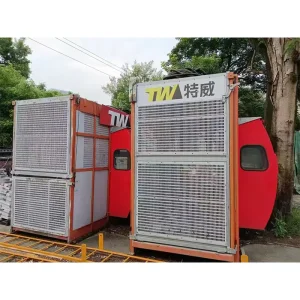
Clear, direct answers regarding equipment verification, marine logistics, international certification, and technical onboarding.
YOM stands for 'Year of Manufacture.' Our fleet concentrates on recent units produced between 2018 and 2023. Every machine retains its original OEM metal nameplate displaying its serial number, certification date, and engineering rating for transparent customs import filing.
Our 128-point pre-export check inspects mast chords for micro-fractures, tests slewing bearing clearances via dial indicators, verifies motor windings with megohm meters, checks wire rope core integrity, and confirms safety limiters (load moment, trolley travel, and slewing) operate correctly under electrical power.
Cranes are dismantled into modular subsections. Standard mast sections (1.6m x 1.6m or 2.0m x 2.0m) fit within 40ft High Cube containers. Oversized counter-jibs, slewing assemblies, and base frames are shipped via specialized Open-Top containers, Flat Racks, or dedicated breakbulk vessels with heavy marine-grade strap lashing.
We provide full documentation: Commercial Invoices referencing equipment serial numbers, itemized Packing Lists with dimensions and tare weights, Clean on Board Ocean Bills of Lading, Certificate of Origin (CO, Form E, or Form R), and optional Third-Party Pre-Shipment Inspection Reports (SGS, BV, or TÜV) as required by local authorities.
Buyers can visit our 30+ acre facility in Huai'an, Jiangsu, China for direct physical inspections, appoint independent testing agencies (such as SGS or Bureau Veritas) to conduct non-destructive testing, or schedule real-time high-definition video audits covering all major subassemblies and operational tests.
We supply complete foundation anchoring templates, mast tie-in diagrams, and maintenance parts kits (including contactors, limit switches, and seal rings) along with your crane. Our engineers provide remote video assistance during erection and calibration, with replacement parts dispatched via air courier within 48 hours when needed.