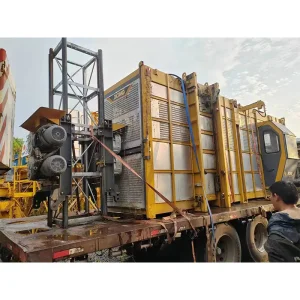
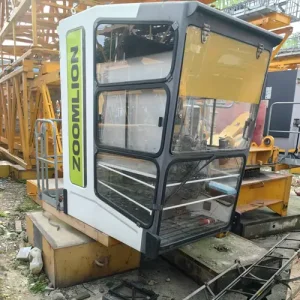
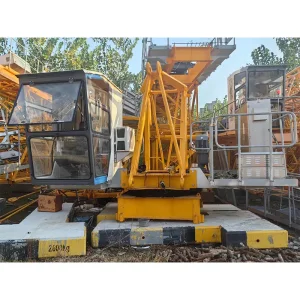
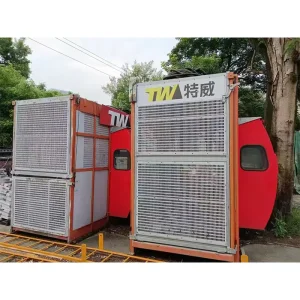
Immediate shipyard and yard allocation of inspected, late-model heavy equipment (YOM 2018–2023) maintained under stringent ISO-certified engineering protocols.
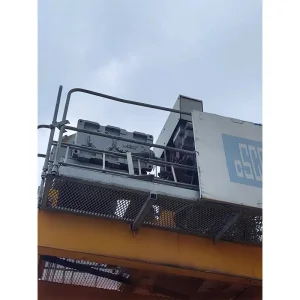
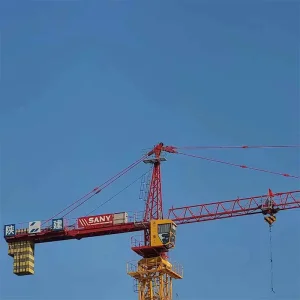
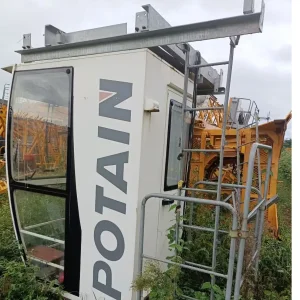
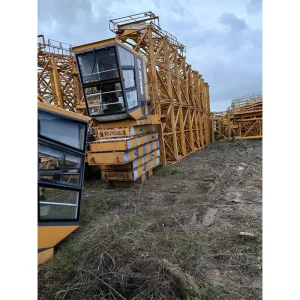
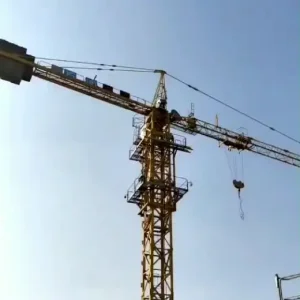
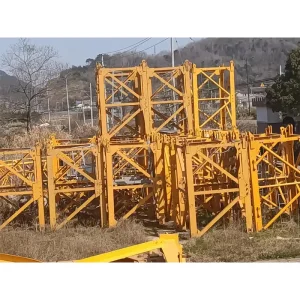
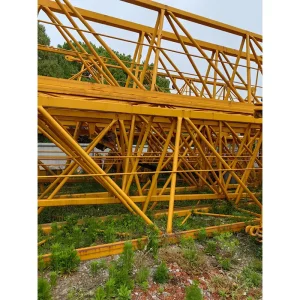
Navigating spatial density constraints, core-wall climbing dynamics, and micro-movement structural loads in ultra-high-rise construction.
Internal climbing tower cranes (“Tower Crane Inside”) operate within elevator shafts or engineered core voids. As vertical structures rise, climbing collars hydraulically elevate the crane using the building's own cured structural concrete as load anchors, eliminating external mast tie-ins and dramatically lowering foundation footprint overhead.
By engineering customized internal support beams, bending moments generated during high-wind slewing and maximum tip-load picks are transferred directly into shear walls. Our technical support validates horizontal reaction forces (H1, H2) against internal concrete strength ratings (C50/C60) for guaranteed site safety.
Unlike external cranes that require 200+ meters of standing mast sections for a supertall structure, an internal climbing crane operates continuously using a fixed mast height (typically 30–50 meters). Contractors reduce initial equipment investment, logistics cube volume, and disassembly costs by more than 40%.
How top-tier international general contractors leverage inspected secondary markets to counter lead-time bottlenecks and volatile supply chains.
Procuring new heavy-class hammerhead or flat-top cranes from European or domestic OEMs routinely requires 6 to 12 months in build lead times. Huaian Zhongqiang International Trade Co., Ltd. resolves capital lockup by maintaining certified late-model stock (YOM 2018–2023) ready for immediate rigging, seaworthy crating, and fast dispatch.
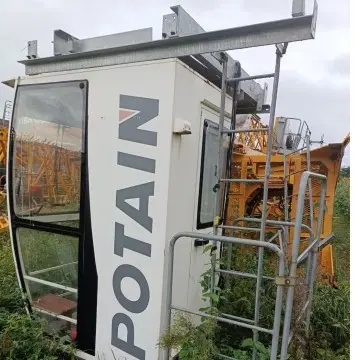
Tier-1 contractors operating across developing civil corridors leverage verified pre-owned machines to optimize return on invested capital (ROIC). High-spec models from Potain, Zoomlion, and XCMG provide 85–90% of structural operational life expectancy at 40–60% lower capital expenditure relative to factory-new machinery.
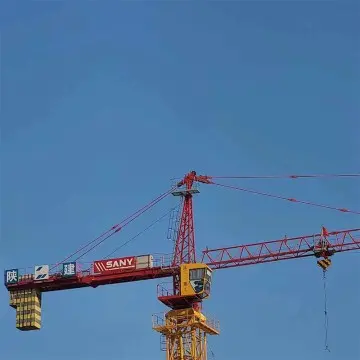
Modern mega-developments utilize standardized mast sections and interchangeable boom inserts. Sourcing verified units within the Potain MC or Zoomlion/SANY QTZ ecosystems ensures parts availability, technician familiarity, and modular adaptability across multiple operational jobsites over extended multi-year campaigns.
From EU CE Machinery Directives to North American ASME B30.3 standards, our engineering ensures total customs transparency and structural verification.
Every critical weld seam, slewing ring, pin-joint collar, and turntable connection undergoes comprehensive Ultrasonic Testing (UT) and Magnetic Particle Testing (MPT). We document material fatigue thresholds to prevent structural compromise on job sites, issuing full metallurgical test reports prior to loading.
Operating with our own independent import and export operating rights, our logistics department packages certified Commercial Invoices, Packing Lists, Bills of Lading, Non-Preferential Certificates of Origin (CO), and manufacturer nameplate authentications, ensuring immediate clearance through global entry ports.
To support varying regional electrical requirements (380V/50Hz, 440V/60Hz, or 480V systems across the Americas, the Middle East, and Asia-Pacific), our electrical technicians recalibrate hoist, trolley, and slewing VFD drives to guarantee steady voltage operation under tough site-grid conditions.
Tailored operational configurations engineered for complex building geometries and dense urban conditions.
Where site boundaries immediately abut public thoroughfares, internal climbing configurations within central lift cores prevent slewing jibs from encroaching upon surrounding air rights, mitigating civic permits, liabilities, and multi-crane airspace clashes.
Bridging expansive rivers and maritime straits demands climbing systems anchored inside hollow reinforced-concrete pylon shafts. Internal climbing rigs ascend along structural hollows, insulated from direct ocean gales and severe offshore winds.
From cement plants to power plant cooling towers, internal climbing crane arrangements ascend within continuous slipform or jumpform framework assemblies, ensuring reliable vertical delivery of heavy aggregate and pre-cast inserts without bulky external tie-ins.
Pioneering safety frameworks through digital twin telemetry, IoT multi-axis sensors, and next-generation semi-autonomous hydraulic climbing systems.
Retrofitting secondary fleets with integrated wireless strain gauges and tilt-monitoring sensors across the turntable and mast connection joints. Real-time data streams prevent dynamic over-moment events and provide proactive maintenance alerts via secure cloud dashboards.
Integrating crane climb milestones directly into 4D construction BIM platforms. Contractors calculate structural load transfers, evaluate concrete curing cure-rates, and simulate high-wind lift envelopes before initiating climbing phases on site.
Future engineering updates will incorporate intelligent hydraulic climbing cylinders equipped with automated pressure balance detection. This architecture maintains levelness during core ascents, minimizing operator error risks while increasing speed and stability.
In-depth answers addressing structural criteria, operational configurations, procurement logistics, and international field compliance.
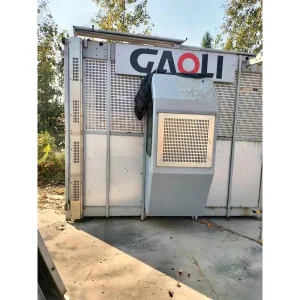
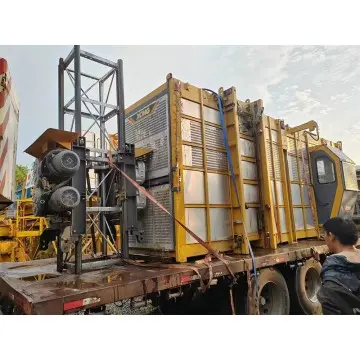
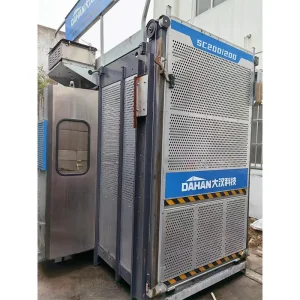
Heavy-tonnage tower cranes and dual-cage construction material hoists available for immediate port dispatch.