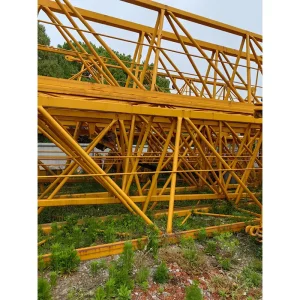
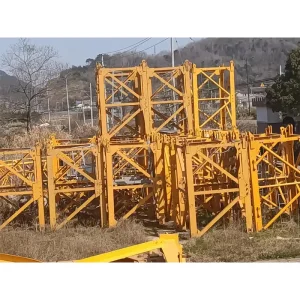
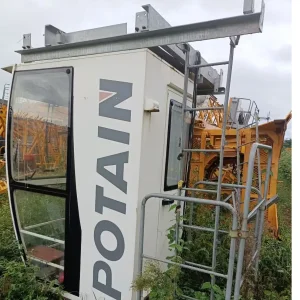
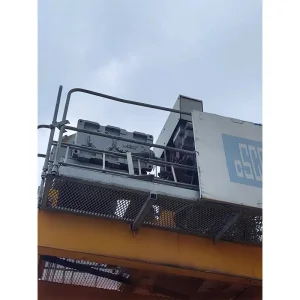
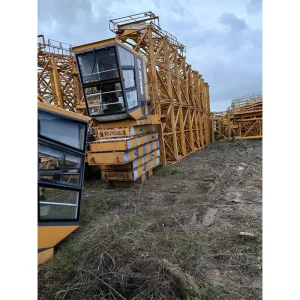
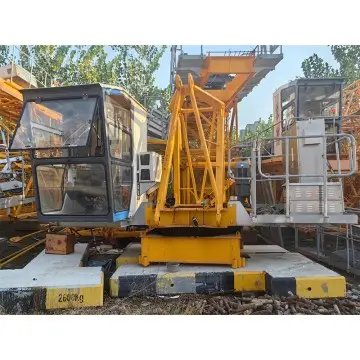
Inspected, non-destructive tested (NDT), and documented units immediately available for sea and overland freight export from our 30+ acre Huai'an yard.
Understanding the strategic procurement landscape, total cost of ownership (TCO), and manufacturing dynamics when sourcing from leading Chinese crane suppliers and secondary equipment distribution centers.
China's mechanical lifting manufacturing clusters integrate high-tensile metallurgical casting, robotic automated welding, and multi-stage anti-corrosion coating. Sourcing directly from Huai'an Zhongqiang bridges overseas EPC enterprises with OEM giants like XCMG, Zoomlion, SANY, Yongmao, and Potain without intermediate agent premiums.
Procuring late-model (YOM 2018–2023) certified mechanical cranes lowers upfront capital deployment by 45% to 65% compared to newly commissioned machinery. This dramatic CAPEX rationalization accelerates return on investment (ROI) across multi-year commercial and civil construction lifecycles.
As a verified entity holding national engineering qualifications and autonomous foreign trade licensing, Huaian Zhongqiang executes standard documentation: Mill Test Certificates (MTC), Non-Destructive Testing (NDT) logs, Certified Bills of Lading, and customized Certificates of Origin (CO/Form E/Form A).
Mechanical cranes necessitate rigorous dismantling schemes. From pin-point chord marking to customized flat rack and high-cube container lashing, our in-house loading crews safeguard slewing mechanisms, mast lattices, and hoist drives against heavy marine vibration and dynamic transit stresses.
How mechanical tower cranes and modular hoists solve critical hoisting constraints across civil engineering, renewable energy complexes, and industrial infrastructure.
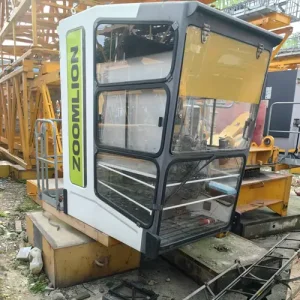
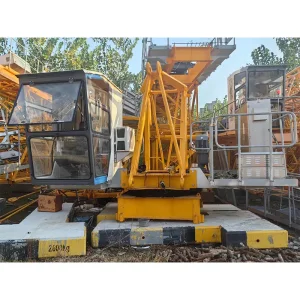
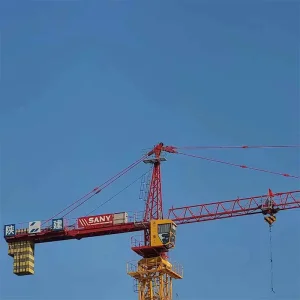
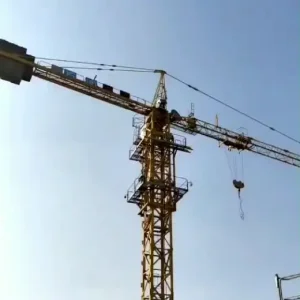
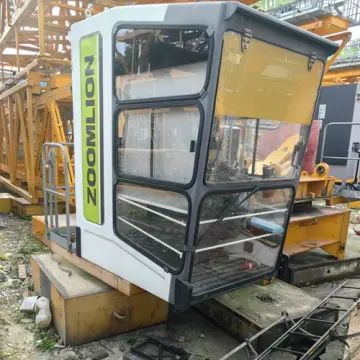
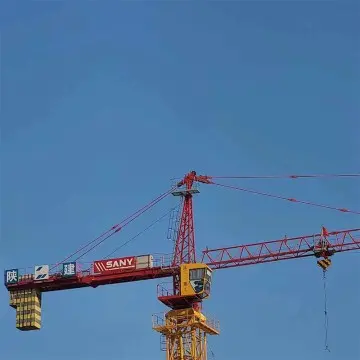
Flat-top and luffing-jib tower cranes minimize spatial interference in overlapping slewing zones. In projects across Southeast Asia and the Middle East, our supplied Zoomlion QTZ250 and Potain MC series enable precise precast concrete placement under constrained airspace parameters.
Heavy-tonnage mechanical lifting demands exceptional torque curve stability and micro-motion hoisting control. Mast sections must withstand continuous lateral wind loading along coastal corridors or mountainous bridge pylons, where structural integrity is verified via our yard's ultrasonic weld testing.
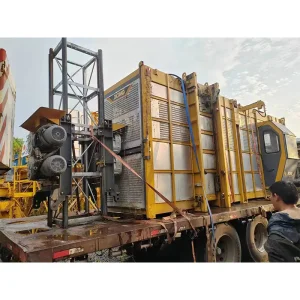
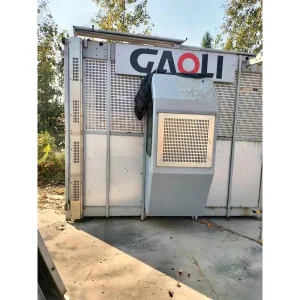
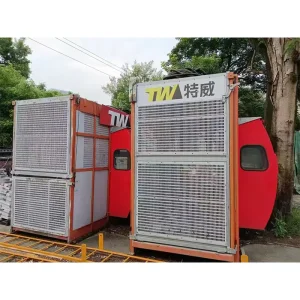
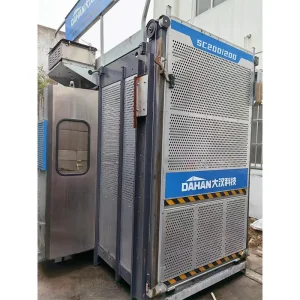
Pairing tower cranes with dual-cage rack-and-pinion builder hoists (such as XCMG SC200/200 or Gaoli SC200/200) ensures uninterrupted personnel flow and bulk material transit up to working heights exceeding 300 meters, utilizing variable frequency drives for zero-shock acceleration.
Demystifying domestic industrial labeling conventions to empower international project managers with transparent technical comparison metrics.
Q (起重机 - Crane), T (塔式 - Tower), Z (自升 - Self-Erecting / Top-Climbing) designates national standard self-climbing hydraulic telescoping cranes capable of increasing working heights via self-contained climbing cages.
The numeric identifier immediately following QTZ reflects nominal load moment in ton-meters (t·m). For instance, a QTZ200 crane possesses a rated gross overturning resistance and working moment in the 200 t·m industrial class.
Four-digit configurations such as "7020" or "6013" specify the geometry: "70" indicates a 70-meter working boom radius, while "20" represents a 2.0-ton safe working load (SWL) capacity at maximum jib reach.
The trailing suffix (e.g., "-10", "-12") corresponds directly to maximum rated reeving capacity near the tower body. A 7020-12 hoist lifts up to 12 tons at internal radii, tapering smoothly to 2.0 tons at the 70m boom tip.
Explore fully checked tower cranes and dual-cage passenger/material hoists curated for immediate site deployment.
Objective answers on factory certification, weld diagnostics, maritime stowage, and global site delivery procedures.