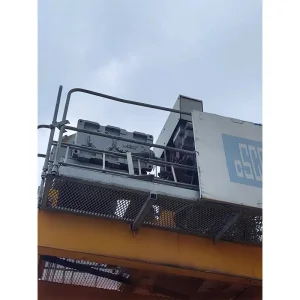
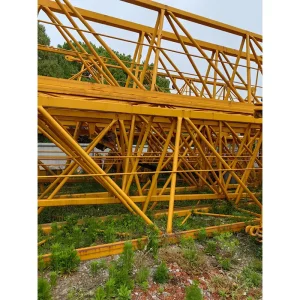
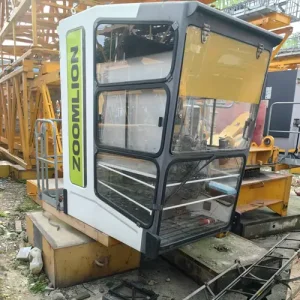
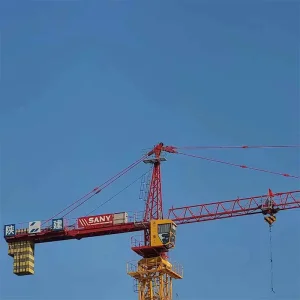
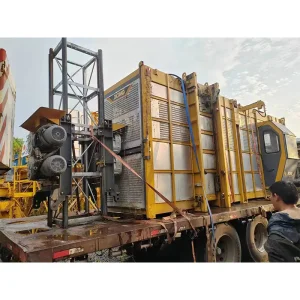
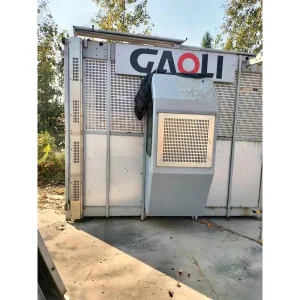
Pre-calibrated load moment indicators, verified slewing rings, and structural integrity checked for high-rise infrastructure deployment.
Examining hydraulic climbing mechanics, internal vs. external telescoping cycles, and global structural standardization in supertall construction projects.
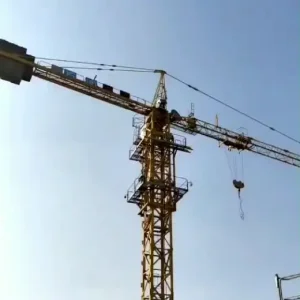
In modern high-density civil engineering and ultra-high-rise construction, jumping a tower crane—widely categorized under internal climbing systems and external telescoping cages—serves as the primary operational bottleneck and vertical transport backbone. The mechanical process of crane climbing demands uncompromising engineering rigour: shifting thousands of metric tons of dynamic overturning moments onto building cores or concrete shear walls through systematically spaced collar ties.
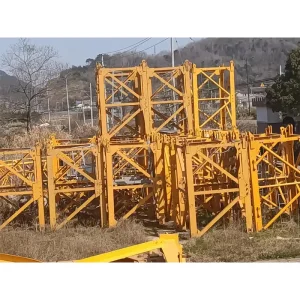
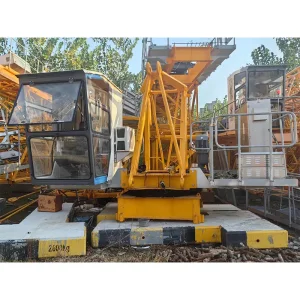
The standard jumping sequence executes in highly orchestrated phases. The internal climbing system utilizes structural collars braced against the floor openings of the elevator shaft or central concrete core. During telescoping operations, the crane's upper assembly (including cab, jib, slewing mechanism, and counter-jib) is unbolted from the mast column and hydraulically elevated via a climbing frame equipped with heavy-duty safety pawls and guide rollers. A new mast section is introduced into the open face of the climbing sleeve via a balance trolley, lowered onto the lower section, and secured using grade 10.9 or 12.9 high-tensile connection pins or pre-stressed bolts.
Equipped with high-pressure displacement pumps, mechanical ratchet safety latches, and hydraulic rupture valves that arrest uncontrolled descents in under 0.05 seconds during climbing cycles.
Fabricated using Q345B and Q460C high-strength manganese structural steels, non-destructively inspected via ultrasonic (UT) and magnetic particle testing (MT) to negate micro-crack fatigue.
Intelligent counterweight balancing systems combined with electronic moment load limiters ensure the mast stays under 4/1000 vertical plumb deviation across continuous supertall climbs.
Analyzing procurement cycles, used equipment capital efficiency, and global supply chain shifts from tier-one manufacturers.
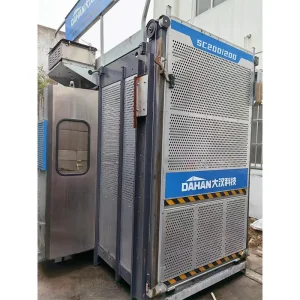
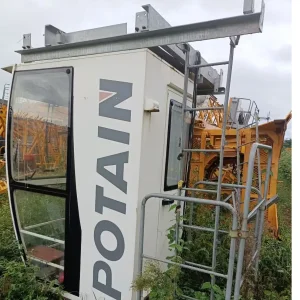
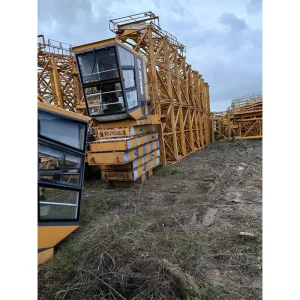
Across North America, Western Europe, the Middle East, and the Asia-Pacific region, construction contractors are confronting severe capital discipline challenges alongside prolonged equipment lead times. Brand-new climbing tower cranes from European OEMs often require 9 to 14 months of manufacturing and delivery timelines. Huaian Zhongqiang bridges this market gap by maintaining a ready-to-ship inventory of meticulously maintained machines from industry giants like Zoomlion, SANY, XCMG, Potain, Dahan, and Yongmao.
By securing inspected, late-model (YOM 2018–2023) equipment, global builders reduce upfront fleet capital expenditure by 45% to 65% while circumventing lead-time liabilities. Certified structural verification and factory-standard load-bearing tests ensure uncompromised operational uptime on complex commercial and infrastructure projects.
Mitigating legal, structural, and import hurdles across international boundaries through end-to-end provenance verification.
Every exported unit is issued with original manufacturer nameplate verification, maintenance history logs, metallurgic clearance reports, and complete bills of lading.
Structural alignments match EN 14439 European safety regulations, ASME B30.3 North American standards, and GB/T 5031-2019 Chinese manufacturing specifications.
Each dismantled component—from tie-back struts to electrical bus cables—is laser-etched and tagged with assembly indices, eliminating installation ambiguities.
Backed by our head office's National Level-2 Engineering Qualification and self-managed ocean cargo booking, preventing custom broker clearance bottlenecks.
From core-wall internal climbing in tight metropolitan plots to external tie-back configurations in coastal wind zones.
Deployment: Internal self-climbing within elevator shafts.
Advantage: Eliminates external perimeter obstacles, preserves city sidewalks, and reduces total mast section expenditures by over 60% compared to foundation-based towers.
Deployment: External telescoping with heavy-duty structural anchoring.
Advantage: Accommodates steep vertical climbs alongside variable-angle pylon profiles, equipped with custom articulated tie-backs resisting high wind shear.
Deployment: Pre-cast modular placement using flat-top configurations.
Advantage: Flat-top and hammerhead units operate within congested airspaces with overlapping jib radiuses, providing millimeter precision for boiler and generator drops.
The convergence of automated telemetry, zero-emission electrical hoists, and algorithmic climbing synchronization.
Integration of real-time tilt, pressure, and pin-displacement sensors communicating via industrial CAN bus, preventing human miscalculations during mast section insertions.
Continuous cloud monitoring of structural metal fatigue, cycle logging, and slewing torque anomalies, granting overseas site directors instant status dashboards.
Adoption of ultra-efficient PM motors across hoisting and slewing winches, decreasing energy consumption by 32% and enabling regenerative braking feed-in.
Robotic positioning collars and self-aligning hydraulic climbing arms that execute safe vertical jumps with zero personnel stationed in hazardous climb openings.
Addressing engineering specifications, dynamic loading requirements, and international trade protocols.
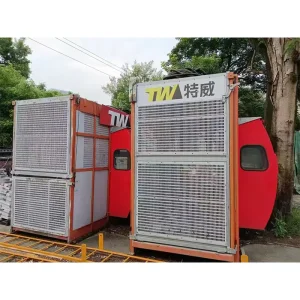
Explore late-model high-performance machinery from Zoomlion, SANY, XCMG, Tewei, and Gaoli, fully staged for global logistics.