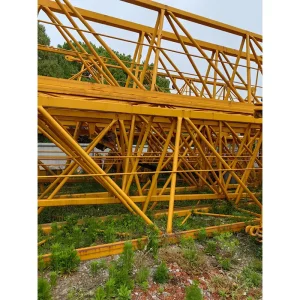
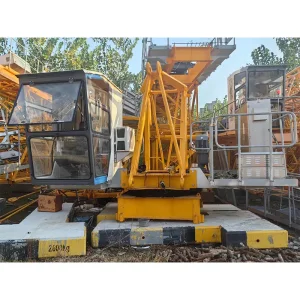
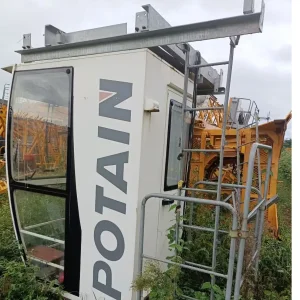
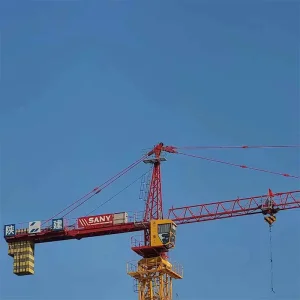
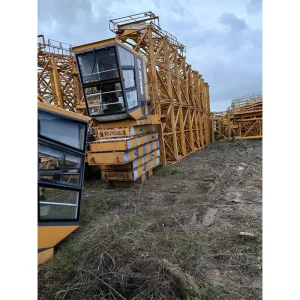
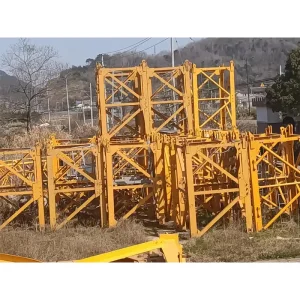
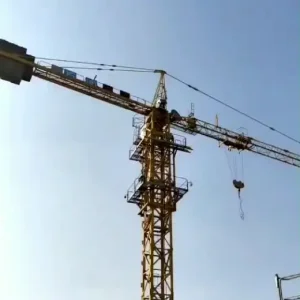
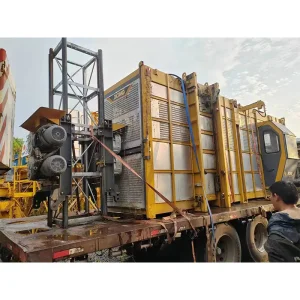
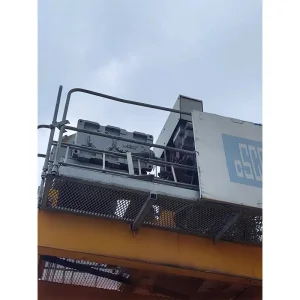
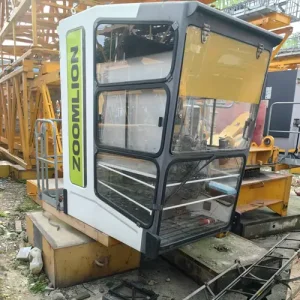
Pre-inspected topkit, flat-top, and hammerhead models featuring structural integrity certifications, calibrated moment limiters, and precision slewing rings.
Addressing the escalating demands of ultra-dense metropolitan skylines through higher capacity moments, internal climbing systems, and intelligent IoT load monitoring.
The global transition toward Prefabricated Pre-finished Volumetric Construction (PPVC) requires standard tower crane configurations to exceed traditional 6-10 tonne thresholds, expanding into 16-64 tonne heavy-lift classes capable of hoisting complete living pods without deflection strain.
Modern high-rise sites operate under tight electrical grid constraints. Modernized hoists and slewing drives leverage dynamic frequency-inverter systems (VVVF) with regenerative braking, trimming operational kilowatt consumption by up to 34% during heavy hook lowering cycles.
Super-tall buildings beyond 300 meters mandate optimized floor climbing and internal shaft anchoring. Hydraulic self-climbing mechanisms have evolved with automated laser-guided plumb-line checks, mitigating crane mast deflection caused by asymmetric wind shear at high altitudes.
How international Tier-1 general contractors, rental fleets, and developer consortiums balance capital expenditure (CapEx) against structural lifecycle safety.
| Evaluation Factor | Direct Factory Brand-New | Certified Late-Model (YOM 2018-2023) | Strategic Advantage for EPC Contractors |
|---|---|---|---|
| CapEx Amortization | 100% Capital Outlay | 40% - 60% Procurement Cost | Significantly improves project IRR without sacrificing OEM structural guarantees. |
| Lead Time to Site | 90 to 180 Days (Factory Queue) | Immediate Yard Inspection & Loading | Eliminates site idle times; ready for rapid mobilization on newly awarded contracts. |
| Depreciation Trajectory | Steep initial depreciation (30%/yr) | Stabilized secondary market curve | High terminal resale value post-project completion via established buyback programs. |
| OEM Parts Interoperability | Full OEM standard | Direct OEM interchangeability | Mast sections (e.g., L68, Mast 1.6m/2.0m) fit existing standard contractor inventories. |
Addressing structural interference, wind aerodynamics, and complex urban plot restrictions with purpose-engineered lifting configurations.
For high-density projects where multiple cranes overlap in airspace, flat-top models (without tie rods) allow closer vertical stacking, mitigating collisions and accelerating multi-hook cycle density.
Essential for downtown metropolitan projects with strict property boundary air rights. Jibs elevate up to 85° angles, eliminating encroachment over public transit lines and neighboring properties.
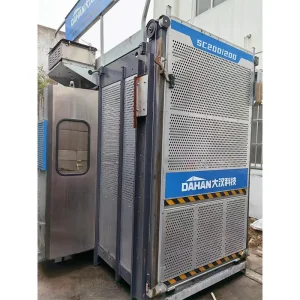
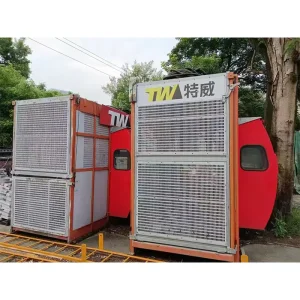
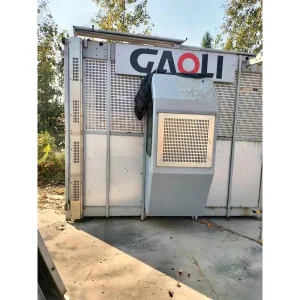
The SC200/200 series provides twin-cage, frequency-regulated transit at speeds exceeding 60 to 96 m/min, ensuring workers and materials reach levels past the 50th floor without site bottlenecks.
Custom-calculated wall attachments (bracing frames) engineered to transfer lateral building shear stress directly back to reinforced core walls during heavy monsoon or typhoon conditions.
Ensuring heavy lifting equipment complies with destination country statutory regulations before it departs the staging yard.
Equipped to satisfy CE (EN 14439), OSHA (USA 29 CFR 1926.1400), EAC (Eurasian Union), and Singapore MOM safety standards. Certified documentation, load moment charts, and manufacturer ratings are delivered alongside machinery.
Prior to shipment, every mast section, jib chord, pin connector, and slewing gear ring undergoes Ultrasonic and Magnetic Particle Testing (NDT) to verify the absence of microscopic metal fatigue or weld cracking.
Our loading crews handle disassembly, marine anti-corrosive coating, numbered marking for re-assembly, and heavy lashing inside 40HQ open-top, flat-rack, or break-bulk vessels to guarantee damage-free overseas transit.
Anticipating the technological transformation of heavy lifting from automated assist to tele-operated ground command centers.
Replacing traditional high-altitude operator cabins with air-conditioned ground-based simulation pods. 5G telemetry allows operators to command multiple cranes from a site office with zero blind spots using 4K multi-angle video feeds.
Algorithmic micro-adjustments in trolley and slewing motion counteract sudden wind gusts, automatically dampening hook oscillation in real time to prevent hook-load collision against building façades.
Embedded strain gauges and vibration sensors feed digital twins with real-time operational cycle logs, predicting component fatigue in slewing bearings and gear reducers before scheduled mechanical intervals.
Straight answers directly from our quality assurance and logistics engineering team.
Every crane undergoes comprehensive structural assessment at our 30+ acre facility in Huai'an. We perform Non-Destructive Testing (NDT) across high-stress zones including the turntable, mast base sections, climbing shoes, and jib chord welds. Ultrasonic flaw detectors ensure steel retains original structural load tolerances without micro-fissures.
Since all inventory is physically stocked in our Huai'an yard, units are marked, crated, and transported to major departure ports (such as Shanghai, Qingdao, or Lianyungang) within 7 to 12 days. Maritime shipping timelines range from 14 days (Southeast Asia) to 30-40 days (Europe, Middle East, and the Americas).
Standard Chinese OEM units operate at 380V/50Hz. For regions utilizing 440V, 460V, or 480V 60Hz systems (e.g., North America, parts of South America, and Saudi Arabia), our engineering team integrates step-up/step-down transformers or replaces frequency drive parameters to ensure full electrical compatibility.
Every shipment is accompanied by complete commercial export packages: original OEM nameplate verification, Certificate of Origin (COO), Bill of Lading, Packing Lists detailing every dismantled section, past maintenance history dossiers, electrical schematic books, and signed pre-shipment inspection certificates.
Explore high-capacity hammerhead cranes, ultra-tall luffing systems, and passenger hoists certified for rapid deployment across high-rise infrastructure projects.