
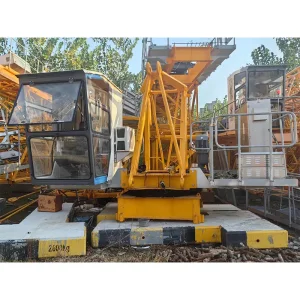
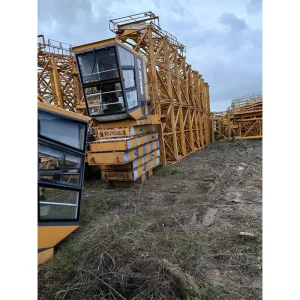
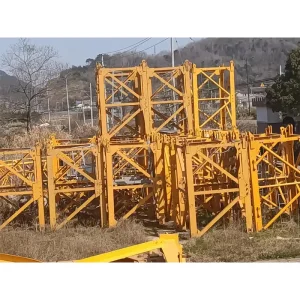
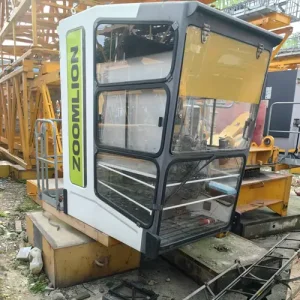
Selected ready-to-deploy tower cranes, bogies, and vertical lifting machinery stored in our 30+ acre facility, completely tested for rail-traveling stability and structural tolerances.
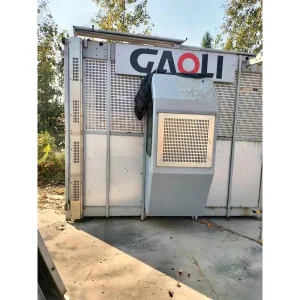
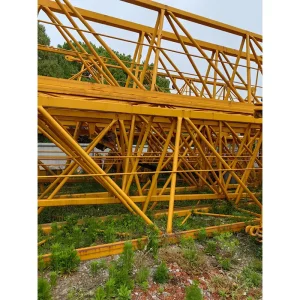
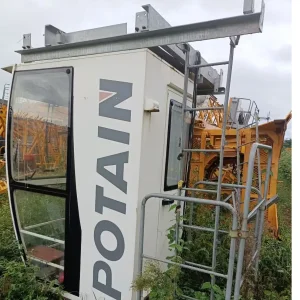
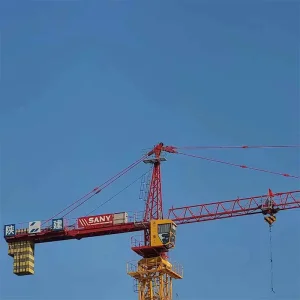
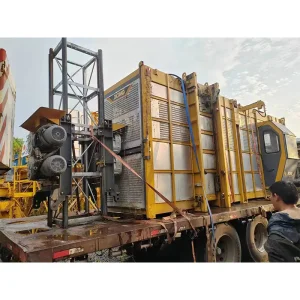
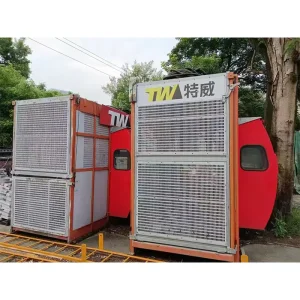
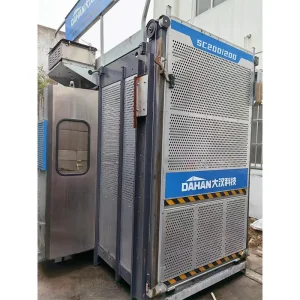
Transitioning from stationary anchor foundations to dynamic rail-traveling configurations: How rail-mounted tower cranes are redefining operational envelopes, material handling throughput, and capital utilization.
Modern traveling tower cranes utilize multi-wheel articulated bogies paired with automated anti-skew mechanisms. Precise alignment eliminates flange friction on curved or linear tracks, distributing structural shear loads evenly across reinforced concrete rail beds under full moment capacity.
ISO 4301 Class ComplianceStationary cranes require dedicated non-recoverable deadweight concrete foundation piles for every single spot. By mounting a heavy-capacity QTZ or MC crane on high-tensile steel rails, a single machine replaces up to three static cranes, radically lowering overall project expenditure.
Cost Optimization ArchitectureAdvanced frequency conversion (VFD) drive systems manage dual-bogie rail movement with millimetric landing accuracy. Smooth acceleration and deceleration damping algorithms prevent dangerous dynamic pendular jib swings, protecting both payload and the slew ring mechanism.
Zero-Jolt Motion ControlTier-1 infrastructure contractors and industrial developers balance lead times, structural reliability, and resale value. How sophisticated buyers audit rail-mounted lifting systems globally.
EPC firms demand ultrasonic inspection of chord seams and pinned connections. Zhongqiang supplies full material certificates, NDT test protocols, and clear historical logs for verified OEM machines (SANY, Zoomlion, Potain, XCMG).
Rail traveling bases and mast towers must fit within standard 40ft HQ or Open Top containers. Optimized component segmenting minimizes non-standard breakbulk freight charges across deep-sea voyages.
From maritime salt mist along coastal ports to sub-zero Nordic conditions, procurement engineers audit protective anti-corrosion marine paint systems, cold-grade Q345B/Q460 structural steel, and IP65 electrical consoles.
Procuring pristine late-model equipment (YOM 2018–2023) cuts initial capital investment by 45–60% compared to new factory-order machinery while retaining high secondary-market liquidity for future asset reallocation.
Why China has evolved into the world's epicenter for premium tower crane engineering, rail traveling base fabrication, and comprehensive aftermarket refurbishment ecosystem.
Chinese OEM giants like Zoomlion, XCMG, SANY, and Dahan have built fully automated "Lighthouse Factories". Main chord welds for tower sections and rail travel undercarriages undergo robotic submerged arc welding and magnetic particle testing for zero defect rates.
Ultra-High Fatigue EnduranceFrom slew bearings and planetary gearboxes to high-precision telemetry limiters, the manufacturing clusters in Jiangsu, Shandong, and Hunan provinces enable complete parts accessibility, rapid replacement dispatch, and zero manufacturing bottlenecks.
Integrated Parts NetworkAt Huaian Zhongqiang's 30+ acre facility, each rail-mounted crane undergoes strict restoration protocols: blast rust cleaning, two-pack polyurethane recoating, complete hydraulic cylinder resealing, and comprehensive load-moment validation.
National Level-2 CertifiedEngineered specifically for expansive industrial layouts where linear reach and uncompromised hook-time availability take precedence over static vertical lifting.
In modern precast yards, heavy pre-cast slabs and modular volumetric pods must be transported between curing chambers, raw materials beds, and truck bays. A rail-mounted tower crane traverses linear tracts smoothly, managing production yard handling without ground vehicle traffic interference.
Precast & Prefab InfrastructureDry docks and vessel retrofit wharves demand extreme outreach across vessel beams. Rail-mounted configurations provide long travel paths parallel to dry docks, enabling the installation of engine blocks, deck equipment, and hull plates across entire berth lengths.
Shipbuilding & Wharf OperationsLongitudinal construction projects like viaducts, lock gates, and hydro-electric dams benefit from linear traveling cranes. The tower crane glides as the structure progresses, ensuring uniform lifting accessibility without requiring continuous crane erection and breakdown.
Heavy Civil & Hydro ProjectsEvaluating design parameters, dynamic load factors, and foundation constraints to inform your jobsite engineering strategy.
| Evaluation Parameter | Rail-Mounted Traveling Crane | Static Anchored Tower Crane | Engineering Benefit |
|---|---|---|---|
| Operational Work Zone | Linear tract + 360° slew radius (Extensible up to 500m+) | Fixed radius circular coverage only | Single crane services entire site footprint |
| Foundation Requirements | Continuously reinforced ballast bed / steel sleepers | Mass concrete pad with sacrificial anchor stools | Eliminates deep piling and embedded chassis loss |
| Wind Load Resistance (In-Service) | Rated up to 20 m/s with integrated automatic rail clamps | Rated up to 20 m/s with fixed base anchors | Hydraulic wedge clamps guarantee absolute station-holding |
| Bogie Kinematics & Drives | Synchronized dual/quad bogies with VFD anti-skid motors | Non-applicable (Stationary structural base) | Precise inching control (<5 mm positioning tolerance) |
| Substructure Reusability | 100% reusable rails, ballast, ties, and bogie assemblies | 0% anchor bolt & concrete pad reusability | 大幅 reduces multi-year capital write-offs |
Premium OEM inventory checked across 128 points: weld integrity, slew bearing clearance, brake drums, limit switches, and control panels.

Direct technical answers from our chief engineers on rail installation, foundation engineering, electrical feeding, and safety certs.