Industrial Heavy Machinery Engineering White Paper

High-Quality Tower Crane Climbing Frame Suppliers & Factory

Precision-engineered hydraulic telescoping systems, structural climbing yokes, and OEM-compatible jacking cages for global high-rise vertical construction.

Technical Specification & Mechanics

Engineering Anatomy of the Tower Crane Climbing Frame

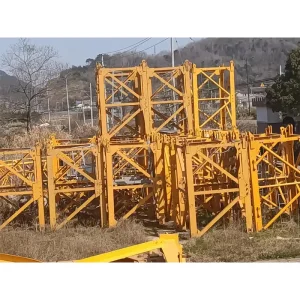
The telescoping climbing frame (jacking collar) represents the single most critical structural element during vertical crane elevation, transferring immense bending moments while inserting modular mast sections.

Structural Jacking Cage Assembly

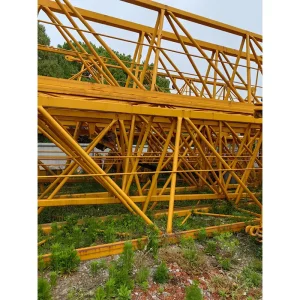
Constructed using low-alloy Q355B or Q420B structural box girders, the telescoping cage envelops the standard mast section. It features open-sided clearance to receive incoming mast units transported via the crane's trolley crane hook balance system.

  • High-precision machined guide roller tracks
  • Reinforced anti-buckling cross bracing
  • Integral operator maintenance platforms with toe-boards

Hydraulic Ram & Piston Propulsion

Integrated hydraulic cylinders operate with bore diameters ranging from 160mm to 220mm, providing upward thrusts of 400 kN to 800 kN. Dual pilot-operated check valves eliminate cylinder creep under full deadweight cantilever moments.

  • Continuous operating pressure up to 25–31.5 MPa
  • Chrome-plated micro-alloy piston rods
  • Proportional descent flow-control safety throttles

Climbing Pawls & Yoke Supports

Forged alloy climbing dogs (pawls) transfer the entire rotating superstructure weight onto the mast section climbing lugs. Heat-treated to 32–38 HRC, they ensure positive mechanical interlock during stroke reset cycles.

  • Gravity-assisted directional lock-pins
  • Fail-safe acoustic latch engagement switches
  • Multi-point load distribution across mast steps
Climbing Frame Metric QTZ80 / MC120 Standard QTZ160 / STT153 Class QTZ250 / MC320 Heavy Series Compliance Standards
Mast Section Dimensions 1.6m × 1.6m × 2.5m (L46 / L44) 1.8m × 1.8m × 2.8m (L68B / Mast) 2.0m × 2.0m × 3.0m (Mast K / 2m) ISO 4301-1 / FEM 1.001
Hydraulic Thrust Capacity 400 kN (40 Metric Tons) 630 kN (63 Metric Tons) 800 kN (80 Metric Tons) DIN 24342 Hydraulic Directive
Structural Steel Grade Q355B (Yield ≥ 355 MPa) Q355B / Q420B Low Alloy Q420B Normalized Killed Steel EN 10025-2 / ASTM A572
Permissible Jacking Wind Speed ≤ 12.5 m/s (Beaufort Scale 6) ≤ 12.0 m/s (Strict Interlock) ≤ 10.8 m/s (Gust Protected) EN 14439 C25 Criterion
Non-Destructive Testing (NDT) 100% Visual + 20% Ultrasonic 100% Visual + 50% UT Flange 100% Full-Penetration UT + MPI AWS D14.1 / EN ISO 17640
Global Market Analysis

Worldwide Industrial Dynamics: The Escalating Demand for Climbing Equipment

Urban vertical densification, prefabricated modular building (PPVC), and hyper-scale infrastructure have shifted the tower crane climbing frame from an occasional accessory to a mission-critical civil asset.

Precast Concrete Demands Heavier Jacking Capacities

The modern transition toward Precast Modular Construction (PPVC) demands tower cranes with tip lifting capabilities exceeding 2.5 to 5.0 metric tons at 60–75 meter jib radiuses. Cranes like the Zoomlion QTZ250 and Potain MC320 impose substantial bending moments onto the mast collar during jacking phases. Suppliers must deliver reinforced climbing cages that accommodate elevated horizontal reaction forces at the guide roller touchpoints.

Core Wall Internal Climbing vs. External Tie-Ins

In metropolitan clusters like New York, London, Singapore, and Seoul, zero-lot-line zoning renders external anchorage impossible. Contractors increasingly deploy internal floor-climbing frames positioned within elevator shafts. These specialized climbing collars transfer combined vertical crane weight and lateral slewing forces into structural concrete floor slabs, requiring automated hydraulic wedging frames and calibrated floor beam supports.

Manufacturing Superiority & Supply Chain Clusters

Why Sourcing from Chinese Factories Yields Decisive ROI

Concentrated industrial supply chains in Huai'an, Jiangsu, and neighboring manufacturing zones enable automated manufacturing, metallurgical uniformity, and rapid turnaround for both standard and customized climbing cages.

Robotic CNC Welding Automation

Massive robotic gantry welding units deliver deep, uniform weld penetration across large chord members. This eliminates human fatigue errors in multi-pass welds and ensures strict alignment tolerance (±0.5mm across diagonal faces).

Full Metallurgical Traceability

Every steel plate and hollow section sourced from top-tier mills (Baosteel, Shagang) comes complete with Mill Test Certificates (MTRs) detailing chemical heat numbers, Charpy V-notch impact values, and carbon equivalence ratings.

Integrated Ecosystem Density

From hydraulic high-pressure seals to precision-ground guide rollers and high-tensile Grade 10.9 connecting pins, all subcomponents are sourced within a 150km industrial radius, slashing procurement lead times by 50% compared to Western OEMs.

Rigorous Pre-Shipment Trial Jacking

Every climbing frame is test-assembled around dedicated calibration mast jigs. The hydraulic cylinders are pressurized to 125% of rated load, verifying smooth roller clearance, automatic pawl lock, and emergency flow limiter shutoff.

30+
Acres Dedicated Facility Yard
100%
Full Component NDT Weld Certified
45%
Average Global CAPEX Savings
50+
Global Seaports Seamlessly Served
Field Applications & Case Studies

Engineered for Demanding Job-Site Environments

From hurricane-prone coastal high-rises to high-altitude urban centers, our climbing systems operate with unyielding stability across diverse geographic realities.

Coastal High-Wind Climbing (GCC & SE Asia)

Challenge: Jacking a 12-ton capacity Zoomlion QTZ250 in coastal Abu Dhabi during seasonal gust transitions exceeding 11 m/s.

Solution: Equipped climbing cages with auxiliary hydraulic lateral guide clamps, clamping the mast section chords directly to prevent slewing oscillation during pin insertion.

Outcome: Zero downtime across 18 intermediate jumps up to a final hook height of 240 meters.

Internal Elevator Shaft Elevation (Seoul, Korea)

Challenge: Strict site boundary rules prohibited external mast anchorage during the erection of a 55-story mixed-use commercial tower.

Solution: Deployed an internal core-wall climbing collar system with automated hydraulic support wedges resting directly on concrete structural ring beams.

Outcome: Elevating cycle reduced from 6 hours to 3.5 hours per floor without external facade penetrations.

Multi-Fleet Cross-Compatibility Retrofit (Europe)

Challenge: A German equipment fleet rental operator owned multiple Potain and SANY cranes requiring unified climbing frames to reduce capital inventory.

Solution: Custom-engineered adjustable guide roller bolsters capable of switching between 1.6m and 2.0m mast section profiles with pinned adapter brackets.

Outcome: Fleet utilization climbed by 34%, eliminating redundant single-model jacking cages.

Industry Innovation & Roadmap

Technological Frontiers in Tower Crane Jacking Systems

The convergence of intelligent sensors, digital twin telemetry, and eco-friendly hydraulics is actively redefining safety benchmarks for tower crane climbing operations.

Automated Center-of-Gravity (CoG) Balancing

Next-generation climbing cages integrate wireless pressure transducers within the hydraulic cylinder foot and guide rollers. The system calculates true counterweight equilibrium in real time, locking the slewing brake only when tipping moments drop to absolute zero.

Digital Twin Structural Health Telemetry

Continuous-wave ultrasonic strain gauges installed at high-stress structural joints transmit stress cycles via 4G/5G industrial IoT gateways directly to the cloud. Maintenance teams receive automated notifications when cumulative fatigue thresholds approach 70%.

Biodegradable Synthetic Hydraulic Fluids

To comply with stringent EU and North American urban environmental run-off ordinances (EPA VGP / ISO 15380), our factory offers non-toxic, synthetic ester-based hydraulic systems. These fluids prevent groundwater contamination in high-density urban environments.

Procurement Quality Assurance

Factory Direct Procurement & Export Verification Workflow

Purchasing heavy machinery components overseas demands unwavering risk mitigation. Our four-stage quality assurance protocol guarantees seamless site integration upon arrival.

01

Technical Match Audit

Confirmation of mast chord dimensions, fishplate or pin connection types, hydraulic pump electrical ratings (380V/480V 50/60Hz), and local wind zone certifications.

02

FAT Testing & NDT Audit

Factory Acceptance Testing with calibrated ultrasonic flaw detection on main tensile welds, guide roller axial clearance validation, and pressurized hydraulic load holding.

03

Sea Containerization

Modular dismantling for 40' High Cube or Open Top containers. Machine parts are sandblasted, coated with two-pack epoxy zinc primer, shrink-wrapped, and lash-secured.

04

On-Site Commissioning

Provision of bilingual electrical schematics, hydraulic valve calibration manuals, remote video commissioning guidance, and immediate courier delivery of critical spare seals.

Authoritative Engineering FAQ

Frequently Asked Technical & Commercial Inquiries

Expert answers addressing the mechanics, structural safety parameters, compatibility standards, and export logistics of tower crane climbing systems.

What is the fundamental mechanical function of a climbing frame (telescoping cage)? +
A tower crane climbing frame (also called a telescoping or jacking cage) is a rigid steel structure surrounding the crane's mast. It contains hydraulic cylinders and climbing pawls that lift the entire slewing superstructure (cab, jib, counter-jib, and counterweights). This creates a physical opening equal to one mast section height, allowing an additional mast section to be rolled into place and bolted or pinned into the tower column, elevating the crane's working height.
How do you maintain balance during a tower crane telescoping operation? +
Superstructure balance is paramount. Prior to releasing the mast connecting bolts, the crane operator must trolley a predetermined counterweight or a new mast section to a strictly calculated balance radius. The crane's center of gravity (CoG) must align precisely with the hydraulic cylinder axis. Guide roller loads must read within specified tolerances (often zero moment on the slewing ring), preventing binding against the mast chords.
What are the maximum permissible wind speeds for tower crane climbing? +
Under international standards including EN 14439, FEM 1.001, and ANSI/ASME B30.3, climbing operations must cease immediately if wind speeds at jib height exceed 12.0 m/s to 12.5 m/s (approx. 45 km/h or Beaufort Scale 6). In heavy-lift cranes with long jibs (such as 70m jibs on Zoomlion QTZ250), factory guidelines often restrict jacking to wind speeds below 10.8 m/s to minimize aerodynamic drag moments.
Can one climbing frame be utilized across different brands of tower cranes? +
Yes, provided structural cross-sections and climbing step configurations are strictly aligned. For instance, cranes sharing identical 1.6m × 1.6m pin-connected mast dimensions (such as standard Potain L46/L44 sections and compatible Chinese OEM profiles like Dahan or SANY QTZ models) can share a climbing collar. However, the hydraulic cylinder thrust rating, stroke distance, guide roller hardness, and climbing pawl profiles must be verified by a certified structural engineer.
What is the difference between external climbing and internal climbing systems? +
External climbing involves adding mast sections via a jacking cage situated at the top of the tower, with the crane tied externally to the building facade using structural collars (tie-in frames). Internal climbing systems operate within a building's interior core or elevator shaft; the crane climbs upward through floors using lower and upper supporting collar beams resting directly on structural building slabs, eliminating the need for hundreds of meters of extra mast sections.
What metallurgical standards apply to factory-made climbing cages? +
High-quality climbing frames are constructed predominantly from Q355B or Q420B low-alloy structural steels (equivalent to European S355JR / ASTM A572 Grade 50). These materials deliver superior yield strength (≥ 355 MPa), exceptional Charpy V-notch impact toughness at -20°C, and excellent weldability. All principal welds are inspected using 100% Visual (VT) and full-coverage Ultrasonic Non-Destructive Testing (UT).
What safety fail-safes are integrated into the hydraulic jacking cylinder? +
Hydraulic climbing cylinders are equipped with hard-piped dual pilot-operated check valves (counterbalance valves) mounted directly onto the cylinder ports. In the event of a sudden hydraulic hose rupture or pump pressure failure, these valves immediately lock the oil inside the cylinder chamber, preventing any uncontrolled retraction or drop of the crane superstructure. Mechanical climbing pawls provide secondary, non-hydraulic positive mechanical locking.
How do Chinese factories achieve cost advantages without compromising safety? +
Cost efficiency originates from massive industrial scale and clustered supply chains. In Jiangsu and Shandong heavy machinery manufacturing clusters, raw structural steel, precision-forged guide rollers, custom-bore hydraulic cylinders, and advanced automated robotic welding cells exist within close proximity. This eliminates redundant transport costs, accelerates batch throughput, and lowers production costs by 40–50% compared to Western fragmented assembly plants.
What export documentation is provided for international customs and safety audits? +
Every shipment includes a comprehensive engineering dossier: Mill Test Certificates (MTRs) for raw steel heats, Non-Destructive Testing (NDT) weld reports, hydraulic system pressure calibration certificates, Certificate of Origin (Form E, CO, etc.), Commercial Invoice, detailed Packing Lists with individual component weights and dimensions, and the original manufacturer CE / ISO declaration of conformity.
How is a large climbing frame packaged and secured for containerized sea transit? +
Climbing frames are designed as modular bolt-assembled structures. They can be broken down into four planar panels to fit into standard 40-foot High Cube (40HC) or 40-foot Open Top (40OT) containers. All precision-machined guide roller pins, cylinder rods, and electrical valves receive anti-corrosion grease and protective vapor-corrosion-inhibiting (VCI) wrap. Internal steel structural lashings prevent shift during ocean transit.
Complete Equipment Fleet Catalog

Heavy Hoisting Units & Industrial Elevators

Explore our export-ready equipment inventory, fully compatible with standardized and custom-engineered telescoping climbing frames.
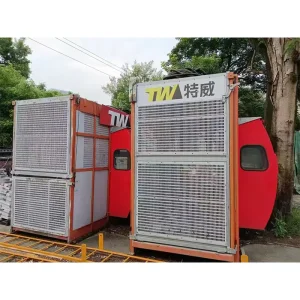
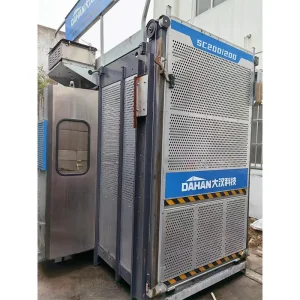
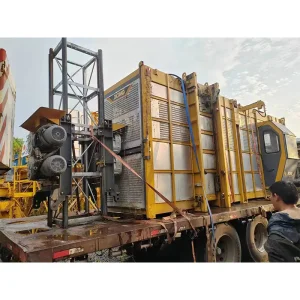
Best TEWEI SC200/200 YOM 2019-2023 Manufacturer, Manufacturers
TEWEI · Construction Hoist
Best TEWEI SC200/200 YOM 2019-2023 Manufacturer, Manufacturers
Request Spec Sheet
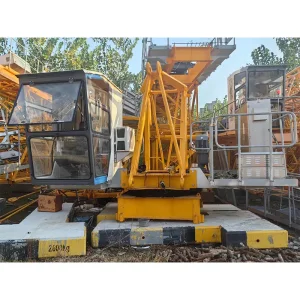
Cheap POTAIN MC320-12 YOM 2019-2023 Supplier, Exporter
POTAIN · 12-Ton Heavy Duty
Cheap POTAIN MC320-12 YOM 2019-2023 Supplier, Exporter
Request Spec Sheet
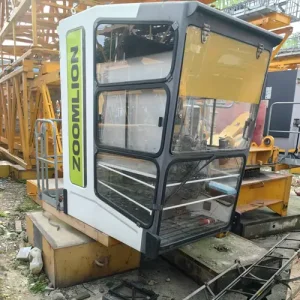
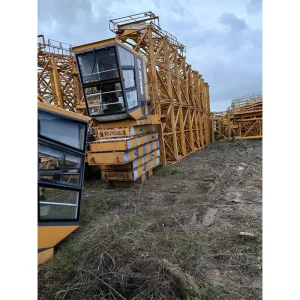
China ZOOMLION QTZ200 7020-12 YOM 2019-2023 Manufacturers, Exporter
ZOOMLION · 70m Jib Reach
China ZOOMLION QTZ200 7020-12 YOM 2019-2023 Manufacturers, Exporter
Request Spec Sheet
Cheap XCMG SC200/200 YOM 2019-2023 Manufacturers, Suppliers
XCMG · Variable Speed Lift
Cheap XCMG SC200/200 YOM 2019-2023 Manufacturers, Suppliers
Request Spec Sheet
Best XCMG QTZ100 6013-6 YOM 2019-2023 Manufacturers, Supplier
XCMG · High-Efficiency Crane
Best XCMG QTZ100 6013-6 YOM 2019-2023 Manufacturers, Supplier
Request Spec Sheet
Wholesale DAHAN QTZ100 6013-6 YOM 2019-2023 Manufacturer, Suppliers
DAHAN · High-Speed Winch
Wholesale DAHAN QTZ100 6013-6 YOM 2019-2023 Manufacturer, Suppliers
Request Spec Sheet
China ZOOMLION QTZ250 7025-12 YOM 2019-2022 Factories, Exporter
ZOOMLION · Heavy Lift Series
China ZOOMLION QTZ250 7025-12 YOM 2019-2022 Factories, Exporter
Request Spec Sheet
Wholesale YONGMAO STT153 7015-10 YOM 2019-2023 Manufacturers, Exporters
YONGMAO · Flat Top Design
Wholesale YONGMAO STT153 7015-10 YOM 2019-2023 Manufacturers, Exporters
Request Spec Sheet