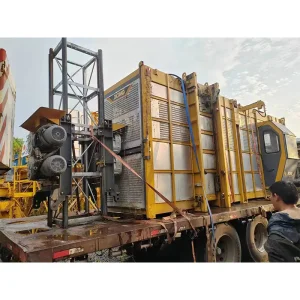
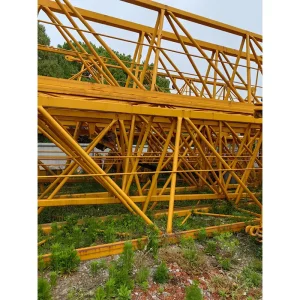
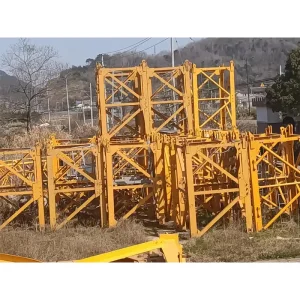
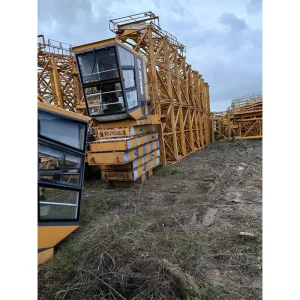
Factory-inspected, structural NDT-cleared machinery ready for deployment worldwide.
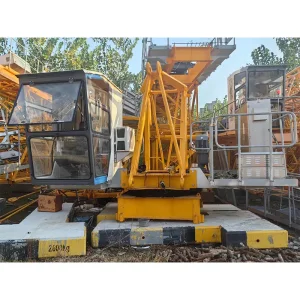
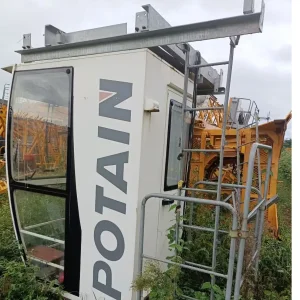
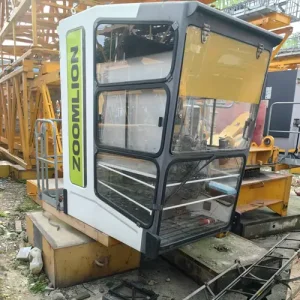
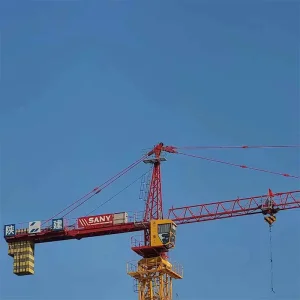
Decoupling equipment life cycles from project risk through high-integrity remanufacturing and technical validation.
Navigating global lifting projects requires equipment that withstands dynamic stress, high wind sheer, and intensive operating cycles. High-quality Soima cranes and tier-1 OEM counterparts demand metallurgical resilience, low-tolerance pin connections, and rigorous quality verifications from certified manufacturing yards.
Global general contractors face a bifurcated market: capital expenditure constraints on brand-new machinery versus operational risks in unchecked secondary assets. Our engineering architecture bridges this gap by enforcing multi-point ultrasonic weld testing, non-destructive testing (NDT), and documented operational histories.
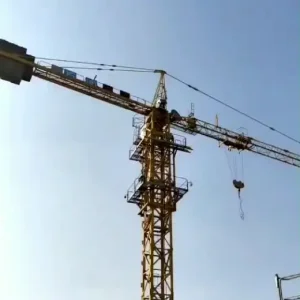
Modern lifting demands precision hoisting kinematics. Whether managing hammerhead jib profiles or flat-top modular extensions, structural safety relies on electronic moment limiters, micro-inverter slewing controls, and dynamic anti-collision algorithms designed to maximize site safety.
The convergence of industrial automation, standardized tooling, and large-scale manufacturing infrastructure.
Factory 4.0 production bases implement automated twin-wire submerged arc welding systems for mast chords and web members, eliminating micro-voids and achieving structural grain uniformity across critical stress sections.
Advanced corrosion mitigation utilizes automated centrifugal shot-blasting systems meeting Sa 2.5 cleanliness standards, followed by multi-layer epoxy-polyurethane electrostatic coatings designed for offshore and desert environments.
Structural steels (Q355B to Q460D) undergo spectral chemical verification and impact testing at -20°C, providing end-to-end mill certification (EN 10204 Type 3.1) from smelting through precision boring.
Leveraging high-density manufacturing clusters in Jiangsu, Zhejiang, and Shandong, our hub operations eliminate tier-2 sourcing lead times, maintaining stock readiness across electrical, hydraulic, and structural assemblies.
Pioneering digital twins, modular variable frequency drive topologies, and remote diagnostics for modern urban construction.
Next-generation Soima and top-tier tower cranes are shifting from passive status loggers to active digital twin telematics. Real-time strain gauge data, wind-vector fluctuations, and motor temperature curves are continuously transmitted to cloud platforms, predicting mechanical degradation before failure thresholds are breached.
As mega-projects emphasize net-zero construction footprints, heavy hoisting systems now integrate active front-end (AFE) variable frequency drives. Potential energy released during load descent is converted to clean electric power, fed back into local site grids to reduce operational consumption by up to 32%.
By pairing stereoscopic vision with high-precision inertial measurement units (IMUs), automated anti-sway algorithms adjust trolley acceleration and slewing vectors in real time, dampening load pendulum motion and enabling safe blind lifts in complex urban layouts.
Engineered lifting systems matching specific load paths, hook speeds, and foundation constraints.
Inner-city skyscraper execution demands compact flat-top and luffing-jib cranes with zero jib overhang interference. Our engineered solutions provide precise slewing limits, external climbing frames, and balanced anchor designs that protect core architectural structures.
Large-scale hydro dams, nuclear power stations, and suspension bridges demand high-tonnage hook lifting (12t to 32t) at extended radii (70m to 80m). We engineer custom foundation undercarriages, cross-chassis configurations, and long-line drum spooling for deep work envelopes.
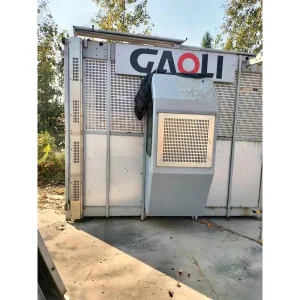
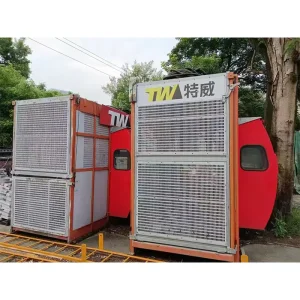
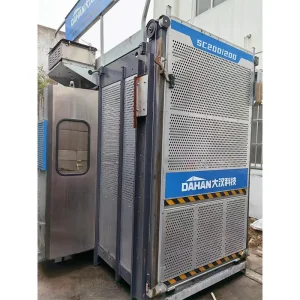
The rise of prefabricated prefinished volumetric construction requires high-capacity hook precision. Our SC200/200 twin-cage hoists and high-moment hammerhead tower cranes deliver millimeter-level placement, speeding up modular assembly cycles.
Managing overseas acquisition through multi-standard engineering validation and risk-mitigated supply chains.
Every inspected unit complies with destination-market standards, including European EN 14439, FEM 1.001 load factor calculations, CE-conformity declarations, and ASME/OSHA North American safety codes, ensuring immediate job-site commissioning.
Heavy machinery handling requires technical logistics. Mast sections, jib lattices, counterweights, and slewing rings are marked, match-drilled, and strapped into 40' High Cube or Flat Rack containers using heavy steel bracing and vapor corrosion inhibitor (VCI) protection for sea voyages.
We provide comprehensive field manuals, electrical schematics, hydraulic climbing schematics, foundation civil load calculations, and real-time remote video support for overseas installation, climbing operations, and proof-load testing.
Essential data points every equipment director must review before contract execution.
Standard nomenclature (e.g., QTZ100 6013-6 or POTAIN MC320-12) encapsulates essential mechanical capabilities:
Never accept secondary heavy machinery without verifying these core components:
Direct, engineering-backed answers addressing common structural and logistical concerns.
Factory-verified, ready for immediate loading from our Huai'an yard to global deep-water ports.