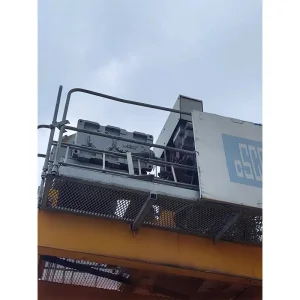
Inspected and verified late-model lifting mechanisms engineered for high-density metropolitan footprints, heavy precast placement, and mission-critical industrial construction.
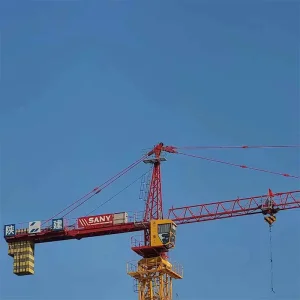
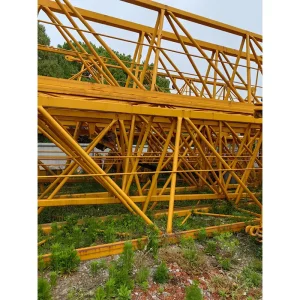

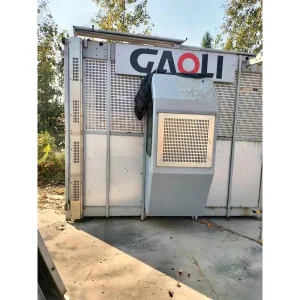
As hyper-dense urban clusters expand horizontally and vertically, modern construction demands heavy hoisting mechanisms capable of mitigating air rights infringements and site geometry restrictions.
In dense urban centers like London, Singapore, Tokyo, and New York, standard horizontal hammerhead or flat-top jibs infringe on neighboring air boundaries, causing legal stop-work injunctions. Mobile luffing cranes adjust working angles from 15° to 85°, restricting swing profiles within project property lines while delivering immense hook height.
Industrialized precast volumetric construction (PPVC) modules require rapid capacity at high radii. Mobile luffing systems deliver steep hoist rope entry angles, preventing side-loading stress on precast shear keys and façade panels, optimizing installation speeds by up to 34% compared to conventional fixed-arm units.
Brownfield refinery revamps and power plant maintenance often occur within congested industrial corridors crowded with piping racks, cooling towers, and live equipment. The luffing boom circumvents aerial obstacles by articulating over operating units, reducing shutdown durations during turnaround phases.
On megaprojects requiring four or more cranes on a shared foundation pad, standard crane jibs risk catastrophic line cross-overs. Luffing cranes luff out of collision vectors dynamically, minimizing vertical separation requirements between jibs and saving thousands in foundation mast tie-in steel.
An authoritative engineering exploration into the drive mechanics, safety telemetry, and lifecycle thermodynamics of modern mobile luffing lifting assets.
Procuring capital lifting assets across the international heavy construction landscape requires understanding structural mechanics, drivetrain dynamics, and regulatory compliance. The Mobile Luffing Crane (alternatively designated as luffing-jib mobile or articulated luffing tower crane) combines the vertical clearance efficiency of tower luffers with the fast deployment of modular mobile undercarriages. This hybrid capability resolves the central conflict of high-density metropolitan lifting: maximizing hook hook-weight capacity while minimizing swing radius footprint.
In mobile luffing crane architectures, two primary mechanism variants dictate boom elevation: hydraulic ram articulation and high-torque rope-winch reeving. Hydraulic luffing configurations rely on heavy-bore, chrome-nickel-plated telescoping cylinders with integrated counterbalance check valves. This design offers high operational rigidity, dampening hook bounce and wind flutter during critical picks. The absence of multi-fall luffing reeving lines eliminates cable scrubbing and fleet angle discrepancies along drum flanges, substantially reducing maintenance costs.
In contrast, rope-drum winch systems utilize variable-frequency drive (VFD) motors coupled to planetary gearboxes with multi-disc wet brakes. Winch-driven luffing mechanisms reduce deadweight on top boom sections, enabling extended reach spans (up to 60m–75m) and improved high-altitude tip loads. With closed-loop flux vector frequency control, our engineered crane platforms transition smooth elevation runs from 15° to 85° in under 90 seconds while eliminating transient shock loads on the slewing ring and chassis frame.
Operational safety during high-radius picks depends on raw material selection. Modern chassis and mast structures integrate fine-grain high-strength low-alloy structural steels, including Q355NE, Q460D, and Q690D/E, formulated with micro-alloying elements like Niobium (Nb) and Vanadium (V) for low-temperature notch impact toughness down to -40°C.
Evaluating capital procurement versus certified late-model equipment (YOM 2018–2023) is central to contractor profitability. Procuring brand-new premium European units often involves 8 to 14 months of manufacturing lead times and steep early depreciation. In contrast, sourcing tier-one certified refurbished equipment through an authorized Chinese engineering yard yields 40% to 55% direct Capex reduction while preserving 90%+ structural design lifecycle hours.
Because major Chinese OEMs (Zoomlion, SANY, XCMG) employ modular, standardized components (including Schneider/ABB switchgear, Hirschmann/PAT load moment computers, and Rexroth hydraulics), global parts replacement costs remain predictable. Fast-wear items—such as slewing pinions, brake linings, rope sheaves, and hydraulic seal kits—are universally cross-referenced, avoiding proprietary supply lockouts and lowering total lifecycle expenditures.
Exploring the evolution of intelligent load monitoring, hybrid electric powertrains, dynamic digital twin architectures, and automated anti-collision control.
Modern luffing crane lines incorporate 5G edge computing gateways reading CAN-bus J1939 telemetry. Sensor arrays track slewing bearing wear, motor temperature profiles, dynamic line tension, and hook vibration in real time, projecting accurate Remaining Useful Life (RUL) estimates directly to fleet management dashboards.
To meet strict European Tier 5 and California CARB emissions standards in city centers, new luffing drive generations combine onboard Stage V diesel generator banks with 400V/800V high-density lithium iron phosphate (LiFePO4) storage batteries. This hybrid setup cuts job site carbon emissions by 40% while enabling quiet nighttime operation.
Multi-point LiDAR units synchronized with RTK-GNSS positioning map dynamic site geography in centimeters. The system creates automatic virtual keep-out corridors around high-voltage utility lines, rail paths, and neighboring structures, overriding manual controls if structural safety thresholds are approached.
Meeting complex international safety codes and customs requirements through rigorous pre-shipment inspections and accredited third-party verification.
Every supplied unit complies with EN 14439, FEM 1.001 (A3–A5 classification), and OSHA 1926.1400 standards. Structural stability, rated load charts, proof load tests (125% dynamic, 140% static), and fail-safe dual-channel brake setups are fully documented to satisfy site inspections across any sovereign jurisdiction.
We coordinate transparent third-party inspection audits with international testing authorities such as SGS, TÜV Rheinland, Bureau Veritas (BV), and DNV. Buyers receive complete engineering dossier packets containing steel heat test certificates, MPI weld records, electrical safety readouts, and operational video logs prior to export release.
Our logistical engineering yard coordinates teardowns, part numbering, and protective corrosion preservation for long ocean voyages. Components are carefully routed into 40' High Cube containers, 40' Flat Racks, or dedicated Breakbulk vessel holds using certified high-tensile lashing chains, anti-abrasion cradles, and desiccant packs.
Detailed answers covering kinematics, lifecycle audits, regulatory compliance, and worldwide shipping logistics.
Explore late-model construction hoists, hammerhead cranes, and high-capacity equipment prepared for immediate global dispatch from our central logistics facility.