Pre-inspected topkit, flat-top, and construction hoists ready for immediate maritime consolidation and job-site commissioning.
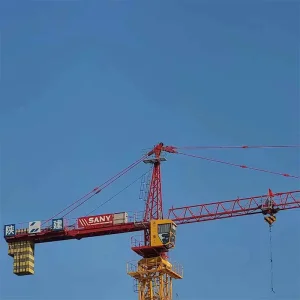
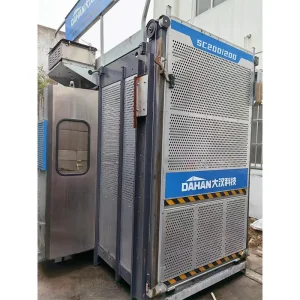
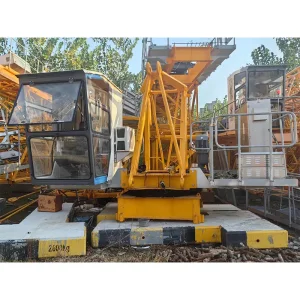
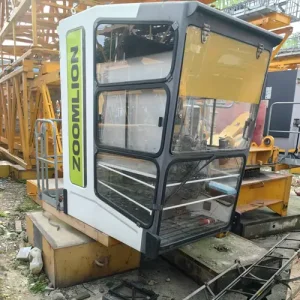
Bridging Chinese Tier-1 manufacturing intelligence with rigorous overseas engineering protocols and transparent procurement auditing.
In modern high-density civil engineering, bridge superstructure fabrication, and modular skyscraper construction, structural lifting integrity governs both critical-path schedules and overall site safety. Huaian Zhongqiang International Trade Co., Ltd. (operating from a dedicated 30+ acre logistics and refurbishment yard in Huai'an, Jiangsu, China) stands as a premier supply chain authority for tested, documented, and globally deployed crane lifting machinery. Established with direct Chinese National Level-2 Construction Machinery Qualifications and autonomous import/export operational rights, Zhongqiang solves the fundamental friction of cross-border heavy equipment procurement: eliminating the information asymmetry between original equipment manufacturers (OEMs) and international general contractors.
The contemporary lifting sector requires far more than mere metal trading; it demands absolute traceability of Year of Manufacture (YOM 2018–2023), structural fatigue lifecycle auditing, ultrasonic weld flaw analysis, and complete component verification across leading global brands including XCMG, Zoomlion, SANY, Potain, DAHAN, Yongmao, Gaoli, and Tewei. By maintaining extensive physical stock on our 30+ acre facility rather than brokering third-party inventory, our international trade engineering group validates slewing ring tolerances, hoist drum reeving geometry, and motor insulation impedance before dispatching machinery across more than 50 major international ports.
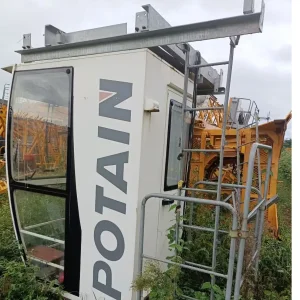
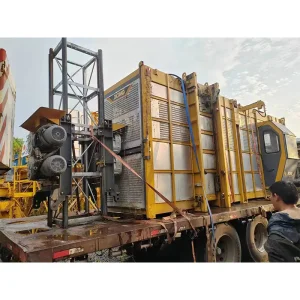
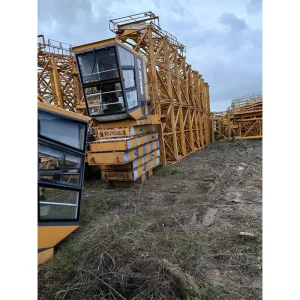
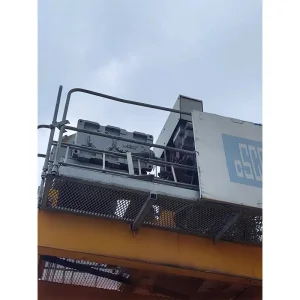
Full-scale physical facility in Huai'an, Jiangsu, housing complete topkit, topless, and hoist assets ready for on-site or live video inspection.
Officially licensed construction engineering and machinery enterprise operating direct manufacturer-to-port pipelines without middlemen.
Concentrated supply of YOM 2018–2023 platforms preserving maximum residual structural life and modern safety PLC architectures.
Experienced heavy-lift multimodal logistics handling container packing, flat racks, bulk shipping, and verified customs documentation.
How hyper-scaled manufacturing ecosystems deliver uncompromising steel metallurgy and rapid component interchangeability.
Chinese OEM crane manufacturing operates at the pinnacle of high-yield structural steel chemistry. Tower mast chords utilize normalized Q355B to Q460 high-tensile manganese alloy structural tubing. Compared to conventional mild steels, these alloys exhibit yield strengths exceeding 460 MPa, ensuring exceptional structural elastic deformation resistance under combined axial wind buffeting and torsional eccentric loading.
Modern Chinese crane factories (XCMG, Zoomlion, SANY, DAHAN) utilize computerized multi-axis robotic gantry welders. Fillet welds on mast chords and internal diagonal lacings are executed in controlled inert gas environments, virtually eliminating weld porosity, undercut defects, and localized hydrogen embrittlement while yielding uniform penetration profiles across full weld seams.
Standardized high-tensile pin-connection geometries (such as the standard 1.6m and 2.0m mast configurations) enable cross-compatibility and fast mast interchangeability. Precision CNC horizontal boring mills machine pin ears to micron-level clearances, preventing mast twist, joint fretting, and pin binding during telescoping climbing operations.
| Evaluation Parameter | Zhongqiang Late-Model Fleet (YOM 2018–2023) | Newly Commissioned Western OEM Units | Unregulated Gray-Market Secondary Units |
|---|---|---|---|
| Capital Expenditure (CAPEX) | 35% – 50% of Factory New (Peak ROI efficiency) | 100% (High capital lockup, heavy financing cost) | 20% – 30% (Severe hidden structural defect risk) |
| Lead Time to Port / Transit | Immediate Stock (Consolidation in 7–14 Days) | 6 to 14 Months manufacturing backorder queue | Unpredictable (Requires extensive rework) |
| Structural Fatigue Life Remaining | 80% – 92% Design Life verified via NDT Metrology | 100% Full Design Fatigue Envelope | Unknown; frequent unrecorded micro-cracking |
| PLC & Safety Architecture | Digital VFD, dynamic load moment indicators (LMI) | Digital proprietary locked firmware systems | Obsolete contactor controls, spliced wiring |
| Global Spare Parts Availability | Universal OEM component interchangeability | Long lead-time proprietary replacement modules | Discontinued assemblies, non-standard parts |
Transitioning from mechanical lifting apparatuses to sensorized, telemetric cyber-physical construction robotics.
Late-model cranes deployed by Huaian Zhongqiang integrate CAN-bus telemetric transceivers. Dual-axis inclinometers, fiber-optic strain gauges on the mast heel, and digital wind anemometers transmit live kinematic telemetry to cloud dashboards. Fleet managers monitor hoisting torque, slew velocity damping, and cumulative stress cycle fatigue calculations in real time.
Multi-crane high-rise construction clusters require millimeter-accurate boundary fencing. Modern anti-collision systems dynamically compute spatial vectors across intersecting jib radii. If an operator breaches pre-configured safety corridors near neighboring structures or overhead high-voltage lines, the control unit overrides joysticks to decelerate and brake slewing drives smoothly.
Advanced closed-loop variable frequency drives (VFD) from Inovance and Schneider eliminate hydraulic shock in hoisting winches. During heavy load lowering, kinetic potential energy is channeled via regenerative braking modules back into the site electrical bus, reducing overall generator diesel fuel consumption by up to 28% while providing micrometer hook placement control.
Permanent acoustic emission transducers detecting localized metal crystalline micro-strain along jib chords before weld cracks manifest physically.
LiDAR-guided camera vision systems suspended directly above the hook block providing blind-lift artificial horizon alignment and automated collision avoidance.
High-voltage lithium-ion capacitor buffer banks smoothing utility peak load demands, allowing high-tonnage cranes to run on constrained temporary site grids.
Ground-based climate-controlled operator cockpits leveraging ultra-low latency 5G data links, removing crane drivers from elevated hazard envelopes entirely.
Matching specific moment-ratings, jib profiles, and winch line speeds to demanding global job sites.
Urban vertical construction demands compact slewing radiuses and high-capacity internal climbing systems. Models like the Potain MC120-6 and Zoomlion QTZ200 (7020-12) provide agile slewing kinematics within restricted airspaces. Telescoping hydraulic climbing frames allow the crane to anchor within elevator core shafts, climbing sequentially with the concrete core walls up to heights exceeding 300 meters without requiring external floor-mounted footprint allowances.
Volumetric modular construction requires lifting multi-ton precast bathroom pods and structural floor cassettes with zero hook bounce. The Zoomlion QTZ250 (7025-12) and Potain MC320-12 provide flat load-curve moment ratings (2500 kN·m) and tip capacities of 2.5 tons at an expansive 70-meter radius. Operators execute sub-millimeter landing tolerances utilizing micro-speed hoisting modes, minimizing damage risks to architectural precast panels.
Turbine installation hubs and hydroelectric spillways require extreme concentrated lifting over massive structural radii. Heavy-class topkit cranes from Yongmao (STT153 7015-10) and Zoomlion deliver the rigidity needed to hoist substation transformers, penstock pipe assemblies, and generator stator segments. Heavy-duty chassis foundation anchors are engineered to resist cyclic seismic and gale-force wind overturning moments.
Vertical workforce throughput dictates tower construction velocity. Our certified twin-cage construction hoists (DAHAN, XCMG, Gaoli, and Tewei SC200/200) lift up to 2×2,000 kg (or 48 workers) at speeds up to 46 meters per minute. Equipped with hot-dip galvanized mast towers, dual SAJ40 anti-drop progressive safety governor devices, and overload limiters, these machines ensure zero-downtime vertical transit under continuous duty cycles.
How Tier-1 general contractors, rental fleet houses, and infrastructure consortia evaluate used heavy lifting equipment.
Enterprise procurement directors cannot afford structural failure risks. When assessing pre-owned tower cranes and hoists from overseas markets, rigorous mechanical qualification must replace marketing claims. Huaian Zhongqiang executes a documented 128-Point Quality Inspection Checklist covering every major structural, electro-mechanical, and safety subsystem before any crane is approved for international shipping:
Visual and Magnetic Particle Testing (MT) across primary jib chord root welds, mast base tie-in ears, counter-jib pivot pins, and A-frame apex weldments. We inspect all structural chords for residual plastic deformation, corrosion pitting depth, and fatigue striations according to ISO 4301 Class A4–A6 standards.
Micrometer dial gauge clearance testing on the double-row ball slewing ring to guarantee axial and radial play remain well within OEM operational tolerances (<0.8 mm). Slew ring high-strength grade 10.9 and 12.9 bolts undergo hydraulic torque calibration to eliminate fatigue shearing risks during heavy slewing deceleration.
Megger insulation resistance testing on hoist, trolley, and slewing electric motor stator windings (>50 MΩ). Hoist drum grooving, wire rope fleet angles, automatic disc brake shoe wear, electromagnetic release mechanisms, and planetary gearbox oil viscosity are inspected, flushed, and renewed.
Navigating global regulatory certifications and heavy out-of-gauge (OOG) shipping containerization.
We configure machinery packages to align with international regulatory jurisdictions: European Machinery Directive 2006/42/EC and EN 14439 for tower cranes, North American OSHA 1926.1400 / ASME B30.3, Singapore MOM SS 559, and Eurasian EAC TR CU 010 safety requirements. We supply complete electrical schematics, translated operator manuals, and manufacturer safety certificates.
Tower cranes cannot simply be loaded as loose freight. Our in-house yard rigging crews strategically nest crane assemblies into standard 40ft High Cube (HC) containers, open-top (OT) units, and 40ft Flat Racks (FR). Slewing tables and climbing cages are secured with marine-grade steel turnbuckles and timber dunnage to prevent transport friction wear during high-sea rolling.
Direct ownership of foreign trade operating rights enables Huaian Zhongqiang to issue complete original export dossiers under our corporate entity: Commercial Invoices, Bill of Lading (B/L), Certified Packing Lists, Certificate of Origin (Form E, CO, etc.), and Verified Gross Mass (VGM) certificates, preventing port demurrage delays.
Explore additional certified tower cranes and rack-and-pinion builder hoists from leading manufacturers.
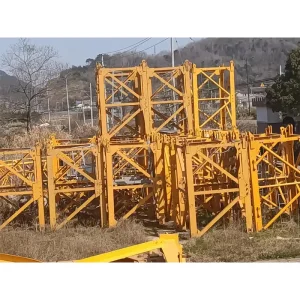
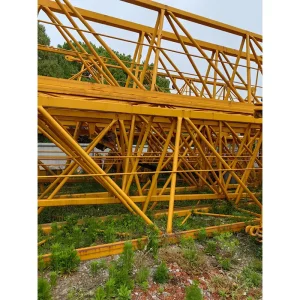
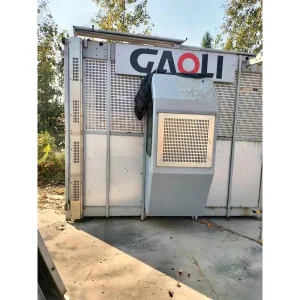
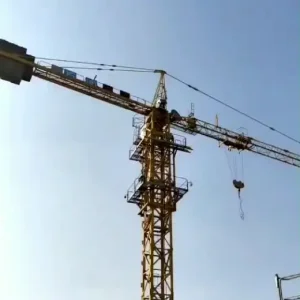
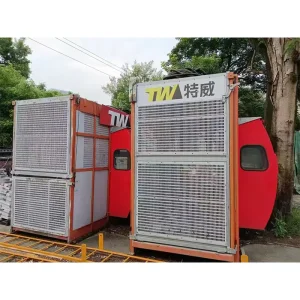
Comprehensive engineering clarifications addressing customs, structural fatigue, and maritime logistics.
YOM stands for Year of Manufacture. Unlike brokers who re-spray and misrepresent machine age, Huaian Zhongqiang verifies every machine against the embossed metal OEM chassis nameplate and matching manufacturer factory dispatch records. Our core inventory focuses on late-model units manufactured between 2018 and 2023, ensuring up to 90% remaining structural design life under standard FEM 1.001 classifications.
Our in-house quality inspection department conducts non-destructive testing (NDT), including Magnetic Particle Inspection (MPI) and Ultrasonic Testing (UT) on high-stress areas: mast root welds, slewing platform chassis, counter-jib tie rods, and hook crossheads. Any mast section displaying pin-ear elongation greater than 0.8 mm or chord wall-thickness loss exceeding 5% is immediately rejected and recycled.
Cranes are dismantled by our certified riggers into logical modular packages. Standard 60-meter jib units (like the QTZ100 or MC120) typically pack into 2 to 3 standard 40ft High Cube containers plus 1 Open Top container or Flat Rack for oversized slewing assemblies. Jibs and counter-jibs are nested and lashed with heavy-gauge steel cables, turnbuckles, and industrial marine moisture desiccants to prevent high-sea corrosion.
As a holder of direct Chinese autonomous import and export rights, we issue complete original documentation under Huaian Zhongqiang International Trade Co., Ltd. This includes the Commercial Invoice, Certified Packing List, Clean On-Board Ocean Bill of Lading, Certificate of Origin (such as CO, Form E, or EUR.1), Factory Test Certifications, and third-party NDT Inspection Reports.
Yes. International contractors are welcome to visit our 30+ acre warehouse and testing facility in Huai'an, Jiangsu, China. Additionally, buyers frequently commission accredited global inspection agencies such as SGS, TÜV, or Bureau Veritas to conduct pre-shipment sign-offs. We also facilitate live real-time video inspections, demonstrating active motor tests, brake tests, and dimensional caliper measurements.
Chinese national crane nomenclature is highly structured. For example, in QTZ100 (6013-6): "QTZ" denotes a self-erecting climbing tower crane; "100" signifies a nominal rated load moment of 1,000 kN·m; "60" represents a maximum operating jib radius of 60 meters; "13" denotes a tip load capacity of 1.3 metric tons at the 60m tip; and "-6" designates the absolute maximum gross hook lifting capacity of 6.0 metric tons.