Pre-inspected topkit, flat-top, and vertical hoist models with fully verified nameplate data, load chart certification, and immediate global port dispatch capability.
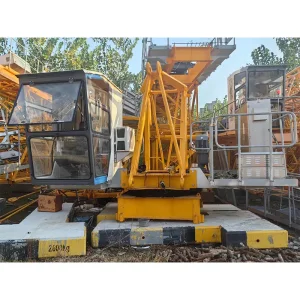
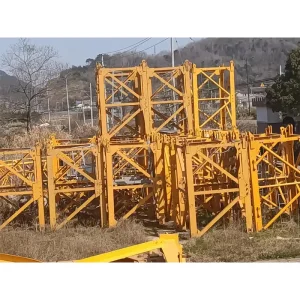
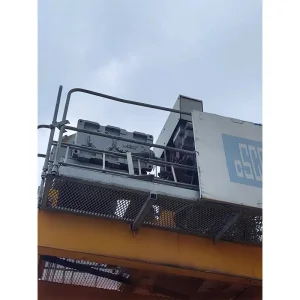
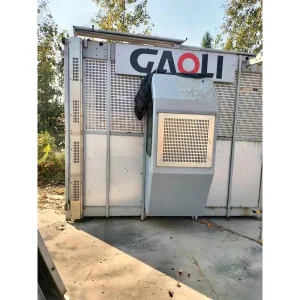
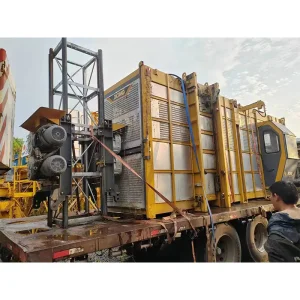
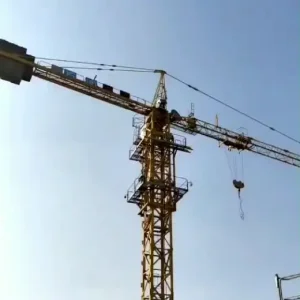
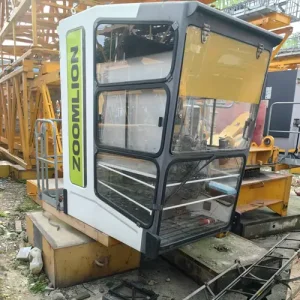
Critical macro factors directing heavy crane capital expenditures across core commercial and civil infrastructure centers worldwide.
Global general contractors face rising capital equipment inflation. Transitioning to certified late-model used cranes (YOM 2018–2023) reduces capital deployment by up to 55% while maintaining Tier-1 lifting cycle parameters.
Modern high-rise engineering hinges heavily on precast concrete slabs, unitized glass facades, and modular steel pods, shifting procurement needs toward cranes with rated tip-capacities exceeding 2.5 to 3.5 metric tons.
Procuring new heavy machinery from Western OEMs regularly incurs 9–14 month delivery horizons. Verified inventory ready for export bypasses backlog, aligning critical-path site schedules with zero downtime.
Comprehensive engineering criteria governing tower crane performance under severe wind loads, external collar anchoring, and dynamic hoist stresses in supertall construction.
High-rise tower crane deployment necessitates calculating static balance and dynamic horizontal forces induced by high-velocity wind pressures (EN 14439 and FEM 1.001 standards). As free-standing mast heights surpass structural limits (typically 40 to 60 meters, depending on mast cross-section), external structural ties—collars fixed to the building's reinforced concrete shear wall or steel column perimeter—become imperative.
Our engineering validation procedures verify mast anchor frame rigidity, pin-joint shear resilience, and collar anchor rod pre-tension values. By inspecting structural weld boundaries using non-destructive ultrasonic testing (NDT), our export verification confirms zero weld-throat micro-cracking or residual plastic deformation across high-stress mast transitions.
Modern high-rise commercial structures require high hoisting speeds coupled with zero-speed torque retention to allow milimeter-accurate positioning of structural steel columns and curtain walls. We source and supply crane models fitted with industrial-grade variable frequency control (VFD) across hoisting, trolleying, and slewing axes.
| Mechanism | Standard Configuration | Supertall High-Rise Optimization | Inspection Tolerance |
|---|---|---|---|
| Hoisting Winch | Dual-speed pole-changing / slip-ring | Full closed-loop VFD with encoder feedback | Rope drum groove runout < 0.5mm |
| Slewing Drive | Resistor-stepped braking | Hydro-dynamic or electronic eddy-current buffering | Backlash clearance 0.15mm – 0.25mm |
| Trolley Control | Stepped contactor system | Stepless vector drive with anti-sway algorithms | Brake lining thickness > 80% OEM spec |
| Structural Bolts | Grade 8.8 structural fasteners | Grade 10.9 / 12.9 High-tensile pre-stressed pins | Torque tested via calibrated torque wrench |
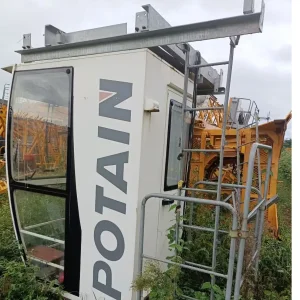
Selecting between hammerhead (topkit) cranes like the Potain MC series and flat-top (topless) models like the Yongmao STT series depends largely on site density. In multi-crane high-rise environments, flat-top cranes permit closer crane centers by eliminating tower heads and tie rods, reducing interference heights by 8 to 12 meters per overlap tier. Conversely, hammerhead cranes deliver optimized cantilever moment transfer under heavy uniform picks along maximum jib radiuses up to 70 meters.
The progression of heavy structural cranes toward digitized, semi-autonomous, and environmentally optimized job site integration.
Real-time telemetry integrating crane kinematic coordinates with digital BIM environments, driving autonomous zoning, hook anti-blind-spot video guidance, and multi-rig site collision mitigation.
Deployment of structural strain gauges and digital cycle recorders directly into pin pockets and slewing rings to log cumulative metal fatigue directly to centralized cloud fleet hubs.
Super-capacitor regenerative descent drives capturing gravitational kinetic potential during continuous lowering cycles, trimming overall grid draw on constrained high-rise sites by up to 25%.
Adoption of ultra-high-molecular-weight polyethylene (UHMWPE) hoist ropes, yielding an 80% weight reduction over steel cables, eliminating multi-layer winding crush at hook depths exceeding 250m.
Operating under our Chinese Head Office National Level-2 Qualification with absolute compliance accountability from yard gate to ocean bill of lading.
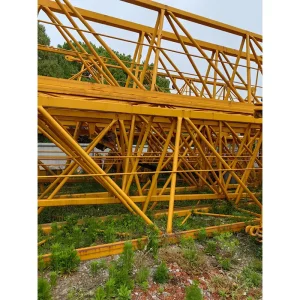
Ultrasonic and magnetic particle non-destructive examination across chord members, jib joints, counter-weight stays, and mast corner welds to identify subsurface stress fractures.
Accurate axial and radial dial-indicator runout testing of slewing rings. Pinion and gear meshing wear checked against strict engineering tolerance tables to prevent backlash shock.
Full renewal or verification of PLC systems, frequency invertors, anemometers, dynamic load-moment limiters (LMI), and high-voltage resistance insulation checks across all control panels.
End-to-end management ensuring heavy lifting assemblies clear ocean transit and integrate directly into domestic high-rise site operations.
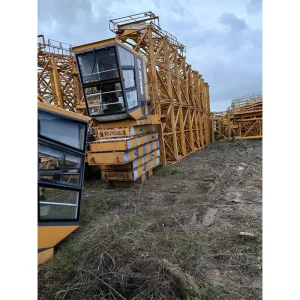
Disassembly of jibs, mast sections, and counter-jibs executed by dedicated loading crews. All assemblies are color-coded, bundled, match-marked, and lashed into 40HC, Flat-Rack, or Breakbulk configurations complying with IMO cargo securing guidelines.
Full provisioning of commercial invoices, packing lists, Bill of Lading, Certificate of Origin (CO/Form E/EUR.1), structural integrity logs, test videos, and verified lifting capacity data to streamline port customs clearance and occupational safety certification.
Direct technical backstopping for on-site commissioning, foundation pre-embedded anchor setup, telescoping climbing cage operation, and initial load calibration delivered remotely via live video telemetry or on-site dispatch through partner networks.
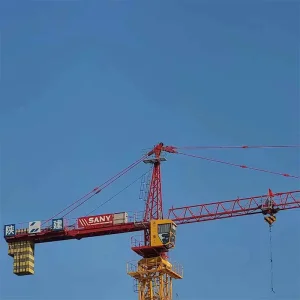
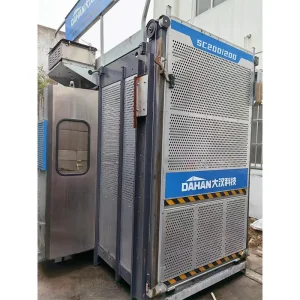
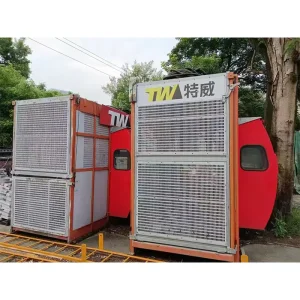
Explore late-model inventory from leading global manufacturing groups: SANY, Zoomlion, Tewei, XCMG, DAHAN, and Potain.
Essential guidance on nomenclature, inspection parameters, sea logistics, and structural installation compliance.