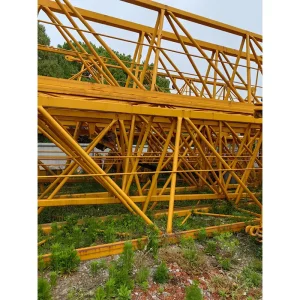
Pre-inspected civil construction lifting units verified for slewing moment, mast weld fatigue, and immediate export delivery.
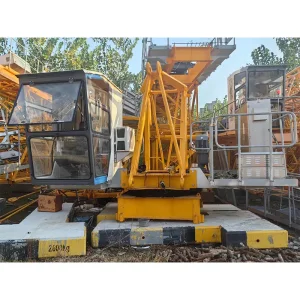
In-depth technical analysis on high-altitude pier lifting, segmental launching dynamics, and precision engineered heavy machinery supply chains.
Modern transportation architecture demands extreme structural resilience. As modern viaducts, suspension bridges, and high-speed rail river crossings traverse increasingly complex geographies, the crane mechanisms required to erect pylons, hoist precast box girders, and assemble stay cables have evolved far beyond standard municipal building apparatus. A modern bridge building crane must combine high rated load moment (over 100 t·m to 250 t·m) with pinpoint positioning down to millimeter tolerances, dynamic crosswind mitigation systems, and self-climbing hydraulic mechanisms calibrated for vertical river piers.
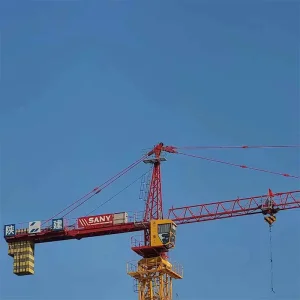
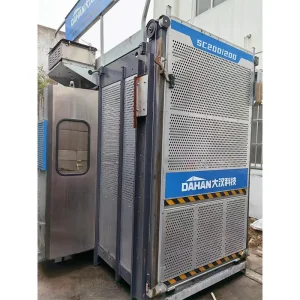
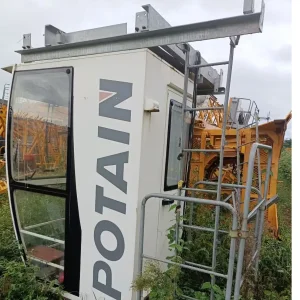
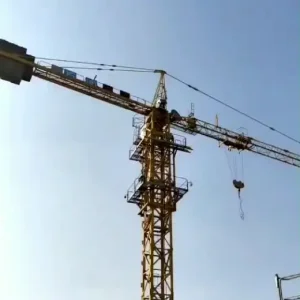
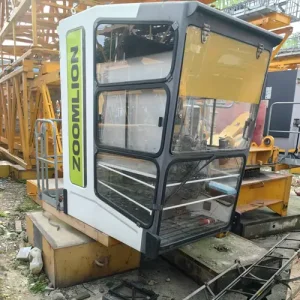
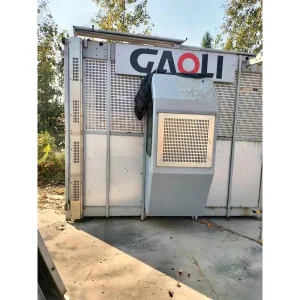
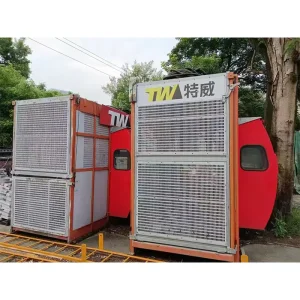
Specialized bridge building cranes integrate hybrid design principles: taking the reach and height capabilities of hammerhead and flat-top tower systems (such as the Potain MC and Zoomlion QTZ series) and pairing them with high-capacity twin-cage construction hoists (such as the SC200/200 series) to deliver personnel and materials to vertical pier elevations exceeding 200 meters. The result is a synchronized logistical pipeline that dramatically cuts concrete curing turnaround and modular steel truss installation cycles.
Real-time microchip telemetry tracks bending moment, Hook height, and slewing speed to prevent over-torque incidents during high-altitude pier placement.
Procuring certified, refurbished YOM 2018-2023 lifting systems saves 40-60% in capital expenditure compared to greenfield OEM orders with immediate deployment readiness.
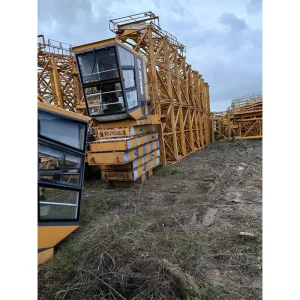
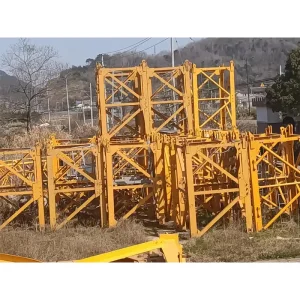
Every structural chord, diagonal brace, and fishplate undergoes ultrasonic non-destructive testing (NDT) to identify subsurface metal fatigue before site reassembly.
Full commercial documentation, customs homologation files, sea lash plans, and certified disassembly drawings ensuring flawless customs clearance worldwide.
Why Tier-1 global general contractors consistently source bridge construction lifting technology from East China's engineering ecosystem.
China's heavy industrial factories leverage domestic Q355B and Q460C alloy steel processing centers. These structural elements deliver optimal strength-to-weight ratios, essential for resisting wind-induced vortex shedding on extended maritime bridge structures and minimizing deadweight deflection across 70m jibs.
From Zoomlion and XCMG to SANY and Yongmao, Chinese production facilities deploy multi-axis CNC laser cutters and submerged arc robotic weld stations. Every chord collar and standard mast connection pinhole is line-bored in automated jigs to guarantee absolute alignment and interchangeable component modularity.
Our Huaian Zhongqiang engineering yard capitalizes on this concentrated industrial footprint. With over 30 acres of dedicated inspection platforms, specialized crews conduct precision tear-downs, shot blasting, anti-corrosive marine paint respraying, and electrical cabinet rebuilding using Schneider and ABB core switchgear.
| Technical Specification | Standard Municipal Crane | Engineered Bridge Building Crane | Huaian Zhongqiang Export Standard |
|---|---|---|---|
| Rated Load Moment Class | 63 t·m to 80 t·m | 100 t·m to 320 t·m | QTZ100, QTZ200, QTZ250, MC320 (Inspected) |
| Free-Standing Mast Stability | 30 m – 40 m standard | 50 m – 70 m reinforced collars | Precision checked pin tolerances (< 0.2mm play) |
| Wind Resistance Envelope | Up to Beaufort Force 6 | Beaufort Force 8 to 10 rated anchors | Full dynamic brake slip calibration & free-slewing test |
| Vertical Personnel Access | Basic internal mast ladder | Twin-cage rack & pinion hoist | SC200/200 Dual-speed drop-tested drive units |
Real-world application patterns where heavy-lift bridge building cranes overcome site-specific physical constraints.
Erecting high-taper concrete and steel composite pylons requires external climbing frames and internal mast anchors anchored to the pier body. Topkit models like the Potain MC320-12 provide heavy lifting capacity (up to 12 tons) at the short radius to position hydraulic formwork, and retain 2.5–3.2 tons tip loads at 70 meters to handle stay cable guidance sheaves.
In montane cross-canyon highway construction, mobile cranes cannot access the steep valley floor. Tower cranes are anchored directly into embedded rock anchor sockets on the cliff face or river caisson foundation, serving as the sole continuous supply artery for continuous cantilever cast-in-situ form travelers and reinforcement rebar bundles.
High-speed passenger lines require precise installation of prefabricated modular box girders weighing thousands of tons. While launching gantries perform longitudinal placement along the bridge deck, ground-to-deck supply is coordinated by heavy QTZ250 7025-12 cranes operating along logistics sidings to hoist bearing plates and track slabs.
How Huaian Zhongqiang mitigates cross-border procurement friction for EPC contractors across Europe, the Americas, and APAC.
Direct export documentation issued strictly in our corporate entity's name (National Second-Level Qualification backing), eliminating intermediary agency risks and commission markups.
Buyers receive comprehensive high-definition video walkthroughs, nameplate serial cross-examinations, gear tooth contact pattern prints, and optional SGS/Bureau Veritas third-party testing.
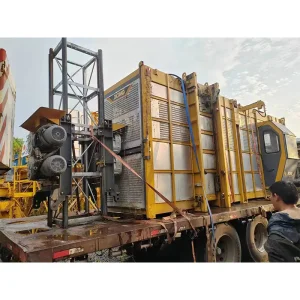
Our dedicated loading master crew coordinates dismantling, colour-coded numbering, timber crating for electrical drives, and heavy-gauge turnbuckle flat-rack strapping to survive oceanic storms.
Every shipment is dispatched with certified Bill of Lading, Legalized Certificate of Origin (CO), Commercial Invoices, Packing Lists with component dimensions, and original factory electrical schematics.
Addressing the technical, transactional, and regulatory inquiries of global engineering project managers.
Complete certified selection of twin-cage vertical personnel hoists and mid-to-heavy tower cranes ready for export packing.