Verified Year of Manufacture (YOM 2018–2023), Non-Destructive Testing (NDT) Passed, and Export-Ready Equipment Portfolio
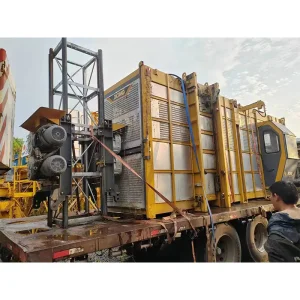
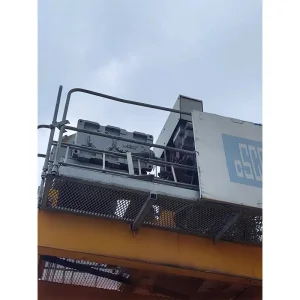
The global construction and industrial engineering ecosystem is undergoing a fundamental structural transition. Extended post-pandemic inflationary pressures, lingering supply chain bottlenecks for primary steel fabrications, and escalating Capital Expenditure (CAPEX) requirements for new machinery have collectively reshaped international procurement strategies. Global EPC (Engineering, Procurement, and Construction) conglomerates, regional contractors, and fleet rental operations are increasingly turning toward high-integrity pre-owned heavy machinery assets to mitigate asset depreciation and optimize cash flow dynamics.
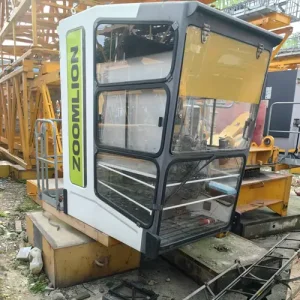
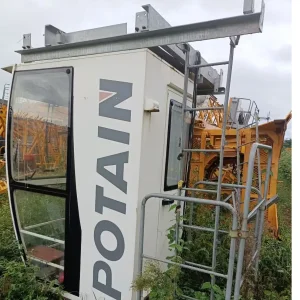
Within this global landscape, China used heavy equipment suppliers and factories have emerged as pivotal anchors of the circular industrial economy. Leveraging China’s expansive infrastructure footprint over the past two decades—which catalyzed the mass deployment of top-tier OEMs such as XCMG, Zoomlion, SANY, DAHAN, Yongmao, Potain China, and Gaoli—the Chinese domestic secondary machinery market represents an unparalleled reservoir of low-hour, high-specification equipment. However, successfully navigating this vast market requires more than traditional trading mechanics; it demands rigorous engineering validation, transparent lifecycle tracing, standardized refurbishment protocols, and robust international trade logistics.
The operational dominance of Chinese heavy equipment factories and supply hubs stems from deep structural synergies within China's manufacturing ecosystems, particularly concentrated in regions like Jiangsu (Huai'an, Xuzhou), Shandong, and Hunan. These industrial corridors provide direct physical proximity to original component foundries, specialized structural steel mills, automated robot welding cells, and dedicated heavy-lift logistics networks.
Consolidated 30+ acre staging yards allow simultaneous holding, trial erection, non-destructive weld testing, and multi-unit containerization, eliminating multi-vendor coordination overheads.
Direct supply agreements with Tier-1 component providers (Schneider Electric, ABB, Yaskawa VFDs, Rothe Erde slewing bearings) ensure rapid, high-precision retrofits during remanufacturing.
Technicians trained under certified National Level-2 qualifications execute precision lattice structural alignments, slewing ring clearance verification, and electrical system modernizations.
Furthermore, China’s secondary machinery market benefits from strict domestic regulatory retirement cycles for equipment used in tier-1 municipal projects. Consequently, heavy equipment units reaching the secondary market after 3 to 5 years of domestic deployment exhibit minimal structural wear, full maintenance records, and intact OEM provenance—presenting exceptional asset value for global cross-border buyers.
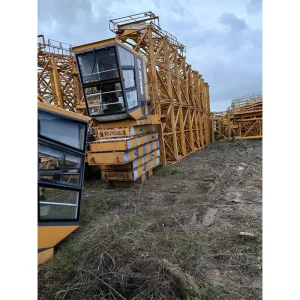
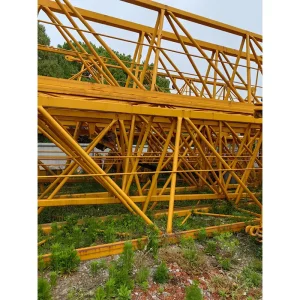
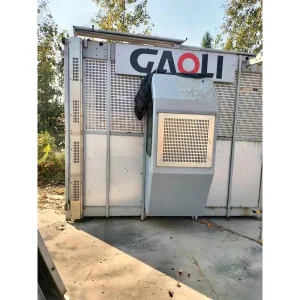
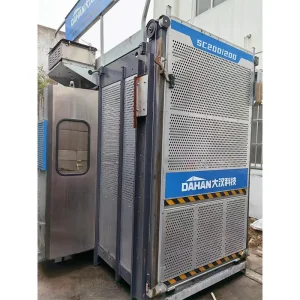
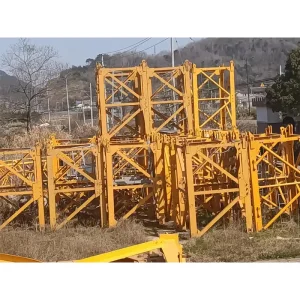
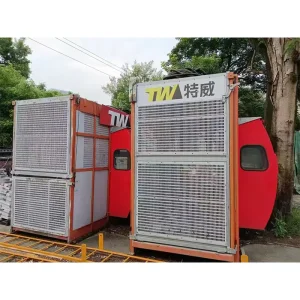
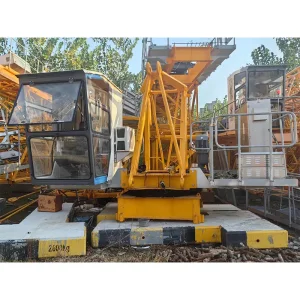
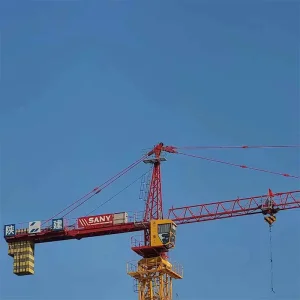
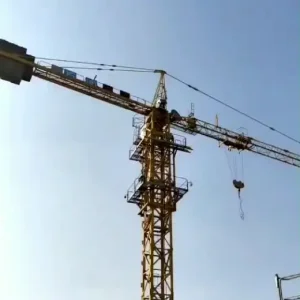
Assessing pre-owned heavy equipment—particularly critical lifting assets like topkit tower cranes (QTZ series), flat-top tower cranes, luffing jib cranes, and twin-cage construction hoists (SC200/200)—requires an uncompromising, quantitative inspection regime. Leading Chinese suppliers employ comprehensive 128-point evaluation frameworks designed to uncover hidden micro-fractures, mechanical backlash, and electrical degradation before shipment authorization.
| Inspection Domain | Diagnostic Methodology & Engineering Tooling | Acceptance Threshold / Quality Standard |
|---|---|---|
| Structural Integrity & Lattice Welds | Ultrasonic Flaw Detection (UT) & Magnetic Particle Inspection (MPI) on chord junctions. | Zero micro-cracks; pin connection hole deformation < 0.5mm; paint thickness > 120μm (C4/C5 grade). |
| Slewing Mechanism & Bearings | Dial gauge clearance measurement, oil spectrographic wear analysis, gear backlash testing. | Axial clearance within OEM specs (≤ 1.2mm); zero metal flakes in race grease; smooth torque curve. |
| Hoisting & Trolley Drives | Vibration spectrum analysis, thermal imaging of motor windings under rated load trials. | Stator insulation resistance > 50 MΩ; brake lining wear < 30%; VFD frequency smooth stepping. |
| Safety & Load Moment Limiters | Dynamic over-load tripping tests at 100%, 110%, and 125% rated capacity limits. | Cut-off trigger response within < 0.2 seconds; dual redundant mechanical and digital sensors verified. |
| Construction Hoist Rack & Pinion | Drop-test calibration for anti-fall safety devices (SAJ series), pitch wear gauge measurement. | SAJ safety device certified within valid 1-year calibration window; rack module wear within tolerances. |
By executing these multi-tier engineering audits, certified Chinese suppliers guarantee that imported machinery meets international safety protocols, including EN 14439 for tower cranes, ISO 4301 load classification standards, and regional lifting equipment regulations worldwide.
Pre-owned machinery exported from China operates in highly diverse climatic and geological settings—from high-humidity marine coastal projects in Southeast Asia to extreme sub-zero infrastructure corridors in Eastern Europe, and hyper-arid high-temperature construction sites in the Middle East. Strategic suppliers engineer custom retrofits to align equipment specifications with local site dynamics.
Application of multi-coat epoxy primer combined with polyurethane topcoats (C5-M marine anti-corrosion spec) alongside stainless-steel electrical enclosure cabinets for island and port construction.
Retrofitting hydraulic system oil coolers with forced-draft heat exchangers, high-viscosity synthetic hydraulic fluids, and tropicalized Class H motor insulation for ambient operations exceeding 50°C.
Installation of pre-heating heating elements in slewing drop gearboxes, low-temperature synthetic wire rope lubricants, and cold-resistant structural alloy steel pins rated down to -30°C.
When executing international procurement contracts for used tower cranes or passenger/material hoists, smart buyers compute the Total Cost of Ownership (TCO) rather than relying solely on initial EXW or FOB unit prices. TCO incorporates freight optimization, customs duties, assembly speeds, and residual asset resale value.
Selecting the optimal maritime transport mode directly impacts both landed costs and equipment safety during international transit:
The global heavy machinery sector is rapidly converging with digital telematics, Internet of Things (IoT) monitoring, and Environmental, Social, and Governance (ESG) compliance frameworks. Chinese remanufacturing suppliers are at the forefront of integrating smart technology into pre-owned assets prior to export.
Key technological enhancements incorporated during factory refurbishment include:
Expert Clarifications on Sourcing, Inspections, Trade Logistics, and Operational Readiness
Explore Featured Models Ready for Fast Overseas Dispatch and Field Deployment