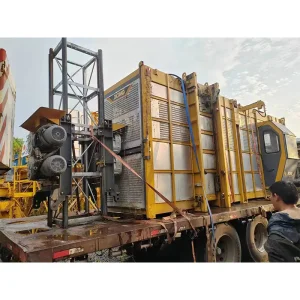
Pre-inspected topkit, flat-top, and vertical transport equipment directly cataloged from OEM inventories with strict year-of-manufacture (YOM) integrity.
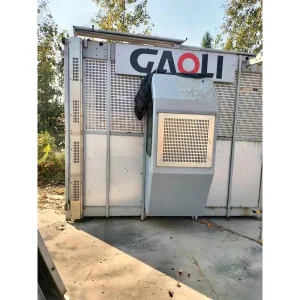
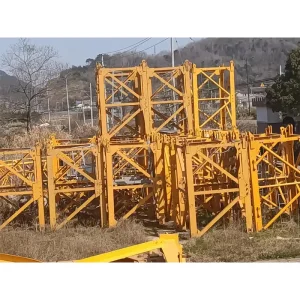
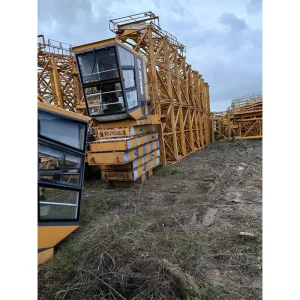
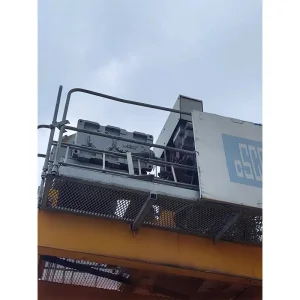
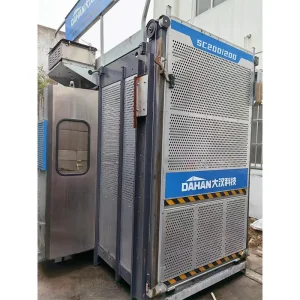

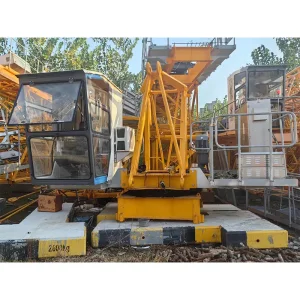
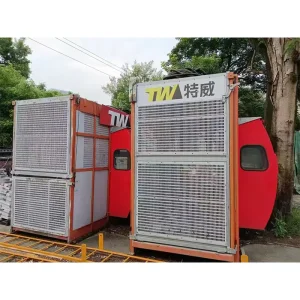
The transition from conventional structural mechanisms to intelligent, frequency-controlled top-slewing configurations is reshaping vertical civil logistics across the globe.
Modern slewing mechanisms utilize advanced Variable Frequency Drives (VFD) coupled with eddy-current braking systems. This engineering eliminates hydraulic shockwaves during acceleration and deceleration, ensuring millimetric hook placement during critical heavy precast panel erection.
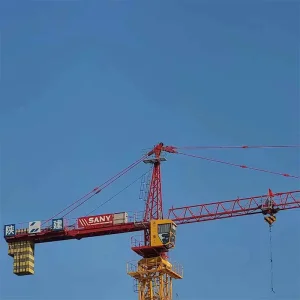
High-density urban development has accelerated the preference for topless (flat-top) slewing cranes over conventional hammerhead designs. Reduced clearance requirements simplify multi-crane overlap protocols, significantly mitigating collision hazards in constrained airspaces.
Integrated load-moment limiters (LMI), wind speed anemometers, and digital black boxes stream operational telemetry to cloud servers. Predictive maintenance schedules track mast pin fatigue, bearing race deflection, and torque degradation in real time.
Civil engineering contractors worldwide demand predictable lifecycles, rigorous structural provenance, and strict compliance alignment before capital allocation.
| Evaluation Parameter | Direct Chinese Exporter Channel | Western OEM Secondary Market | Strategic Advantage |
|---|---|---|---|
| Capital Expenditure (CAPEX) | Competitive entry cost; 45%–60% lower than European benchmarks | High residual valuation; premium dealer surcharges | Accelerates project cash-flow break-even timelines |
| Supply Velocity | Ex-stock delivery from concentrated storage bases (e.g., Jiangsu) | 8–20 week backlog due to dispersed logistics yards | Direct inland waterway access to major deep-sea export terminals |
| Structural Integrity | Documented ultrasonic testing, pin bore laser calibration, NDT certified | Variable service history records dependent on regional operators | Complete multi-point pre-export verification dossier |
| Interchangeability | Standard pin-connected mast sections (1.6m, 2.0m standard sizes) | Proprietary bolting patterns limiting cross-brand usage | Universal modular adaptability for existing contractor fleets |
The manufacturing ecosystem powering China's slewing tower crane industry relies on end-to-end automation, metallurgical control, and integrated multi-modal transport hubs.
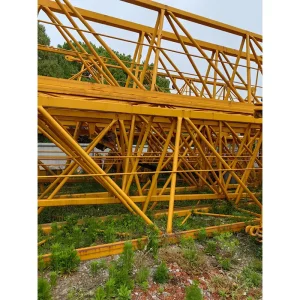
Chord members and diagonal lattice bracing are fabricated using robotic submerged-arc welding machines. This eliminates thermal inconsistencies and ensures structural penetration depth in compliance with international ISO 9001 and CE execution classes.
Masts and main jibs are engineered with high-tensile structural steel tailored for low-temperature resilience and dynamic torsion stability. Shot-blasting surface treatments ensure epoxy protective coating longevity against offshore maritime salt spray.
Operating from major industrial belts such as Jiangsu (Huai'an), exporters manage 30+ acre consolidation bases. Direct river-to-sea barge links and highway freight corridors streamline the delivery of over-dimensional jibs to ocean shipping gateways.
Slewing cranes must adapt to diverse climatic extremes, seismic loads, and localized civil structural methodologies across primary overseas project sites.
Equipment deployed across coastal hubs (Singapore, Philippines, Vietnam) features automated free-slewing (weathervaning) brakes to safely disperse destructive wind cross-forces up to 60 m/s.
Low-temperature lubricant compositions, insulated electrical control cubicles with automated thermostatic heaters, and notch-impact tested structural steel configurations ensure operation at -25°C.
IP65-rated sealed enclosures prevent sand ingress into high-precision planetary gearboxes. High-efficiency thermal air conditioning systems preserve electrical inverter life in 50°C environments.
Optimized tip-load capacity at extreme radiuses (up to 70m) supports the positioning of heavy precast concrete facade panels, elevators, and structural pods in congested metropolitan projects.
Clear, direct answers regarding slewing bearing testing, logistics packaging, export documentation, and on-site assembly validation.
Clearance is verified using calibrated dial indicators positioned axially and radially around the slewing ring while applying standardized tilting moments. Exporters verify that axial play and gear backlash remain within original OEM tolerances, ensuring race gears are free from pitting or uneven surface wear.
Mast sections and cab assemblies are planned to fit standard 40ft High Cube (HC) containers where dimensions allow. Long boom jib sections and turntable slewing rings exceeding container envelopes are securely lashed to 40ft Flat Racks or arranged on breakbulk ships with moisture-barrier packaging.
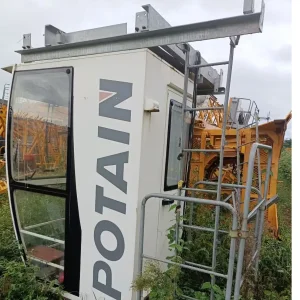
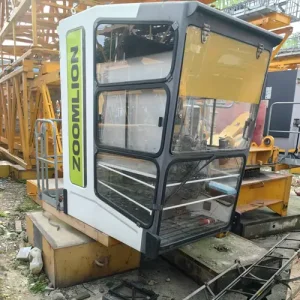
YOM is verified directly against riveted factory metal nameplates, stamped chassis serial numbers, and production registry databases from OEMs like Zoomlion, SANY, XCMG, and Potain. Complete documentation dossiers contain high-resolution photos of all factory stamps.
Standard export shipments include the Commercial Invoice, Certified Packing List, Clean on Board Ocean Bill of Lading, Certificate of Origin (CO), Pre-shipment Quality Inspection Dossiers, and NDT Structural Test Records for customs clearance in destination ports.
Heavy tonnage slewing units, robust multi-brand tower cranes, and high-speed vertical hoists ready for prompt worldwide export dispatch.