Explore late-model, zero-defect pre-inspected inventory ready for immediate teardown, containerization, and intermodal ocean shipment.

Deciphering nominal load moments, cross-sectional chord integrity, and operational kinematics under rigorous international site conditions.
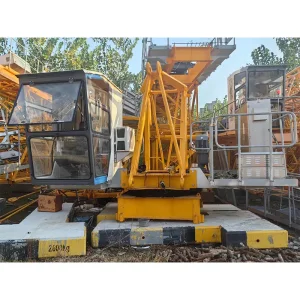
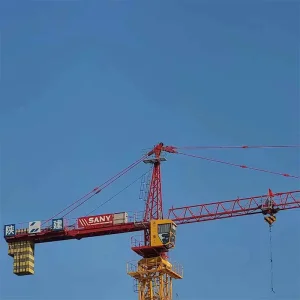
In modern industrial and civil construction, the QTZ63 tower crane stands as one of the most prolific, economically balanced, and structurally adaptable lifting solutions engineered in China. Categorized under the standardized Chinese standard (GB/T 5031), the model designation QTZ63 (typically aligned with 5013 or 5010 configurations) indicates a nominal lifting moment of 630 kN·m, designed primarily with an operational radius between 50 to 56 meters, a maximum lifting capacity of 4,000 kg to 5,000 kg (in 2-fall or 4-fall reeving), and an impressive tip load capacity of 1,000 kg to 1,300 kg at terminal outreach.
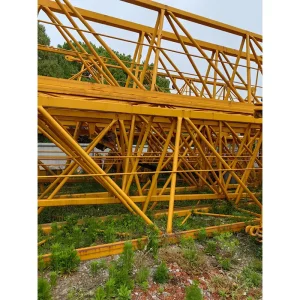
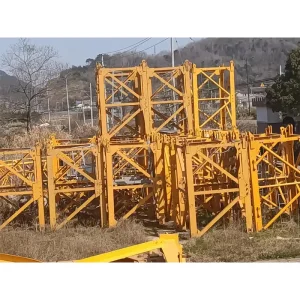
Engineered using high-strength low-alloy structural steels—primarily Q345B (equivalent to European S355JR) for principal chord members and Q235B for bracing lattices—the QTZ63 platform optimizes wind resistance, self-weight distribution, and fatigue resistance during heavy slewing duty cycles. The crane operates on a standard 1.6m × 1.6m × 2.5m or 1.6m × 1.6m × 2.8m mast section layout utilizing fishplate or pin-bolt connections. This modular mast engineering allows contractors to transition smoothly from an independent freestanding height of 30–40 meters to anchored building-tied configurations exceeding 140–180 meters without sacrificing dynamic stability or structural rigidity.
| Technical Metric / Specification | QTZ63 (Standard 5013 Configuration) | QTZ63 (High-Outreach 5010 / 5210) | Operational Safety Standards Compliance |
|---|---|---|---|
| Nominal Rated Lifting Moment | 630 kN·m (63 t·m) | 630 kN·m (63 t·m) | ISO 4301 / GB/T 5031 Industrial Rating |
| Maximum Lifting Capacity | 4.0 to 5.0 Metric Tons (2/4 Fall) | 4.0 to 5.0 Metric Tons (2/4 Fall) | Load-moment limiter cutoff at 104% load |
| Jib Radius & Tip Capacity | 50 m Radius @ 1.30 Metric Tons | 52-56 m Radius @ 1.00 Metric Tons | Deflection testing under static proof load 1.25x |
| Freestanding / Anchored Height | 35.0 m / 140 m+ with standard tie-ins | 38.0 m / 160 m+ with reinforced anchors | FEM 1.001 Standard Class 3 calculation |
| Hoisting Mechanism Power | 24 kW to 30 kW VFD Stepless / Dual Speed | 24 kW to 30 kW Frequency Controlled | Fail-safe hydraulic disc brakes & micro-inching |
| Slewing & Trolleying Velocity | 0 - 0.7 r/min; Trolley: 0 - 45 m/min | 0 - 0.7 r/min; Trolley: 0 - 42 m/min | Eddy current / Inverter anti-sway monitoring |
How dynamic climate parameters, urbanization patterns, and structural engineering typologies dictate crane deployment across five continents.
Widely deployed across residential residential clusters in Southeast Asia, Central Asia, and Latin America. The QTZ63 provides sufficient tip payload (1.3t @ 50m) to position precast concrete beams, staircases, formwork panel bundles, and reinforcement steel without inducing excessive ground slab bearing pressure or requiring prohibitive foundation footprint zones.
In Middle Eastern and North African job sites, prolonged ambient heat exceeding 48°C often triggers severe thermal faults in standard electrical switchgear. Zhongqiang-sourced QTZ63 systems feature localized air-conditioned control operator cabs, heavy-duty electrical cabinet cooling radiators, IP55-sealed electric motors, and high-viscosity hydraulic fluids tailored for desert duty cycles.
For Eastern Europe, the CIS states, and high-latitude mining infrastructure, sub-zero embrittlement poses critical metallurgical risks. Our cranes incorporate customized low-temperature resilient steels with Charpy V-notch impact toughness certified to -20°C and -40°C, paired with cold-resistant synthetic lubricants and anti-condensation heating elements inside all mechanism enclosures.
The structural, economic, and logistical factors that enable Chinese tower crane manufacturers and exporters to lead global commercial equipment deployment.
The global dominance of China’s tower crane production stems from an extraordinarily integrated industrial base. Unlike localized assembly setups that rely heavily on fragmented tier-2 international parts sourcing, China's leading manufacturing clusters in Jiangsu, Shandong, and Hunan provinces unify raw steel rolling, automated robotic welding, shot-blasting, robotic electrostatic powder coating, and precision CNC slewing ring machining within dense regional radiuses. This tight geographic co-location drastically compresses production lead times, ensuring replacement parts—from hoist reduction boxes to slew drive motors—are immediately available off the shelf.
Furthermore, China’s industrial consolidation allows for scale-driven capital allocation in advanced quality testing apparatus. At our dedicated 30+ acre logistics and inspection yard base in Huai'an, Jiangsu, used and factory-refurbished QTZ63 units undergo thorough nondestructive testing (NDT), ultrasonic testing of welded chord junctures, and slewing gear bearing clearance verifications before being cleared for sea-freight packaging.
Transitioning from traditional contactor-driven mechanical lifting to intelligent, sensor-monitored, IoT-integrated lifting systems.
Early iterations of the QTZ63 utilized pole-changing mechanical systems and eddy-current resistor banks which produced severe mechanical impact loads and high power draw on site grids. Modernized iterations adopt closed-loop vector VFD controls across Hoisting, Slewing, and Trolley mechanisms. This eliminates dynamic shock loads, extends wire rope operational life by over 30%, and drastically reduces power surge demand.
Next-generation QTZ63 systems interface directly with real-time site anti-collision systems. Multi-crane overlapping interference is mitigated via GNSS-synchronized positional telemetry and dynamic braking zones, stopping crane operation automatically before blind-spot structural or hoist clashes occur on dense high-rise developments.
Integrating strain-gauge telemetrics and digital load-cell data arrays allows structural engineers to track cumulative fatigue damage over extended operational cycles. By feeding continuous hook load and slewing shear data into cloud-based maintenance dashboards, fleet owners can plan proactive component teardowns rather than reactive failures.
Capital asset allocation strategies for international contractors balancing project return-on-investment against lifecycle equipment ownership costs.
Deploying a verified, late-model (YOM 2019-2023) QTZ63 or certified equivalent frees up substantial capital reserves compared to procuring expensive western European equipment. Contractors recover project setup expenditures within fewer active working months while maintaining equivalent hook speeds, load moment capabilities, and uptime.
Because the QTZ63 series is structurally compatible with ubiquitous modular components (such as standard mast pin-bolts, standardized tie-in anchors, and widely stocked hoist gearings), fleet operators can seamlessly resell or redeploy their assets across global markets without suffering devastating asset depreciation.
With verified export clearance documents—including original certificates of origin, CE declarations, technical passports, and standardized NDT reports—procurement teams face minimal customs friction at destination terminals, ensuring machinery reaches foundation pads on schedule.
How Huaian Zhongqiang ensures every structural segment, electrical panel, and mechanical assembly survives intermodal maritime transport.
Ultrasonic and magnetic particle non-destructive examination across critical pin joints, turntable base plates, and mast foundation stools eliminates latent metal fatigue risks.
In-house yard crews pack jibs and counter-jibs into 40ft High Cube (HC) containers or custom Open-Top/Flat-Rack equipment with welded anti-chafing bracing to stop saltwater abrasion.
Full commercial invoices, stamped bills of lading, detailed packing lists with section markings, and English electrical schematics accompany every shipped consignment.
Remote engineer video conferencing and commissioning guidance ensure client erectors adhere to proper climbing cylinder pressures, anchor ties, and torque limits.
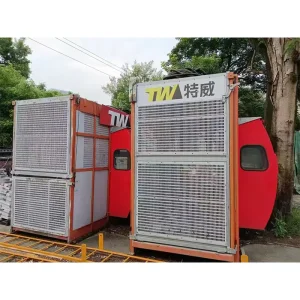
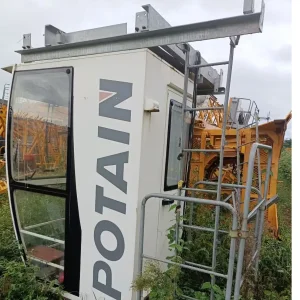
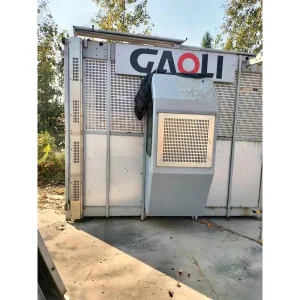
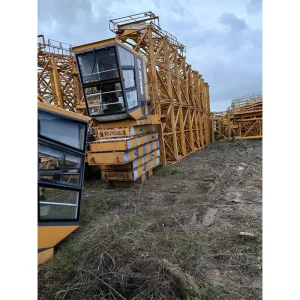
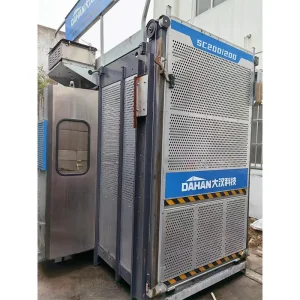
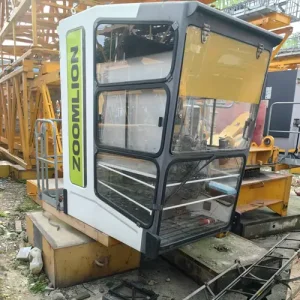
Review additional field-tested heavy equipment units from leading tier-1 builders (SANY, XCMG, Zoomlion, Yongmao, DAHAN, Gaoli, and Tewei).
Essential answers regarding model nomenclature, international standard conversions, shipping loads, and structural integrity audits.