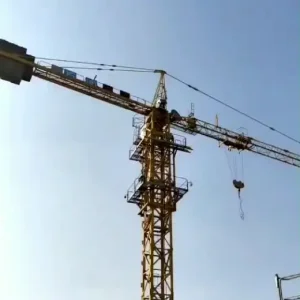
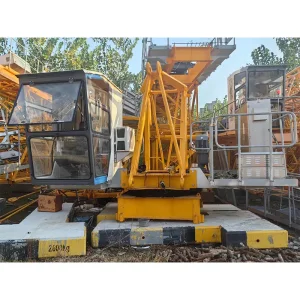
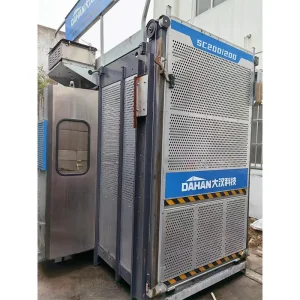
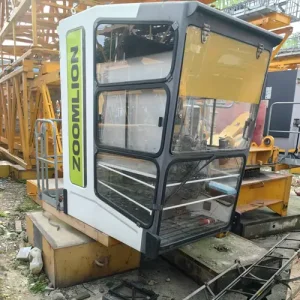
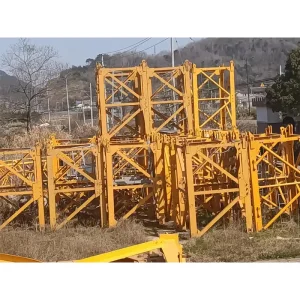
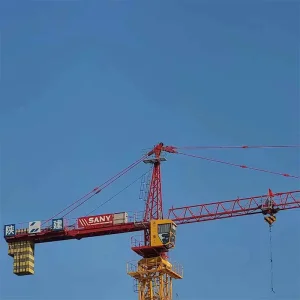
Pre-inspected topkit, flat-top, and vertical hoist configurations certified under Chinese National Level-2 industrial standards and verified for international deployment.
A data-backed examination of heavy construction logistics, OEM technological leaps, and the strategic positioning of Chinese export engineering.
Over the last decade, high-density urbanization, large-scale civil infrastructure projects, and the explosive rise of precast, modular construction (Prefabricated Prefinished Volumetric Construction - PPVC) have dramatically shifted hoisting dynamics. Conventional cranes designed for loose aggregate or secondary structural steel placement are increasingly inadequate. Contractors today face aggressive project timelines that mandate high-tonnage lifting capacities at extended reach radii.
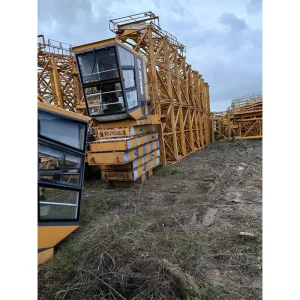
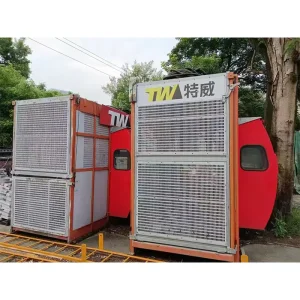
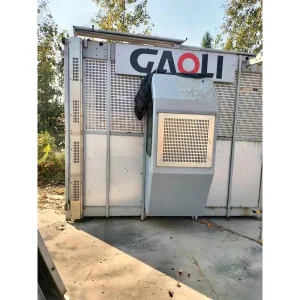
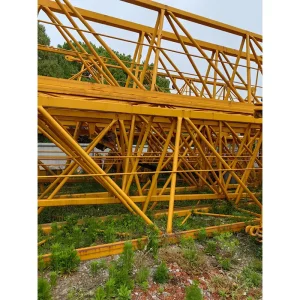
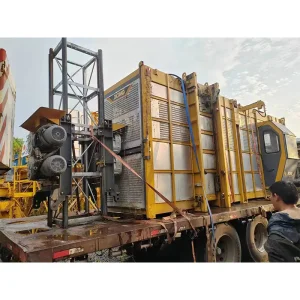
In response, Chinese manufacturing leaders—notably Zoomlion, XCMG, SANY, Yongmao, and DAHAN—have fundamentally redesigned crane mechanical architecture. Transitioning from traditional hammerhead models to flat-top (topless) designs has eliminated tie-rod assembly interference in congested airspace, while high-tensile structural hollow steel segments provide maximum torsional rigidity against adverse wind shear loads. Meanwhile, secondary vertical transportation has seen the standard dual-cage hoist evolve into variable-frequency, ultra-high-speed vertical material distribution platforms, such as the widely deployed SC200/200 platforms engineered by GAOLI and TEWEI.
Modern Chinese hoisting machinery incorporates advanced VFD (Variable Frequency Drive) systems that eliminate mechanical shock loads during start-stop sequences, extending the lifespan of gearboxes, slewing bearings, and steel wire cables while slashing grid peak consumption by up to 35%.
State-of-the-art multi-crane telemetry allows networked cranes on mega-sites to share coordinate vectors in real time, actively restricting slewing arcs and hook positions to prevent collisions and bypass restricted urban zones without relying exclusively on visual spotting.
By leveraging China's integrated supply chains, exporters can deliver late-model machinery (YOM 2018–2023) at a fraction of Tier-1 Western factory prices, while retaining original OEM component authenticity, comprehensive wear traceability, and full overhaul certifications.
Addressing the nuanced expectations of multinational procurement directors, safety auditors, and project managers across regulated jurisdictions.
Global general contractors refuse unverified machines. Procurement standards demand unambiguous Year of Manufacture (YOM) physical plate verification, authenticated maintenance logs, and documented cumulative operational hours across hoisting and slewing drives.
Cross-border engineering mandates rigorous non-destructive ultrasonic and magnetic particle testing of primary chords, pin connections, and slewing rings to eliminate micro-fracture risks before maritime containerization takes place.
Overseas buyers increasingly cut out layered intermediary agents. Enterprise accounts demand direct access to centralized inspection bases—such as Huaian Zhongqiang's 30+ acre facility—enabling physical or live remote high-resolution walkarounds.
A heavy crane deal falls apart if logistics fail. Sourcing contracts require turnkey breakdown engineering: jib bundling, mast section nestings in flat racks, mechanical rust protection, and seaworthy lashing verified against marine surveyor criteria.
Evaluating the optimal machinery pairings for complex municipal, commercial, and industrial vertical builds.
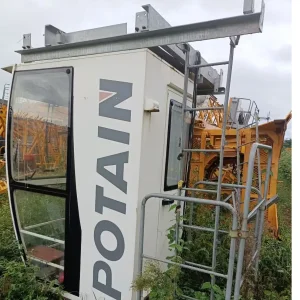
For high-rise builds exceeding 150 meters, the synergy between internal-climbing flat-top cranes (such as the Zoomlion QTZ250 or Potain MC320 series) and high-speed variable-frequency personnel hoists (SC200/200) minimizes hook waiting times, handles heavy facade curtain walls, and preserves street-level clearance.
Bridge piers and cable-stayed pylons require immense tip-load capacities in turbulent wind profiles. Deploying heavy-moment QTZ models with anchored wall-ties guarantees unyielding deflection performance, providing millimeter-accuracy during segment placement and rebar cage positioning.
Energy plants and petrochem installations leverage distributed hammerhead lifting systems. Machines like the Potain MC120-6 paired with dedicated mobile fleet assets ensure fast pick-and-carry staging cycles, minimizing the need for expensive high-tonnage all-terrain mobile cranes on site.
Bridging global machinery standards with verifiable QA processes, sovereign documentation, and technical transparency.
Every crane undergoing export readiness in Huai'an passes an exhaustive protocol:
Eliminating border clearance friction with end-to-end bureaucratic precision:
Ensuring operational continuity long after vessel arrival at your local terminal:
Projecting the mechanical and algorithmic milestones that will define lifting equipment over the next decade.
Widespread integration of black-box load sensors, live weight telemetry, remote motor vibration diagnostics, and structural stress telemetry directly streamable to site HQ dashboards.
Computer-vision-guided hook path optimization, smart anti-sway algorithms compensating dynamically for wind buffeting, and assisted blind-lift visual feeds straight to the operator cab.
Zero-emission battery-buffered hoists designed for renewable site power banks, cutting diesel generator emissions and eliminating voltage spikes on delicate municipal power lines.
Full integration with Building Information Modeling (BIM) engines enabling automated structural module pickup, trajectory calculation, and auto-placement without manual ground taglines.
Clear, direct answers regarding equipment verification, transit logistics, certifications, and operational warranties.
Explore additional verified inventory currently staged, tested, and cleared for rapid ocean freight dispatch.