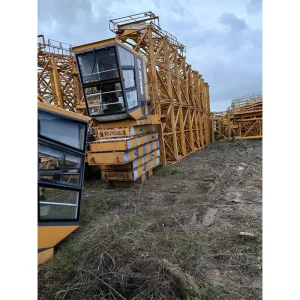
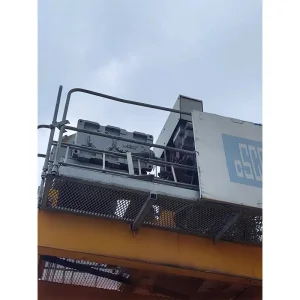
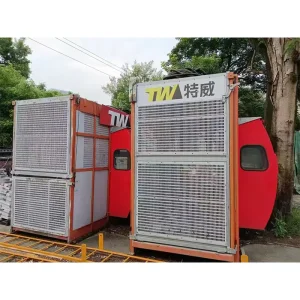
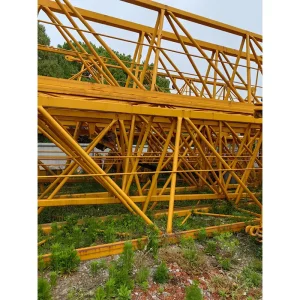
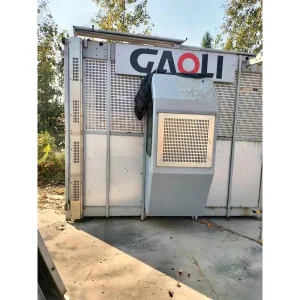
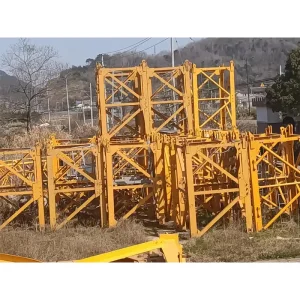
Precision-inspected hoisting structures, standard QTZ heavy-lift chassis, and passenger-material hoists certified for transnational engineering deployments.
Evaluating macroeconomic trends in modern urban expansion, structural modular prefabrication, and the shifting dynamics of global heavy equipment procurement.
The worldwide construction sector is transitioning from in-situ concrete casting toward prefabricated precast building modules (PPVC). This transition exponentially increases average hook-load requirements, establishing high-capacity tower crane assemblies (such as the 10t to 12t QTZ200 and QTZ250 variants) as non-negotiable capital assets for multi-story residential and infrastructure developments.
Contractors in the Middle East, Southeast Asia, and Latin America face rising interest rates and stringent debt service constraints. Sourcing verified, inspected top-tier machinery (YOM 2018–2023) directly preserves working capital, delivering 55% to 65% capex savings compared to newly commissioned units, with identical duty cycles and certified metallurgical integrity.
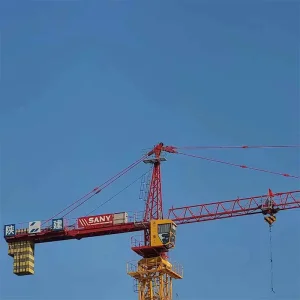
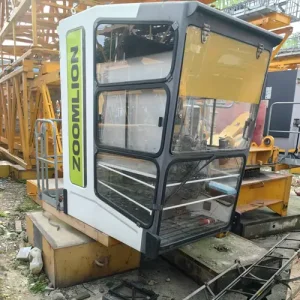
Contemporary engineering demands interchangeable mast sections (such as 1.6m and 2.0m fishplate/pin systems), universal anchor collars, and standard trolley pulleys. The integration of established brands like SANY, Zoomlion, Potain, and XCMG ensures that field replacement components, safety limiters, and cable drums can be universally interchanged without site shutdown.
Examining the structural supply-side advantages, robotic welding processes, scale advantages, and technical throughput of certified Chinese staging hubs.
Chinese crane assemblies utilize high-tensile structural steel (predominantly Q345B/Q355B and seamless chord tubes). Submerged arc robotic welding ensures microscopic weld porosity standards that exceed EN 14439 design requirements.
With staging centers spanning more than 30 dedicated acres in Huai'an, Jiangsu, buyers eliminate middlemen. Units undergo pre-assembly, dynamic slewing tests, ultrasonic flaw detection, and anti-corrosion recoating under one roof.
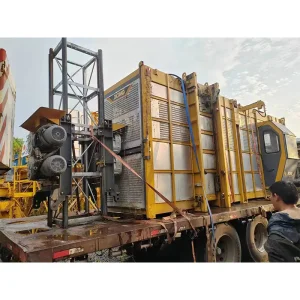
Proximity to major coastal deepwater terminals (Shanghai, Qingdao, Ningbo) enables turnkey dispatch. Mast sections, slewing turntables, and counter-jibs are systematically balanced across 40HC and Flat Rack containers to minimize ocean freight.
Holding Chinese National Level-2 industrial qualifications and autonomous customs documentation permits swift export handling, verified Bills of Lading, CE test compliance files, and standardized Form E / CO certificates.
Comparative parameter index for mainstream topkit, hammerhead, and flat-top crane equipment available in the current industrial export inventory.
| Equipment Model Reference | Structural Configuration | Max Hoisting Capacity | Working Radius (Jib) | Tip Capacity @ Max Jib | Standard Mast Section | Hoisting Mechanism Power |
|---|---|---|---|---|---|---|
| QTZ100 (6013 Class) | Topkit / Hammerhead | 6,000 kg | 60 m | 1,300 kg | 1.6m × 1.6m × 2.8m Pin | 30 kW / 37 kW Dual Fall |
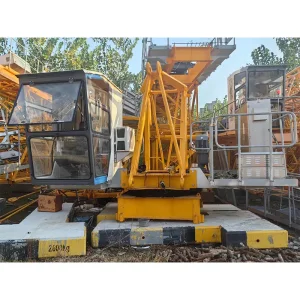
| QTZ200 (7020 Class) | Topkit / Heavy Radius | 12,000 kg | 70 m | 2,000 kg | 2.0m × 2.0m × 3.0m Pin | 55 kW Frequency Inverter |
| QTZ250 (7025 Class) | Topkit Heavy Dynamic | 12,000 kg | 70 m | 2,500 kg | 2.0m × 2.0m × 3.0m Pin | 75 kW Stepless VFD |
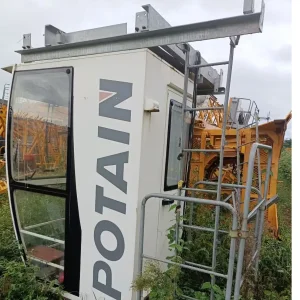
| Potain MC120 / MC320 | Topkit European Standard | 6,000 – 12,000 kg | 50 – 70 m | 1,400 – 3,200 kg | 1.6m / 2.0m Modular Mast | LVF Stepless Hoist |
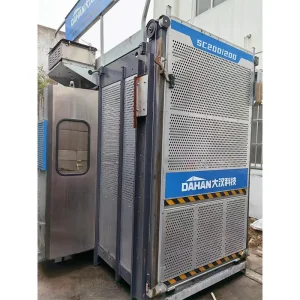
| SC200/200 Vertical Hoist | Twin-Cage Rack & Pinion | 2 × 2,000 kg | Vertical Mast | Full Cage Capacity | 650mm × 650mm Tube | 3 × 3 × 11 kW High Torque |
High-altitude civil towers, deep oceanic bridge anchorages, and hyper-dense downtown envelopes demand specialized structural anchoring schemes.
Constrained structural footprint sites in Manila, Jakarta, and Seoul demand internal-climbing and flat-top tower crane setups. The lack of tower top-heads facilitates close-proximity multi-crane overlap without risk of jib-to-tie wire collision, ensuring maximum site safety.
High-wind marine pylons and hydropower dams in South America and Africa leverage heavy-duty topkit units anchored via custom heavy-gauge collar frames. Precision low-speed micro-inching enables the installation of massive rebar cages with sub-millimeter precision.
Continuous operating conditions in desert and petrochemical environments require dust-sealed electrical panels (IP55/IP65), integrated PLC diagnostics, and heavy-duty hoist motors capable of sustained, high-ambient-temperature duty cycles.
How next-generation sensor arrays, smart anti-collision matrices, and remote fleet monitoring redefine construction logistics.
Real-time load moment telemetry automatically broadcasts stress profiles, motor thermal status, and wind velocity metrics to remote site offices via 5G gateways. This mitigates human operator error and eliminates hazardous overload incidents.
Secondary used machinery exports now require verified non-destructive testing (NDT). Ultrasonic flaw detectors inspect pins, chord junctions, and the main slewing bearing teeth to mathematically certify steel crystalline health before global shipping.
Standardized sensor packages synchronize crane operations on dense job sites. Jib coordinates are computed via differential GPS to prevent structural entanglement and automatically establish no-fly safety zones over public thoroughfares.
A transparent guide to auditing overseas equipment, inspecting mechanical drives, and ensuring smooth customs clearance.
Ensure the metal serial nameplate matches the stamped chassis numbers across all base sections, slewing platforms, and winches. Never acquire units with defaced or mismatched manufacturing dates.
Axial and radial clearance in slewing bearings must be quantified with dial indicators. Tolerances exceeding OEM wear allowances signify imminent raceway fatigue, requiring ring replacement before deployment.
Inspect the central cabinet for original contactors, PLC program cards, and variable frequency drives (VFD). Eliminate units featuring bypassed thermal cutouts, compromised limit switches, or burnt terminal tracks.
Demand live, unedited full-cycle video testing prior to dismantling. High-definition footage must show smooth hoist acceleration, precise slewing brake deceleration, and responsive trolley operation under load.
Clear, authoritative technical answers addressing customs, containerization, load calculations, and structural inspection standards.
Expanding project execution capabilities with certified high-speed vertical personnel hoists and mid-range urban construction cranes.