Explore precision-inspected, ready-to-deploy tower cranes and vertical construction hoists sourced from China's Tier-1 industrial manufacturing lines with factory-grade structural certification.
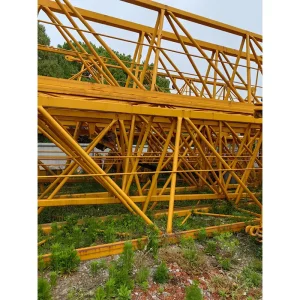
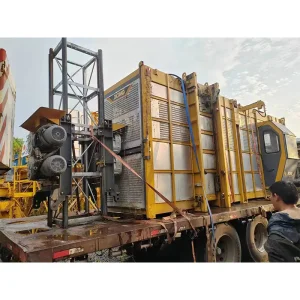
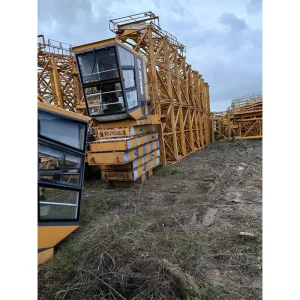
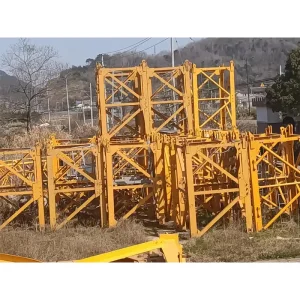
In the contemporary landscape of global civil construction, thermal energy plant construction, precast mega-modular engineering, and cross-sea suspension bridges, the requirement for super-heavy-class tower cranes has transcended historical capacity limits.
The K1650L class tower crane represents an apex in Chinese heavy machinery design, characterized by load moments typically exceeding 1,600 to 1,750 tonne-metres (t·m). Originating from leading Chinese heavy equipment manufacturers—including pioneering R&D from Zoomlion, Yongmao, XCMG, and SANY—the K1650L series responds directly to the rigorous demands of large-scale modular construction where individual structural elements, such as prefabricated composite shear cores, steel truss girders, and pre-stressed concrete modules, routinely weigh between 25 and 64 metric tonnes.
Unlike standard urban development tower cranes operating in the 100 to 250 t·m class (such as the standard QTZ100 or MC120 configurations), the mechanical architecture of the K1650L is engineered with specialized structural steel profiles (predominantly HG785D and Q460D high-strength low-alloy structural steels). This metallurgy guarantees an exceptional strength-to-weight ratio while maintaining structural toughness across extreme thermal cycles from −30°C up to +50°C.
The K1650L incorporates high-precision forged steel pin connections with surface-nitrided treatment instead of traditional high-strength bolt packages. This eliminates bolt torque fatigue, minimizes assembly time by 40%, and guarantees structural rigidity against dynamic torsional loads during slewing acceleration.
Equipped with closed-loop variable-frequency hoisting mechanisms (110kW to 132kW), the machine allows micro-inching precision down to 5 mm/s under maximum 64-tonne suspended load. Closed-loop vector drive algorithms eliminate hook recoil and rope slack, mitigating shock impulses across the boom chords.
Utilizing a standard 3.0m × 3.0m or 4.0m × 4.0m split-panel monolithic mast section design, cold-formed tubular chords dissipate localized wind shear stresses. The system complies with European standard EN 14439 (C25 wind classification) and ISO 4301 load spectrum criteria.
A rigorous engineering comparison between the super-heavy K1650L platform and conventional high-capacity Chinese/European workhorses across critical operational indices.
| Performance Parameter | China K1650L Heavy-Lift | Zoomlion QTZ250 (7025-12) | Potain MC320-12 (Topkit) | Yongmao STT153 (Flat-Top) |
|---|---|---|---|---|
| Rated Load Moment | 1,650 – 1,750 t·m | 250 t·m | 320 t·m | 153 t·m |
| Maximum Lifting Capacity | 64.0 t (at 28.5 m) | 12.0 t (at 19.8 m) | 12.0 t (at 23.4 m) | 10.0 t (at 16.2 m) |
| Jib Length Range | 50 m – 85 m | 30 m – 70 m | 30 m – 70 m | 30 m – 65 m |
| Tip Load at Maximum Radius | 15.2 t @ 85 m / 20.0 t @ 80 m | 2.5 t @ 70 m | 3.2 t @ 70 m | 1.5 t @ 65 m |
| Mast Section Dimensions | 3.0 × 3.0 × 6.0 m (or 4.0m) | 2.0 × 2.0 × 3.0 m | 2.0 × 2.0 × 3.0 m | 1.6 × 1.6 × 2.8 m |
| Hoisting Mechanism Rating | 110 kW – 132 kW Vector VFD | 55 kW VFD | 55 kW – 75 kW LVF | 45 kW VFD |
| Maximum Freestanding Height | 81.5 m (Chassis/Anchor) | 53.8 m | 54.7 m | 45.0 m |
| Primary Application Profile | Nuclear, Mega-Precast, Pylons | Commercial Towers, Civil | High-Rise Residential/Office | Urban Residential Modular |
Mapping macroeconomic deployment patterns across mega-infrastructure, renewable energy transformation, and industrialized precast construction.
Across Saudi Arabia (NEOM, Red Sea Project, New Murabba) and the UAE, project engineering schedules demand continuous, heavy structural placement. The K1650L and large QTZ series reduce the required crane density per square kilometer, eliminating hazardous multi-jib overslew airspace overlaps while accelerating erection cycles.
Generation III+ nuclear reactor construction (including Hualong One, AP1000, and EPR designs) relies on modular containment assembly. Heavy tower cranes place steel containment dome rings and heat exchangers weighing 40 to 60 tonnes directly from the peripheral foundation without demanding heavy crawler ground corridors.
Cable-stayed and suspension bridge towers exceed heights of 250 to 330 metres. Super-heavy top-slewing cranes attached with heavy-duty collar tie-ins ensure lifting stability under severe gust vortex resonance, delivering aggregate concrete buckets, structural cross-beams, and stay cable anchors at significant elevations.
Operating from Huai'an, Jiangsu, Huaian Zhongqiang International Trade Co., Ltd. provides certified sourcing, full-scope refurbishment, and strict structural metallurgy verification.
Procuring heavy tower cranes from China requires verified engineering oversight. As a holder of a Chinese National Second-Level Qualification with independent import and export operating rights, Zhongqiang maintains an extensive 30+ acre warehouse and equipment base and a specialized technical office spanning over 500 m². With over a decade of domain expertise in construction machinery remanufacturing and international project supply, our certified engineering teams bridge the gap between Chinese OEM fabrication lines and international job-site safety compliance.
Every structural weld along the primary chord members, boom pin ears, and slewing mast adapter transitions undergoes Magnetic Particle Inspection (MPI) and Ultrasonic Testing (UT) to detect micro-cracks, metal fatigue, and internal porosity prior to containerization.
Double-row four-point angular contact and triple-row cylindrical roller slewing bearings are measured via dial indicators for axial and radial clearances. Units exceeding 0.25 mm clearance tolerance are systematically refurbished or replaced with OEM factory spares.
Handling 64t-class machinery requires segmented dismantling schemes. Our in-house loading crews oversee modular jib split packing, custom steel saddles for mast chords, and anti-corrosive VCI shrink-wrapping for marine breakbulk and flat-rack ocean transit.
How the integration of AI telemetry, high-modulus synthetic ropes, and digital twin architectures is transforming the heavy tower crane industry through 2035.
Transition from compacted high-carbon steel wire ropes to ultra-high molecular weight polyethylene (UHMWPE) fiber ropes. This cuts deadweight by 80%, increases tip capacity by 12%, and eliminates internal greasing maintenance.
Real-time millimeter-wave radar and RTK-GNSS positioning feeds building information models (BIM) directly into the crane's PLC. Dynamic virtual geofences actively eliminate operator blind zones and structure proximity hazards.
Ground-based ergonomic operator cockpits leveraging 5G and satellite uplinks. Operators control multiple cranes across distinct sites with haptic-feedback joysticks and multi-angle augmented reality camera suites.
Regenerative dynamic braking systems capturing kinetic energy during load lowering and slewing deceleration. Direct DC-bus battery storage cuts overall grid power consumption by up to 35% on major job sites.
Evaluating Capital Expenditure (CAPEX) versus Operational Expenditure (OPEX) tradeoffs when sourcing high-tier inspected machinery from China.
For international tier-one engineering contractors, acquiring heavy-lift lifting capacity presents a critical financial calculation. A brand-new European 1,500+ t·m tower crane frequently demands an ex-factory expenditure in excess of $3.5M to $5.0M USD, coupled with lead times often exceeding 12 to 18 months. Conversely, procuring verified late-model Chinese heavy equipment (YOM 2018–2023) through an accredited international exporter like Zhongqiang delivers significant economic and strategic benefits:
Precision-tested construction hoists and intermediate-class tower cranes available for immediate global export and project site deployment.
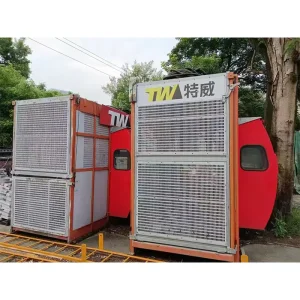
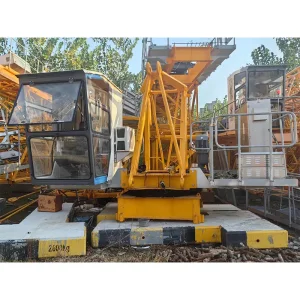
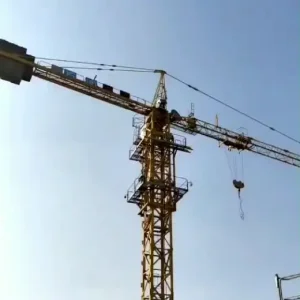
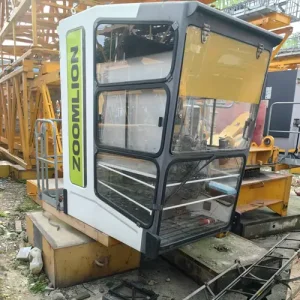
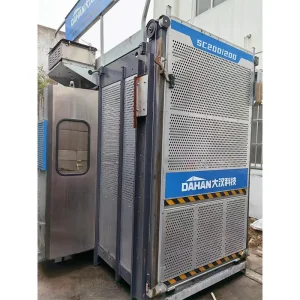
Authoritative technical guidance compiled by our senior structural engineers and global logistics team for EPC contractors, plant managers, and equipment buyers.