Every machine listed below is physically stationed at our 30+ acre Huai'an base. Units undergo comprehensive load-moment calibration, structural NDT testing, and pin-bearing tolerance checks before loading.
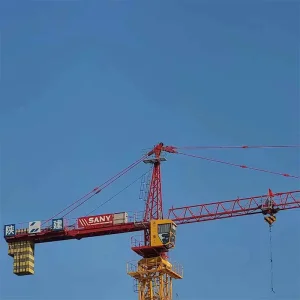
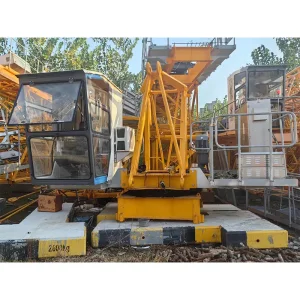
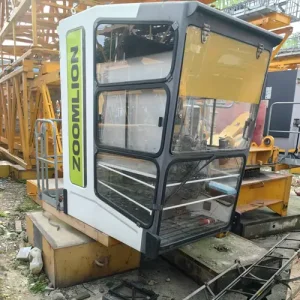
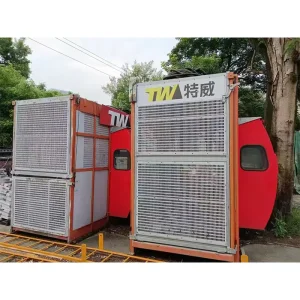
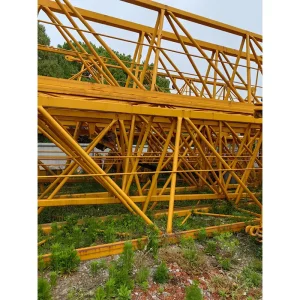
High-rise commercial construction demands machinery that transcends standard earthmoving equipment. Operating between 150 and 600+ meters in elevation introduces severe aerodynamic drag, dynamic wind shear, harmonic resonance, and logistical hoisting challenges.
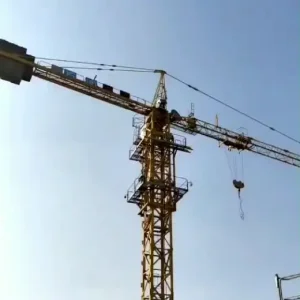
Modern skyscrapers require either internal climbing cranes positioned inside elevator shafts or external climbing configurations tied into structural core columns. High-rise cranes engineered by Zoomlion, SANY, and Potain employ custom hydraulic jacking collars that absorb torsional wind loads, permitting continuous building heights without sacrificing structural rigidity or operator safety.
Lifting heavy structural steel or precast concrete facades at elevations exceeding 200 meters requires variable frequency drives (VFD) with closed-loop encoder monitoring. These systems eliminate mechanical shock loading, deliver zero-speed torque retention, and enable micro-inching position accuracy down to 2 mm tolerances even in gusting wind environments.
Coastal metropolitan skylines in East Asia, the Middle East, and North America experience extreme typhoon conditions. High-rise cranes sourced from premium Chinese OEM manufacturers are constructed from high-tensile Q345B and Q460 steel chords with hydrodynamic pin-connected chord members designed to weather winds exceeding 160 km/h in out-of-service weathervaning configurations.
China’s heavy machinery sector has centralized the entire metallurgy, robotic welding, planetary gearbox production, and precision slewing ring supply chain. Manufacturers like Zoomlion, XCMG, Dahan, SANY, and Yongmao leverage automated submerged-arc welding, shot-blasting de-rusting lines, and cathodic electrodeposition primer booths.
Over 80% of world crane components—from slewing rings to VFD control cabinets—are produced in coordinated industrial zones in Jiangsu, Hunan, and Shandong provinces, reducing transit costs and component lead times.
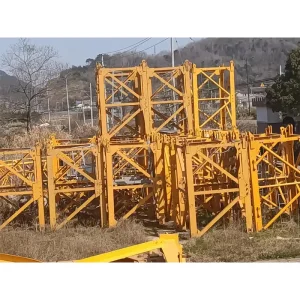
Standardized pin-joint and bolt-joint mast sections (such as 1.6m × 1.6m and 2.0m × 2.0m dimensions) ensure seamless modular upgrading, replacement, and field compatibility across diverse crane fleets.
Direct export sourcing from vetted Chinese crane depots delivers up to a 45–60% reduction in capital expenditure compared to Western equivalents, while retaining late-model (2018–2023) structural and electrical integrity.

Chinese high-rise tower crane nomenclature follows standard national nomenclature (QTZ) indicating maximum nominal moment rating, jib radius, tip load, and gross tonnage. Understand model specifications to align lifting capacity with project engineering schematics.
| Model Designation | OEM Brand | Max Capacity | Jib Reach | Tip Load @ Max Radius | Mast Section Spec | Recommended Height |
|---|---|---|---|---|---|---|
| QTZ100 (6013-6) | SANY / DAHAN / XCMG | 6.0 Metric Tons | 60 Meters | 1.3 Tons | 1.6m × 1.6m × 2.8m Pin | Free: 40m / Tied: 200m+ |
| QTZ200 (7020-12) | ZOOMLION | 12.0 Metric Tons | 70 Meters | 2.0 Tons | 2.0m × 2.0m × 3.0m Fishplate | Free: 50m / Tied: 220m+ |
| QTZ250 (7025-12) | ZOOMLION | 12.0 Metric Tons | 70 Meters | 2.5 Tons | 2.0m × 2.0m × 3.0m Bolt | Free: 60m / Tied: 240m+ |
| MC120-6 | POTAIN (China Facility) | 6.0 Metric Tons | 60 Meters | 1.5 Tons | 1.6m × 1.6m Monobloc | Free: 44m / Tied: 180m+ |
| MC320-12 | POTAIN (China Facility) | 12.0 Metric Tons | 70 Meters | 3.2 Tons | 2.0m × 2.0m L68 Mast | Free: 55m / Tied: 250m+ |
| STT153 (7015-10) | YONGMAO | 10.0 Metric Tons | 70 Meters | 1.5 Tons | 2.0m × 2.0m Tower Section | Free: 48m / Tied: 210m+ |
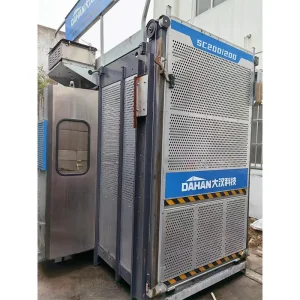
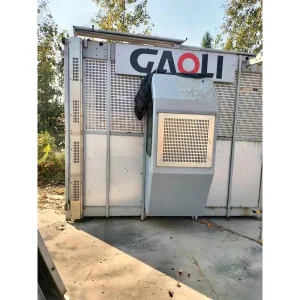
| SC200/200 | DAHAN / XCMG / GAOLI | 2 × 2,000 kg | Twin Cage Hoist | Full Height Rated | 650 × 650 × 1508 mm | Vertical Max: 450m+ |
In standard nomenclature (e.g., QTZ100 6013-6), "Q" designates Crane (Qi), "T" designates Tower (Ta), and "Z" designates Self-Erecting (Zi-sheng). "100" signifies nominal moment capacity in kNm/10 (approx. 100 t·m), "60" represents max boom length in meters, "13" confirms 1.3-ton tip lifting limit, and "6" defines peak capacity in metric tons.
With modern prefabricated modular construction (PPVC/DfMA), tower cranes must handle heavier deadweight loads (often 8 to 12 metric tons) at extended working radii (40m+). SANY QTZ100 and Zoomlion QTZ250 variants feature high line speed and dual/quad reeving auto-switchable systems to facilitate rapid panel rigging.
SC200/200 series vertical construction passenger/material hoists are engineered for continuous cycles. Equipped with progressive anti-fall safety devices (SAJ series) and dual-cage independent rack-and-pinion engagement, these units achieve lifting velocities up to 63 m/min without sacrificing personnel ride smoothness.
High-rise cranes operating in diverse global geographies face distinct structural constraints. Chinese OEM equipment backed by Zhongqiang International is tailored to diverse geotechnical, seismic, and architectural conditions.
In compact urban settings (Singapore, Hong Kong, New York), flat-top (topless) tower cranes eliminate tie-rod interference, permitting overlapping slewing perimeters without air-space collision hazards.
Coastal developments across the Arabian Gulf, Florida, and Southeast Asia encounter salt-spray corrosion and sudden cyclonic gusts. Our yard delivers high-tensile epoxy and hot-dip galvanized finishes.
Megastructure bridge towers demand specialized anchorage brackets, external climber jacking units, and non-rotational steel wire ropes rated for high vertical line speeds over water bodies.
Industrialized volumetric precast building projects require heavy-lift cranes capable of tandem tandem synchronization and exact millimeter positioning to dock prefabricated rooms seamlessly.
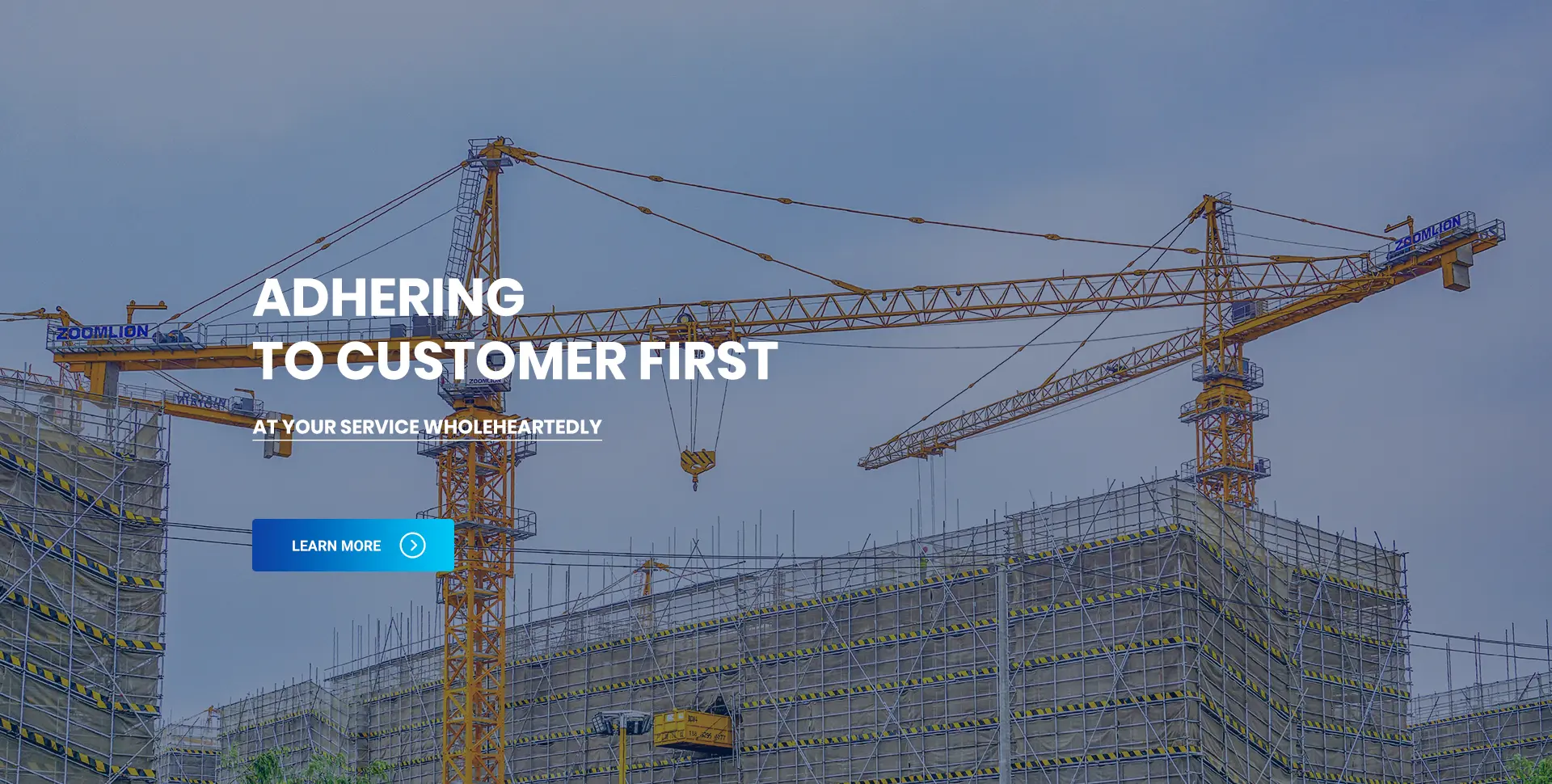
Huaian Zhongqiang International Trade Co., Ltd. operates a mandatory pre-export inspection regime in our Huai'an yard. Every crane and hoist undergoes exhaustive non-destructive testing (NDT) to verify metal fatigue life and operational safety.
Pin ear plates, chord welds, and counter-jib hinge pins undergo magnetic particle and ultrasonic testing to rule out micro-fissures or stress deformation.
Dial indicators confirm gear mesh backlash and axial play. High-strength bolts (Grade 10.9 / 12.9) are torque-checked and certified against original OEM design tolerances.
We execute multi-stage simulated payload runs to test hook height limiters, trolley range limits, slewing zone boundaries, and load-moment cut-offs under live load triggers.
The high-rise tower crane sector is transitioning from traditional mechanical rigs into connected digital ecosystems. China’s major manufacturers are leading the integration of intelligent telemetry, smart load-sensing, and automated collision mitigation.
Equipped with millimeter-wave radar and RTK-GNSS positioning sensors, high-rise cranes dynamically map surrounding structures, adjacent crane jibs, and blind lifting corridors. The control system automatically decelerates or halts trolley/slewing functions if a collision trajectory is calculated.
Cloud-connected sensors continuously monitor motor winding temperatures, gear vibration harmonics, brake lining wear, and boom stress spikes. Contractors can monitor crane telemetry via 4G/5G mobile dashboards, receiving predictive maintenance warnings before mechanical faults manifest.
Lowering a 10-ton concrete bucket down 300 meters generates substantial kinetic energy. Modern regenerative variable frequency drives convert this gravitational load into electrical power fed back into the project microgrid, cutting site energy consumption by up to 25%.
Procuring heavy high-rise lifting equipment across borders involves complex logistics, customs verification, and total lifecycle optimization. Navigating these requirements prevents expensive port demurrage or site delays.
Vetted late-model (2018–2023) equipment provides Tier-1 OEM performance while mitigating the massive initial depreciation of brand-new machines. Equipment retains significant resale value after multi-year project completion.
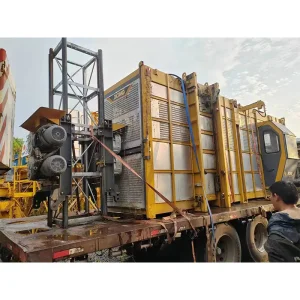
Our specialized in-house lashing and loading team packs complete tower cranes into 40ft High Cube containers and 40ft Flat Racks, securing mast sections and jibs to prevent maritime rolling damage during ocean transit.
Every shipment includes the Commercial Invoice, Packing List, Clean On-Board Bill of Lading, Certificate of Origin (CO), Factory Nameplate Registry, and Third-Party NDT Inspection dossier ready for your customs clearing broker.
Huaian Zhongqiang International Trade Co., Ltd. holds independent Chinese import and export operating rights and a National Second-Level Qualification, cutting out non-technical trading middlemen.
Key questions international contractors, fleet managers, and procurement officers address when purchasing heavy construction lifting systems from China.
YOM stands for Year of Manufacture. Our current export fleet consists primarily of late-model machinery produced between 2018 and 2023. Each tower crane and hoist retains its original OEM stamped metal nameplate showing the certified production date, model code, serial identifier, and structural tare weight.
Our full-time quality assurance team conducts a 128-point technical inspection in our Huai'an yard. We test mast and boom chords using non-destructive ultrasonic testing (NDT), evaluate slewing bearing play using dial gauges, inspect gear teeth profiles, examine VFD electrical cabinets, and perform live load testing. Comprehensive photos and high-resolution video files are supplied prior to loading.
Cranes are methodically disassembled into mast sections, jib elements, counter-jibs, operator cabins, and hoist/slewing winches. Structural pieces are marked with color-coded tags matching the assembly drawings. Components are lashed into 40ft High Cube containers, 40ft Flat Racks, or secured via breakbulk cargo holds using anti-corrosion barrier wrapping and heavy-duty steel wire chocking.
Yes. Buyers are welcome to visit our 30+ acre warehouse and testing yard in Huai'an, Jiangsu, China. Alternatively, you may commission international inspection agencies (such as SGS, Bureau Veritas, or TÜV) to audit the equipment on-site, or schedule a live multi-camera video inspection with our mechanical engineers.
Topkit (Hammerhead) cranes use a tower head and tie rods (pendants) to support the jib, providing exceptional structural economy for long working radii. Flat-top (Topless) cranes feature cantilevered jibs without tie rods, making them the standard choice for multi-crane jobsites where cranes swing over one another, reducing required clearance height and easing erection via smaller assist cranes.
We provide full documentation: Commercial Invoice, Packing List with dimensional tare/gross weights, original Sea Waybill or Bill of Lading, Certificate of Origin (CO/Form E/Form F), manufacturer load test certificates, equipment maintenance records, and export clearance documentation issued under Huaian Zhongqiang International Trade Co., Ltd.'s registered export license.
Explore specialized lifting configurations from Potain, Yongmao, XCMG, and Zoomlion. Select any unit below to access complete technical specifications, load radius charts, and pre-shipment inspection files.
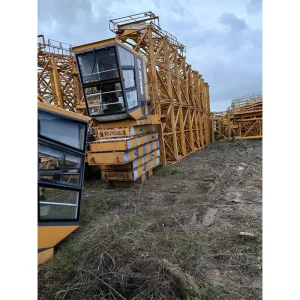
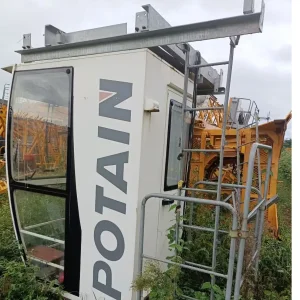
Connect directly with Huaian Zhongqiang International Trade Co., Ltd. Our engineering team provides foundation load calculations, packing schematics, and firm CIF/FOB quotations within 24 business hours.