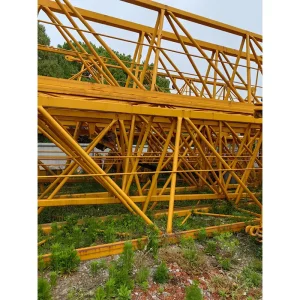
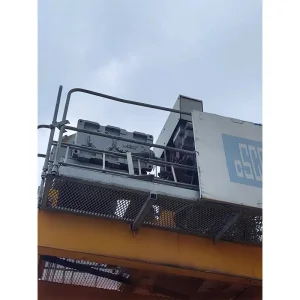
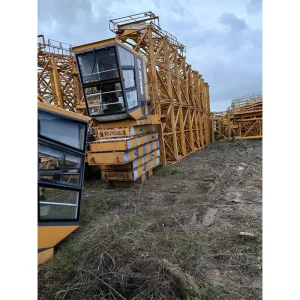
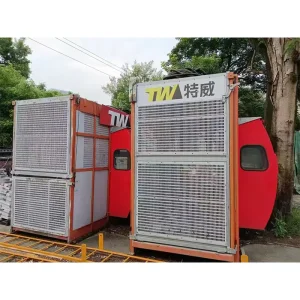
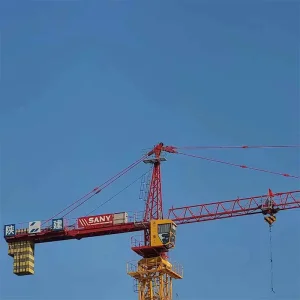
Pre-inspected, high-performance lifting machinery from tier-1 Chinese manufacturers available for immediate export.
The global construction sector is undergoing a profound structural shift. Accelerated urbanization in emerging markets across Southeast Asia, Latin America, and Africa, combined with massive infrastructure revitalization programs across North America and the Middle East, has catalyzed unprecedented demand for heavy lifting equipment. Among these critical assets, construction tower cranes stand as the foundational pillar of high-rise commercial construction, megastructure assembly, civil engineering, and prefabricated modular building systems.
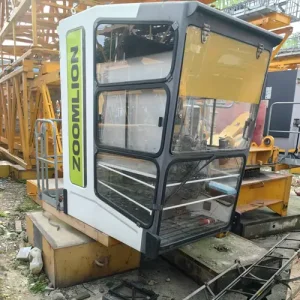
Over the past two decades, China has emerged not only as the world's largest market for tower cranes but also as the undisputed epicentre of tower crane design, manufacturing, and technological evolution. Chinese OEM equipment manufacturers—led by global titans such as Zoomlion, XCMG, SANY, DAHAN, Yongmao, and joint ventures like Manitowoc Potain China—have transformed the competitive matrix of global heavy machinery. By combining state-of-the-art structural metallurgy, advanced frequency conversion drive systems, digital load monitoring, and highly efficient manufacturing ecosystems, Chinese tower crane suppliers deliver equipment that meets or exceeds European safety benchmarks at highly competitive total cost of ownership (TCO).
China's dominance in the global tower crane market is rooted in an unmatchable industrial clustering advantage concentrated in provinces such as Jiangsu, Hunan, and Shandong. This industrial ecosystem creates structural advantages across four major vectors:
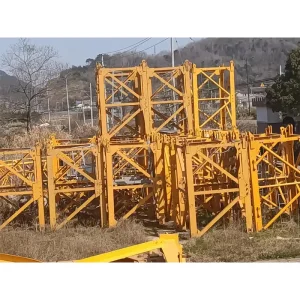
Chinese manufacturers utilize high-strength Q345B, Q460, and manganese steel alloys engineered specifically for fatigue resistance, low-temperature ductility, and structural longevity under severe dynamic loading.
Production lines at Zoomlion, XCMG, and SANY leverage full-process robotic welding cells and large-scale boring CNC machinery, ensuring 100% weld ultrasonic flaw detection compliance and exact mast pin interchangeability.
Direct access to localized tier-1 component ecosystems—such as Schneider or Siemens electrical controls, Rothe Erde slewing bearings, and Jiangte heavy motors—ensures reliable performance and streamlined replacement parts sourcing worldwide.
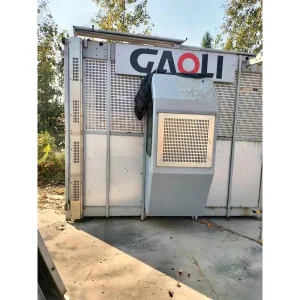
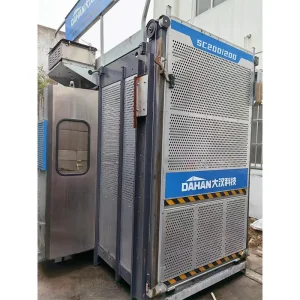
Furthermore, the Chinese supply chain allows for rapid custom configuration. Whether a job site requires specialized free-standing heights, customized jib lengths (from 30 meters up to 80 meters), or integrated passenger/goods construction hoists (such as the SC200/200 series from DAHAN, Gaoli, or Tewei), Chinese manufacturers and professional export suppliers provide flexible turn-key options.
Selecting the optimal construction tower crane requires matching site logistics, structural weight requirements, and operational radius with the appropriate crane architecture. Below is an engineering comparison matrix of primary tower crane typologies commonly manufactured and exported from China:
| Crane Architecture | Key Technical Characteristics | Typical Load Range (Max / Tip) | Ideal Application Scenario | Popular OEM Models |
|---|---|---|---|---|
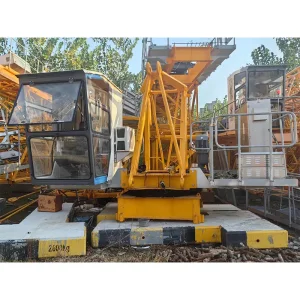
| Flat-Top (Topless) | No A-frame tie bars; simplified erection; ideal for multi-crane overlap zones. | 6 Ton – 20 Ton / 1.3t – 3.2t @ 70m | Urban residential, multi-crane jobsites, modular PPVC construction. | Zoomlion QTZ250, Yongmao STT153, SANY QTZ100 |
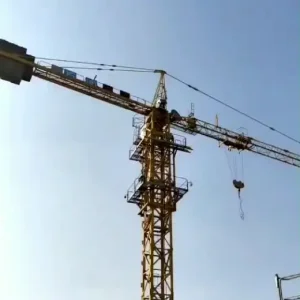
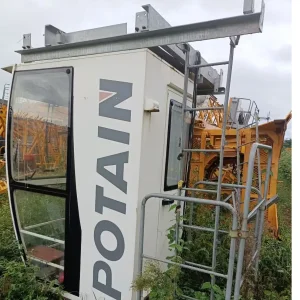
| Hammerhead (Top-Kit) | Traditional tie-rod design; high structural rigidity; cost-effective lifting dynamic. | 6 Ton – 16 Ton / 1.2t – 2.5t @ 60m-70m | Standard high-rise commercial, industrial plants, infrastructure projects. | Potain MC320-12, Potain MC120-6, XCMG QTZ100 |
| Luffing Jib | Variable jib angle (15°-85°); ultra-compact slewing radius; avoids overflying adjacent sites. | 8 Ton – 32 Ton / 2.0t – 5.0t @ 50m | Ultra-dense urban skylines, high-rise inner city redevelopment. | Zoomlion L-Series, Yongmao STL Series |
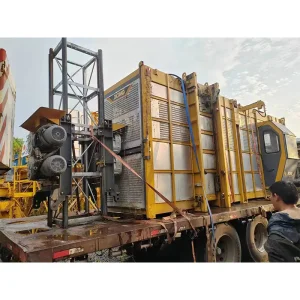
| Construction Hoist (SC Series) | Rack-and-pinion drive; dual/single cage; integrated safety progressive brake system. | 2 × 2000 kg capacity; speed 36-63 m/min | Vertical transportation of workers and materials during high-rise construction. | XCMG SC200/200, DAHAN SC200/200, GAOLI SC200/200 |
China-manufactured tower cranes and construction hoists operate across diverse climatic and geographic conditions worldwide. Understanding localized installation requirements ensures optimal jobsite safety and equipment utilization:
In crowded metropolitan centers across Singapore, Tokyo, Dubai, and Frankfurt, flat-top cranes (e.g., Zoomlion QTZ series or Potain MC series) are deployed to prevent jib collision when multiple cranes operate overhead. The absence of a top tower head reduces vertical clearance requirements between overlapping cranes by 5 to 10 meters.
Modern construction increasingly uses precast concrete modules weighing between 8 to 15 tons. High-capacity Chinese tower cranes (such as Zoomlion 7025-12 or Potain MC320-12) provide the heavy tip load capacity required to place prefabricated room units with millimeter precision.
From bridge pylons and nuclear power cooling towers to hydropower dam construction, heavy hammerhead cranes and high-speed passenger/material hoists (such as SC200/200 twin-cage units) ensure continuous 24/7 vertical logistics flow across demanding terrain.
Export-grade Chinese cranes supplied to coastal regions or desert environments (e.g., Middle East, North Africa) are customized with marine-grade epoxy anti-corrosion paint coatings, tropicalized IP65 electrical cabinets, dust-sealed bearings, and high-ambient heat cooling systems.
The construction machinery sector is entering a digital transformation era. Chinese OEM manufacturers are leading the integration of intelligent control architectures and eco-friendly powertrains into next-generation tower cranes:
Integrated dynamic sensors provide real-time 3D spatial mapping, automatically detecting blind spots, wire rope sway, structural overload, and potential zone breaches to prevent site accidents.
Cloud-connected telemetry modules stream real-time data on motor operating hours, brake wear, structural stress points, and energy consumption direct to fleet managers, enabling predictive maintenance.
Next-gen frequency conversion systems capture kinetic energy during heavy load lowering, feeding electricity back into the jobsite grid and cutting overall power consumption by up to 20%-30%.
Procuring heavy lifting equipment overseas requires strict quality assurance protocols to guarantee jobsite safety, regulatory compliance, and smooth customs clearance. Buyers should enforce a 5-stage verification framework when sourcing used or new tower cranes from China:
Inspect main chord members, diagonal webs, and mast connection plates for fatigue, micro-cracks, or plastic deformation. Certified suppliers conduct Non-Destructive Testing (NDT) such as ultrasonic flaw detection on critical welds.
Measure axial and radial play in the slewing ring bearing. Inspect planetary gearboxes, hoist drums, wire ropes, and automatic electro-hydraulic brakes for wear parameters within factory specs.
Verify load-moment indicators (LMI), height limiters, slewing angle limiters, and trolley travel switches. Ensure electrical cabinets contain original breakers, contactors, and variable frequency drives.
Reputable exporters operate expansive yard facilities (e.g., 30+ acre bases) equipped to perform full test rigging, zero-load operational testing, and load-capacity test runs documented via live video HD streams.
Technical and procurement answers from senior heavy equipment engineers and international logistics experts.
Explore late-model used cranes and passenger/material construction hoists ready for international dispatch.