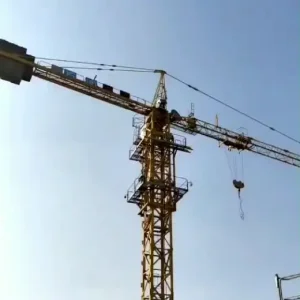
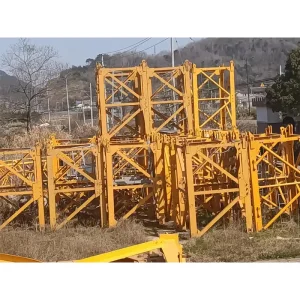
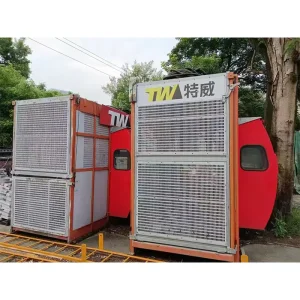
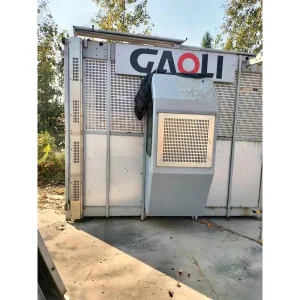
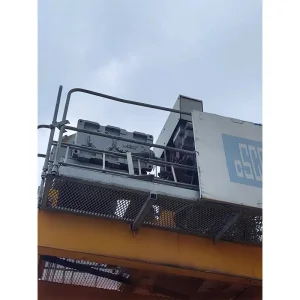
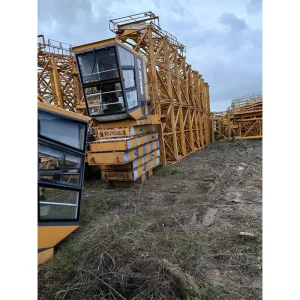
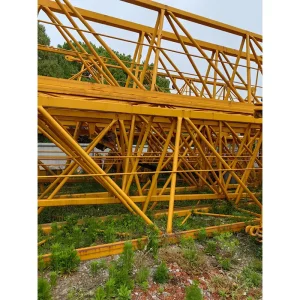
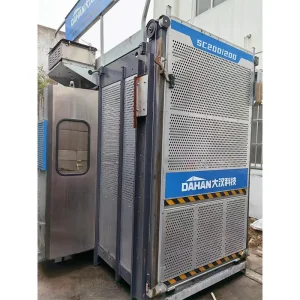
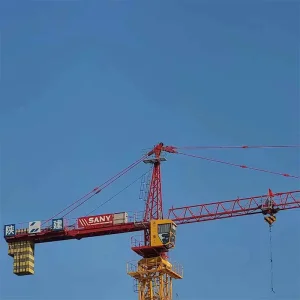
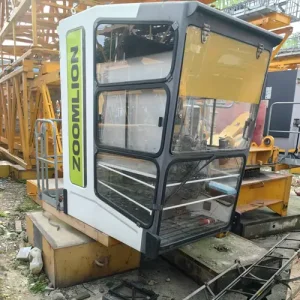
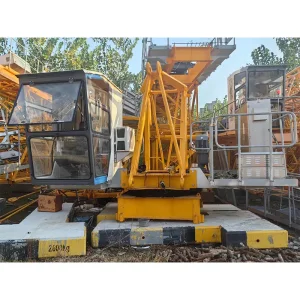
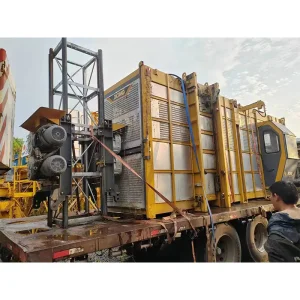
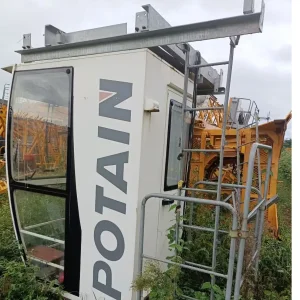
Certified used and refurbished lifting assets from leading tier-one manufacturers (Potain, Yongmao, Tewei, Gaoli, XCMG, Zoomlion, Dahan). Every crane undergoes systematic pre-shipment structural verification and NDT weld testing.
The international commercial construction and civil infrastructure sectors are undergoing a systemic equipment transition. Across metropolitan skyscraper developments in the Middle East, bridge and hydro-power infrastructure across Southeast Asia, and modular precast residential construction throughout Eastern Europe and Latin America, the modern construction site demands higher tip-load capacities, faster line speeds, and optimized structural modularity. In this macro environment, China big construction crane suppliers and factories have evolved from domestic industrial suppliers into the undeniable backbone of global lifting logistics.
Historical procurement models in heavy engineering relied heavily on legacy European brands. However, extended supply chain disruptions, OEM backlog lead times exceeding 14 to 18 months, and escalating capital expenditure requirements have shifted the focus of major EPC contractors (Engineering, Procurement, and Construction). Today, Chinese manufacturing ecosystems—spearheaded by engineering conglomerates such as Zoomlion, XCMG, SANY, Yongmao, and specialized hoist giants like Tewei, Gaoli, and Dahan—command over 70% of global heavy tower crane production volume.
This comprehensive engineering whitepaper addresses the core technical and strategic queries confronting EPC procurement directors: How do Chinese crane manufacturing clusters achieve cost efficiencies without compromising metallurgical integrity? What structural classifications (FEM 1.001, EN 14439, DIN 15018) govern these assets? And how does an overseas contractor mitigate the cross-border risk of acquiring heavy equipment through standardized, multi-stage non-destructive testing (NDT)?
The dominance of Chinese heavy construction crane manufacturing is rooted in complete industrial vertical integration, advanced metallurgical processing, and relentless structural engineering automation.
Unlike fragmented Western supply lines, Chinese manufacturing clusters in Jiangsu, Shandong, and Hunan assemble 95% of components within a 100-kilometer radius. Raw manganese steel rolling mills, specialized slew ring forging plants, and robotic welding facilities operate in unified geographic nodes, driving down production latency and component procurement overhead.
Chinese tier-one factories utilize high-yield structural steel alloys such as Q345B, Q355B, and super-heavy Q460 for mast chords and jib chords. Seamless submerged arc robotic welding and CNC profiling guarantee that mast fishplates, pin holes, and chord connections maintain tolerances within fractions of a millimeter, resisting cyclic metal fatigue under severe dynamic loading.
Longevity on coastal and high-humidity job sites depends on structural surface prep. Major Chinese crane yards execute full-immersion acid pickling or automated shot blasting to Sa 2.5 standards, followed by electrostatic powder coating or marine-grade polyurethane bake finishes. This provides over 3,000 hours of salt spray corrosion resistance.
Modern Chinese cranes incorporate microcomputer-driven Load Moment Indicators (LMI), frequency-converted VVVF drive mechanisms, and real-time slewing wind-speed sensors. The integrated PLC controllers dynamically calculate load vectors, prevent anti-tip tipping moments, and enable silky-smooth micro-inching movements essential for modular civil placement.
The sheer volume of China's domestic civil works over the past three decades has allowed manufacturers like Zoomlion and XCMG to achieve unparalleled economies of scale. Capital depreciation per unit manufactured is significantly lower than that of European boutique manufacturers, translating into dramatic cost efficiencies for global buyers.
Standardized mast cross-sections (e.g., 1.6m x 1.6m, 2.0m x 2.0m L68B1, L68B2, L69) provide inter-brand modularity. Jib sections, pin connectors, climbing hydraulic frames, and tie-in collars share standard engineering dimensional criteria, making spare parts acquisition and fleet expansion remarkably straightforward and economical worldwide.
Selecting the correct structural configuration is critical for site productivity, slewing clearance, and foundation load distribution. Review the operational taxonomy of big construction cranes below.
| Crane / Hoist Architecture | Typical OEM Models | Max Capacity Range | Max Working Radius (Jib) | Core Application Profile | Key Engineering Feature |
|---|---|---|---|---|---|
| Hammerhead (Topkit) Tower Crane | Potain MC120 / MC320, Zoomlion QTZ series | 6t – 25t | 50m – 75m | Long-term heavy civil, bridges, dam construction | High structural rigidity; tie-rod supported jib; superior tip capacity at extreme reach. |
| Flat-Top (Toppless) Tower Crane | Yongmao STT153, Zoomlion T7020, SANY SQT series | 8t – 32t | 60m – 80m | Congested urban multi-crane sites, airport zones | No tower head or tie bars; rapid assembly; reduced vertical clearance required for crane overlap. |
| Luffing Jib Construction Crane | Yongmao STL series, XCMG XL series | 10t – 64t+ | 35m – 60m | Super-tall skyscraper cores, ultra-narrow city lots | Variable steep jib angle; virtually zero tail swing outside job site perimeter lines. |
| Twin-Cage Construction Hoist | Tewei SC200/200, Gaoli SC200, Dahan SC series | 2 × 2,000 kg | Mast Height up to 450m | Vertical high-speed transport of personnel & bulk materials | Rack-and-pinion transmission; progressive SAJ safety burst arrestor; dual variable-speed inverter. |
Overseas buyers frequently encounter model codes such as QTZ100 (6013-6) or QTZ250 (7025-12). Under China's national lifting engineering standards (GB/T 5031), these designations convey exact load moment and kinematic parameters:
Procuring used heavy machinery from abroad requires uncompromising technical validation. Huaian Zhongqiang's dedicated engineering quality department executes a 128-point non-destructive testing (NDT) regime on every unit.
Lifting equipment must be calibrated to diverse geotechnical, thermal, and meteorological regimes. Below is an engineering analysis of how Chinese big construction cranes perform across international theatres.
In UAE, Saudi Arabia, and Qatar, ambient job site temperatures routinely surpass 50°C with severe airborne silica dust. Chinese cranes deployed here are outfitted with heavy-duty air-conditioned electrical enclosures, high-viscosity synthetic hydraulic lubricants, IP65-sealed slewing gear reducers, and oversized motor cooling impellers to prevent thermal tripping during continuous batch concrete pouring.
Across Indonesia, Malaysia, Vietnam, and the Philippines, equipment faces constant salt mist and torrential tropical downpours. High-build epoxy mastic paint systems, galvanized climbing cage ladders, sealed weather-proof limit switches, and double-lip rotary oil seals prevent water ingress into wire rope hoists and electric winches, maintaining mechanical dielectric resistance.
In space-constrained inner-city developments (Germany, UK, South Korea, Japan), overfly airspace restrictions and crane jib overlapping represent major legal and safety risks. Flat-top cranes (such as the Yongmao STT153 and Zoomlion QTZ series) combined with zone-interlocking anti-collision systems enable tight 3D envelope management without jib interference.
Strategic equipment management evaluates acquisition cost, depreciation velocity, salvage residual value, and project downtime risk.
When executing major civil or precast construction contracts, capital allocation determines overall contractor profitability. Traditional procurement mandates often default to purchasing new European equipment at extreme premium rates. However, seasoned EPC leaders systematically evaluate the Total Cost of Ownership (TCO) across an asset's 10-year lifecycle curve:
| Lifecycle Metric | Brand-New European OEM | Certified Inspected Chinese Fleet (Zhongqiang) | Commercial / Operational Advantage |
|---|---|---|---|
| Initial Capital Outlay (Capex) | $450,000 – $900,000+ | $120,000 – $280,000 | Reduces initial project liquidity freeze by up to 65%. |
| Lead Time to Site Delivery | 9 to 16 Months Backlog | 15 to 30 Days Ready-to-Ship | Immediate contract start; eliminates project tender liquidated damages. |
| First-3-Year Asset Depreciation | 40% – 50% Steep Drop | Gradual 8% – 12% Plateau | Significantly higher capital recovery when sold post-project completion. |
| Spare Parts Availability & Cost | High cost; lengthy import cycles | Universal modular stock; direct container stuffing | Critical components (hoist motors, contactors) sourced within days. |
| Rigorous Inspection Assurance | Standard factory bench test | 128-Point Pre-Shipment NDT + live video inspection | Eliminates blind-purchasing risks via empirical test data. |
By selecting a certified, late-model machine (YOM 2018–2023), contractors acquire an asset with over 80% remaining fatigue lifecycle at a fraction of the cost, amortizing the machine fully within a single major construction cycle.
How Chinese factories are pioneering intelligent telemetry, digital twins, anti-sway algorithms, and low-carbon electrification in lifting machinery.
Modern Chinese crane architectures integrate 4G/5G remote black-box telemetry modules. Slew bearing vibrations, winch motor thermal signatures, and hook travel accelerations stream continuously to cloud platforms, executing predictive maintenance before micro-fissures or brake slip induce site downtime.
Vector-controlled VVVF inverters utilize real-time pendulum modeling algorithms. Even during rapid acceleration in adverse gust conditions, the control system calculates counter-torque impulses on the trolley and slewing gears, keeping heavy prefabricated concrete slabs perfectly plumb within ±5 mm.
To address weak grid conditions on remote infrastructure job sites, new-generation Chinese lifting equipment utilizes supercapacitor and lithium battery energy storage systems (ESS). Gravitational energy recovered during hook descent is captured dynamically, slashing peak grid draw demands by up to 35%.
Founded in Jiangsu Province, Huaian Zhongqiang International Trade Co., Ltd. operates a premier physical logistics and heavy equipment testing facility, connecting Chinese OEM manufacturing with international building contractors.
Unlike trading brokers operating out of shared virtual spaces, Zhongqiang maintains an expansive 30+ acre heavy equipment depot in Huai'an, Jiangsu. Over 60 complete crane sets and construction hoists are erected or stored in readiness for direct visual, physical, or live video engineering inspections.
Our head office maintains a Chinese national Level-2 qualification for heavy construction machinery operations, along with independent import and export operating authorizations. Buyers engage directly with the licensed equipment titleholder, ensuring clean international title transfer and transparent documentation.
Improper sea packing causes severe structural distortion during long ocean transits. Zhongqiang's dedicated loading crew engineers tailored lashing schematics for 40' High Cube containers, Open Top (OT) units, and Flat Racks (FR), utilizing structural dunnage and tensioned steel cables to ensure undamaged delivery to over 50 global ports.
Detailed, engineering-backed answers addressing the most critical operational, financial, and logistical concerns of overseas heavy machinery buyers.
Browse additional stock units currently situated in our Huai'an yard. All units are fully decommissioned, cleaned, NDT tested, and staged for expedited container loading and global ocean transit.