Fully inspected topkit, hammerhead, and flat-top crane models, together with twin-cage vertical hoists from tier-one manufacturers including Zoomlion, Potain, XCMG, and SANY.
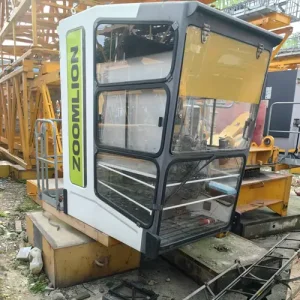
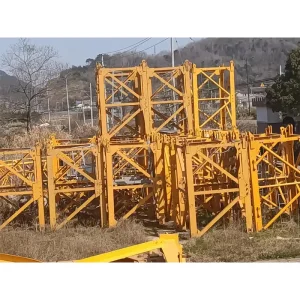
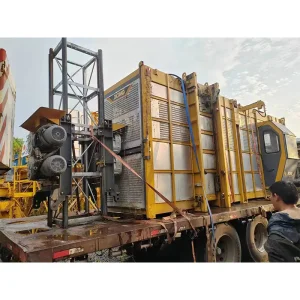
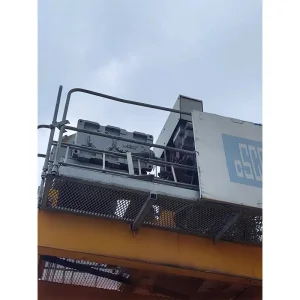
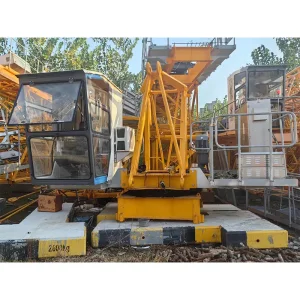
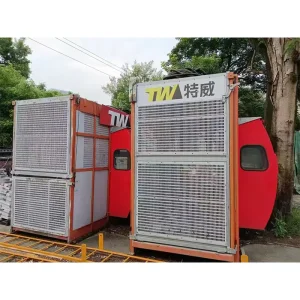
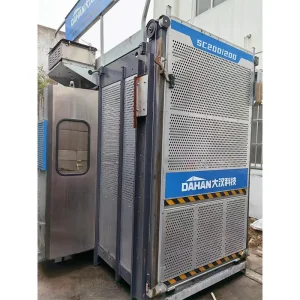
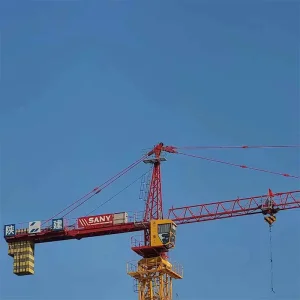
China's construction machinery industry combines massive structural fabrication capacities with advanced robotic welding and tightly integrated component supply loops.
China's steel clusters provide immediate access to specialized Q345B, Q355B, and Q460 seamless square steels. Mast chords and boom sections feature continuous automated submerged arc welds that guarantee high fatigue resistance under heavy cyclic loads.
From precision forged slewing bearings by Rothe Erde / DHI to variable-frequency planetary gear mechanisms by Schneider and Yaskawa, Chinese crane factories integrate top-tier electrical and drive solutions that minimize operational downtime on site.
Operating with centralized spare parts hubs in Jiangsu, Shandong, and Hunan, Chinese manufacturers ensure that replacement tie collars, climbing frames, motor gearboxes, and electronic load limiters can be packaged and flown globally within 48 to 72 hours.
A comprehensive review of what global contractors, plant engineering firms, and plant rental operators prioritize when procuring large-scale building cranes.
Late-model inspected cranes (YOM 2018–2023) achieve up to 45%–60% capital expenditure savings compared to brand-new units, while retaining over 90% of their operational life cycle when backed by OEM parts and professional refurbishment.
International buyers require clear title documentation, original OEM certificates of conformity, non-destructive testing (NDT) weld reports, clear nameplates, and full structural inspection logs before customs clearance.
Every high-rise project brings unique anchor heights and load radius constraints. Buyers demand flexible configurations: interchangeable mast sections (1.6m × 1.6m vs. 2.0m × 2.0m), customizable counterweights, and varied trolleying speeds.
How Huaian Zhongqiang eliminates overseas procurement risk via strict pre-shipment testing protocols and professional breakbulk/container packing.
Our engineers test structural chords for deflection, inspect pin holes for micro-wear, measure slewing bearing axial clearance, check electrical insulation, and calibrate electronic load-moment limiters before loading.
All exported units comply with GB/T 5031, EN 14439, FEM 1.001, and OSHA standards. Machines come with dual-language wiring diagrams, localized emergency-stop systems, and export-compliant certifications.
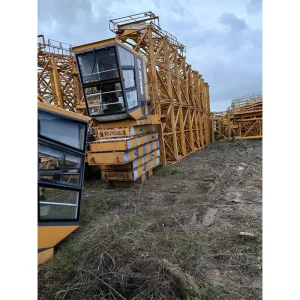
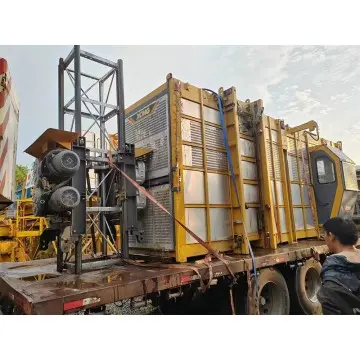
Tower crane components are disassembled systematically. Jibs and counter-jibs are nested and tied down; electrical cabinets are vacuum-wrapped with desiccant to prevent corrosion across ocean voyages.
Huaian Zhongqiang International Trade Co., Ltd. operates with licensed direct import and export authority, supported by a Chinese national Level-2 qualification held by our corporate group. Buyers work directly with the yard operator, without trading intermediaries or markups.
From dense urban high-rises to coastal bridge pylons and modular precast building sites, these cranes deliver stable lifting capacity across every project phase.
Flat-top (topless) models excel in high-density downtown job sites where crane jibs must overlap in tight airspace. The lack of tie-rods simplifies erection and dismantling under low hook-clearance constraints.
Handling heavy precast concrete facade panels, bathroom pods, and modular steel frames calls for high tip loads. QTZ200 and QTZ250 class cranes deliver 2.0t to 2.5t lifting capacity at a full 70-meter working radius.
For cooling tower pylons, thermal energy plants, and cable-stayed bridge towers, deep foundation anchorage and external floor-climbing frames allow work heights exceeding 200 to 300 meters.
Key technological shifts changing crane manufacturing and the global secondary machinery trade over the next decade.
Smart crane systems now feed operational telemetry directly to project managers: structural stress metrics, slew-angle limits, hook video feeds, and anti-collision zoning reduce site accidents and simplify maintenance planning.
Newer hoist designs incorporate regenerative braking systems that capture energy during hook descent and feed clean power back to site circuits, reducing total job-site power draw by 15% to 25%.
Leading manufacturers are converging on unified fishplate and mono-block mast pin dimensions. This modular compatibility lets plant rental firms mix mast sections across fleets without re-engineering tower footprints.
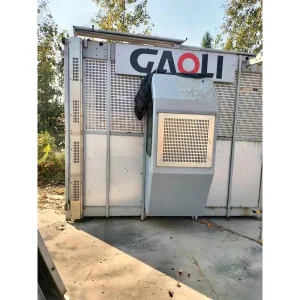
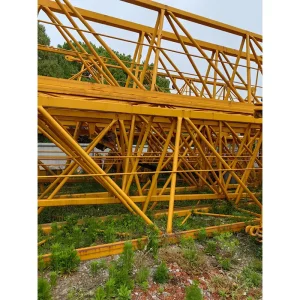
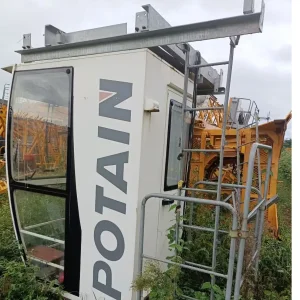
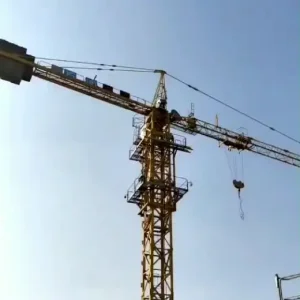
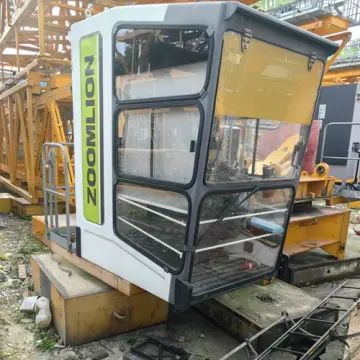
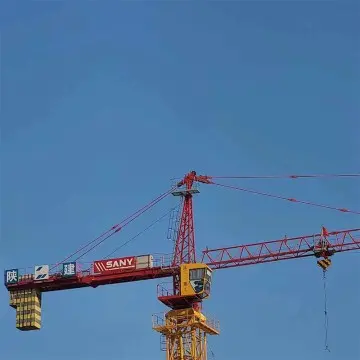
High-performance tower cranes and high-speed hoist systems ready for loading at East China seaports.
Understand capacity, reach, and rating designations under Chinese national manufacturing standards (GB/T 5031) before issuing an RFQ.
Every Chinese tower crane designation is an engineering formula that reveals its nominal load moment, reach, and lift profile.
Straight answers regarding inspection protocols, shipping logistics, customs documentation, and crane lifespans from our export team.