Wholesale YONGMAO STT153 7015-10 YOM 2019-2023 Manufacturers, Exporters
Inspect Details
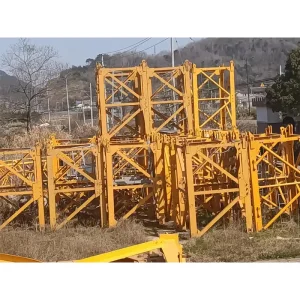
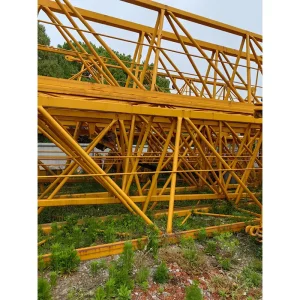
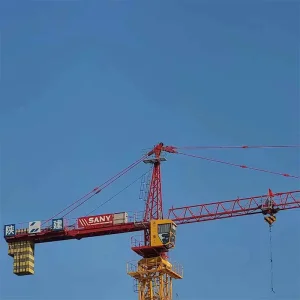
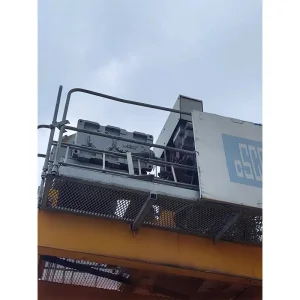
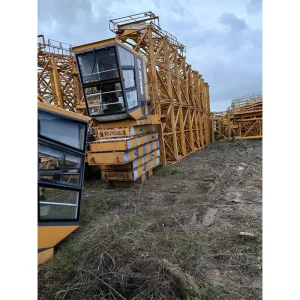
Pre-selected hammerhead, flat-top, and luffing models inspected under 128-point dimensional and non-destructive weld criteria.
Analyzing structural shifts in prefabrication, modular construction, and heavy capital procurement across international development zones.
The transition toward Prefabricated Precast Concrete (PPVC) and dense modular volumetric designs requires assembling cranes capable of delivering severe hook-height lifting torque. Modern job sites demand rapid pin-connected mast systems that transition seamlessly between external free-standing operations and braced internal climbing sequences.
Engineering procurement directors face stringent capex pressures. Acquiring late-model, authenticated assembling cranes (YOM 2018–2023) directly from centralized export hubs slashes overall lifting capital expenditures by up to 55% compared to greenfield OEM builds, without yielding an ounce of metallurgical integrity or torque endurance.
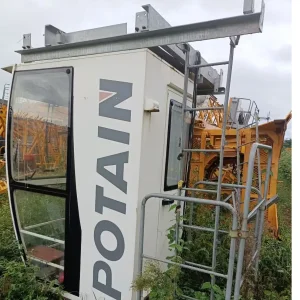
Today's top-tier EPC contractors enforce strict safety conformity: EN 14439, FEM 1.001, and ISO 4301 load spectrum standards. China’s assembled tower crane fleets, manufactured in partnership with or under license from global leaders like Manitowoc Potain and regional giants like XCMG and Zoomlion, exhibit native compliance with global seismic and dynamic wind loading envelopes.
China's Yangtze River Delta and surrounding industrial zones maintain an unrivaled supply ecosystem for tower crane manufacturing and reconditioning. At our specialized 30+ acre facility in Huai'an, Jiangsu, structural mast weld lines, slewing ring machining facilities, and state-of-the-art variable-frequency drive (VFD) recalibration bays operate within hours of major steel foundries and precision component plants. This geographic consolidation enables turnkey component sourcing, stress-relieving heat treatments, ultrasonic flaw tests, and rapid export packaging at turnaround cycles impossible to match in fragmented markets.
How our certified inspectors and technical teams validate metallurgical stability, load moments, and slewing gear tolerances before loading for export.
Every standard mast section (such as L46A1, L68B2, or QTZ herringbone profiles) undergoes Ultrasonic Testing (UT) and Magnetic Particle Testing (MT) across core fishplate joints, pinholes, and chord-to-diagonal welds. This strictly isolates any hairline crystallization, micro-fissuring, or thermal stress fatigue.
We measure axial and radial clearances on the slewing ring to ensure readings stay well inside OEM wear thresholds (typically <0.25mm initial baseline tolerance). Double-slewing and triple-slewing planetary reducers are purged, flushed, resealed, and checked for smooth torque delivery under inverter load.
Old contacts are renewed with Schneider or ABB contactors, micro-motion load switches are replaced, and load moment limiters (RCI/SLI systems) are systematically recalibrated. Hoisting drums receive brand-new, rotation-resistant compacted wire ropes matching strict safety factors.
Our parent entity maintains state-certified Level-2 operational credentials in heavy hoisting machinery engineering and high-altitude erection safety.
We manage direct customs clearances, preferential Certificates of Origin (Form E, RCEP, EUR.1), and clean bills of lading with zero third-party broker friction.
Strategically situated in Huai'an, Jiangsu, offering direct barge feeds to Shanghai, Taicang, and Qingdao ports for immediate worldwide containerized or breakbulk shipping.
From congested downtown high-rises to rugged maritime infrastructure and power stations, assembling cranes meet demanding operational profiles.
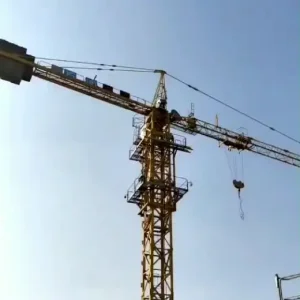
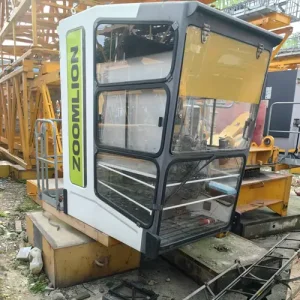
Restricted urban sites require precise flat-top (topless) assembling cranes like the Zoomlion QTZ series or Potain MC units. The absence of a towering cat-head reduces erection clearance issues when multiple jibs overlap, cutting overall assembly costs and reducing interference hazards.
Thermal turbine retrofits, nuclear balance-of-plant constructions, and bridge pylon slip-forming demand cranes with high free-standing hook heights and massive tip load capacity. Heavy hammerhead units (12t to 16t classes) provide the rigid hoist control needed to seat pre-assembled rebar modules smoothly.
Modern procurement priorities emphasize energy savings and remote diagnostics. Our reconditioned models integrate Stepless Frequency Inverters on slewing, hoisting, and trolley paths. This minimizes peak amperage loads, protects onboard diesel generator sets, and smooths startup torque to keep the hook steady at long radius points.
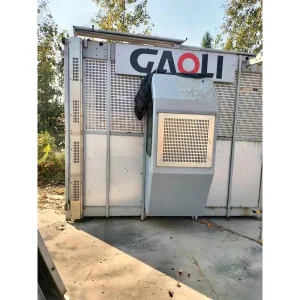
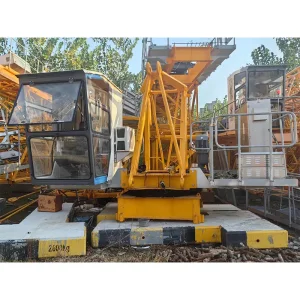
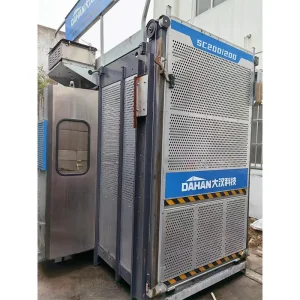
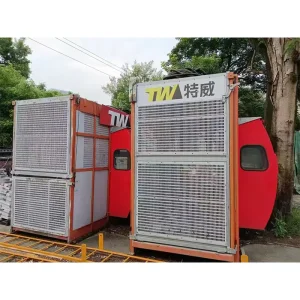
Browse our verified stock of construction passenger hoists, topkit cranes, and high-moment tower cranes with complete yard inspection files.
A systematic framework protecting complex mechanical assemblies from corrosion, impact, and structural deformation over long oceanic transits.
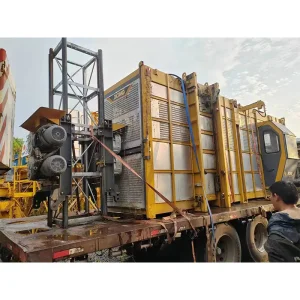
Mast sections (1.6m and 2.0m cross-sections) are precision-nested into high-cube (40HC) containers or loaded onto flat racks with heavy welded dunnage. Critical mechanisms—such as the hoist winch, slew drive, and electrical cabinets—are wrapped in corrosion-inhibiting vapor barrier films with multiple desiccant packs.
Every exported unit includes verified structural calculations, foundational load reaction diagrams, electrical schematics translated into English, and full non-destructive testing (NDT) certificates signed off by internal quality engineers before the crane leaves our yard.
Leveraging direct river access to Yangtze shipping arteries, units pass rapidly through Shanghai or Qingdao deepwater terminals. This streamlined transit reduces port dwell times and avoids multi-tier logistics markups, helping projects stay on schedule and under budget.
Authoritative answers addressing engineering lifespans, logistics configurations, third-party verifications, and cross-border delivery schedules.