Explore our export-ready machinery stock. Each verified unit undergoes structural crack detection, slewing torque validation, and electrical load limit testing before crating.
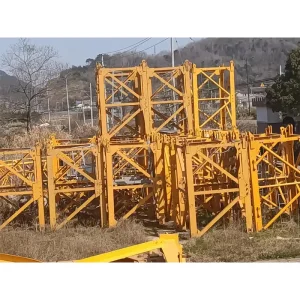
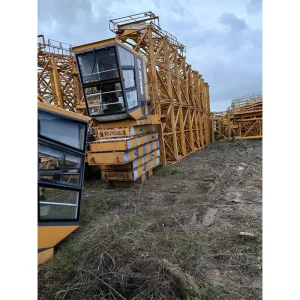
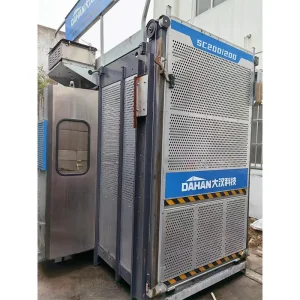
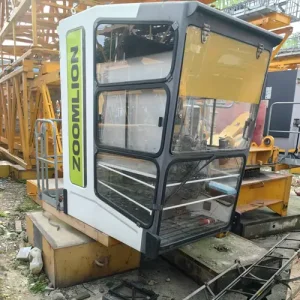
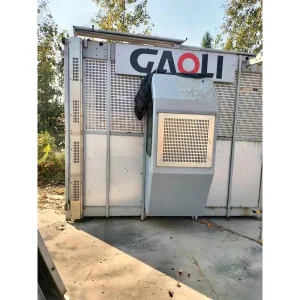
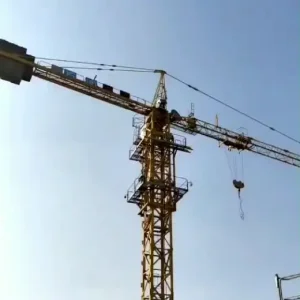
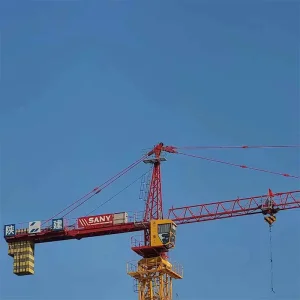
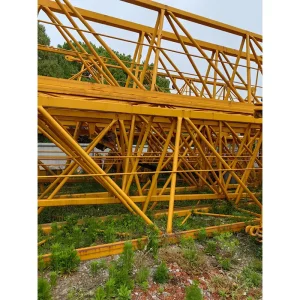
In global structural engineering, procuring a "cheap" tower crane on tracks does not denote compromised structural integrity; rather, it reflects radical Total Cost of Ownership (TCO) compression through Chinese manufacturing density and optimized site logistics.
Conventional high-rise and horizontal construction projects frequently suffer from logistical bloat caused by stationary cranes. A stationary tower crane pinned to a static concrete base has a radial operational envelope limited by its jib length. For extensive horizontal projects—such as precast housing blocks, drydock shipbuilding facilities, dam slipforms, and railway viaducts—contractors historically deployed three to five independent static cranes. This configuration multiplies foundation costs, doubles anchor collar installations, requires multiple certified operators, and increases blind-spot collision risks.
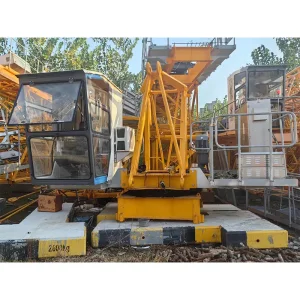
A rail-traveling tower crane (Tower Crane on Tracks) eliminates this structural redundancy. Anchored on an engineered traveling chassis equipped with 4-bogie or 8-bogie rail systems, the crane moves dynamically along a continuous steel rail track under full ballast. A single traveling tower crane (such as an STT153 or QTZ250 chassis adapted with rail bogies) effortlessly serves a 200-meter to 500-meter linear working front. By substituting multiple static towers with one traveling system, construction companies achieve a drastic cut in initial equipment expenditure, dismantle site power draws, and minimize equipment idle time.
| Evaluation Parameter | Stationary Tower Crane Setup | Track-Mounted Traveling Crane Setup | Direct Financial & Operational Gain |
|---|---|---|---|
| Civil Foundation Cost | Multiple concrete mass gravity bases ($45,000 × 3) | Single ballasted sleeper & rail track bed | 52% savings on deadweight concrete pouring |
| Equipment Fleet Size | 3 static cranes required for 240m frontage | 1 track-mounted crane with 60m–70m jib | Reduces capital acquisition expense by 60% |
| Operator & Labor Overhead | 3 operators + 6 riggers per 8-hour shift | 1 operator + 2 ground marshals with radio remote | Over 65% reduction in recurring monthly payroll |
| Airspace Overlap Hazard | High: Complex slewing anti-collision coordination | Zero: Single crane eliminates slewing intersections | Drastically lowers insurance premiums and risk |
| Relocation & Dismantling | Requires multi-stage hydraulic climbing tear down | Rolls along rails to access successive job sectors | Compresses project turnover timeline by weeks |
A precision-manufactured traveling crane balances extreme wind shear, slewing dynamic torque, and heavy hook loads while rolling smoothly along precision-calibrated heavy rail tracks.
The undercarriage incorporates 4 corner bogies, each fitted with dual-flanged forged steel wheels (typically 42CrMo alloy) riding on P43 or P50 crane rails. Driven by integrated planetary geared motors with variable frequency drives (VFD), these units eliminate dynamic torque lag, guaranteeing millimeter-accurate travel synchronization without skewing or derailment stresses.
Unlike static cranes which depend solely on underground anchor rebar, track cranes utilize a central portal ballast frame. Reinforced concrete counterweight slabs rest securely within a boxed structural steel cradle directly above the rail bogies. This geometric center of gravity design prevents overturning moments even under maximum working hook capacities and extreme gales.
High-voltage electric power is supplied continuously through a heavy-duty motorized torque reel drum. Incorporating an internal slip ring and magnetic coupler, the mechanism spools or unspools armored flexible PUR trailing cables across travel spans exceeding 300 meters, ensuring continuous operational uptime with zero phase drop or cable snag hazards.
Wind safety is engineered directly into the traveling base. Automatic spring-loaded or hydraulic rail clamping systems engage instantaneously whenever the crane halts or if site anemometers detect gusts exceeding 20 m/s. Manual mechanical wedge locks and end-of-track buffers supply fail-safe secondary physical retention against sudden severe storm shifts.
For non-linear job sites, specialized pivoting bogies with spherical thrust bearings allow the traveling tower crane to navigate curved rail profiles with curve radii as tight as 18 to 25 meters. This structural flexibility allows a single crane to encircle industrial plants, chemical refineries, or sprawling residential compounds without tracks interruption.
Across emerging economies and established infrastructure hubs, track-mounted tower cranes dominate project schedules that mandate extensive horizontal movement and high duty cycles.
Modern prefabricated building construction requires moving heavy 8-to-15 ton modular bathroom pods and concrete wall panels from delivery trailers directly into alignment. A traveling crane glides alongside the building perimeter, unloading flatbeds at station A and erecting modules at station B without double handling.
Shipbuilding demands lifting pre-assembled hull sections, piping spools, and marine engines across extended slips. Rail-mounted tower cranes provide generous height-under-hook (HUH) and up to 70m radius coverage, shifting along the slipway to position maritime components with pinpoint accuracy.
Dam construction spans hundreds of meters across gorges and valleys. Track-mounted cranes roll along the crest or upstream cofferdam parapets to manage aggregate bucket placement, penstock section positioning, and radial flood gate mechanical installations.
Bridge casting yards rely on rail-mounted cranes to lift rebar cages, transfer concrete forms, and stage completed prestressed bridge girders. The linear track layout mirrors the linear geometry of transportation corridors perfectly.
Achieving competitive procurement costs without compromising tensile safety is the hallmark of China's advanced heavy equipment manufacturing clusters.
International buyers frequently query how Chinese manufacturers and seasoned exporters like Huaian Zhongqiang International Trade Co., Ltd. offer track-mounted tower cranes and construction hoists at prices 30% to 50% below Western European competitors. The explanation lies in unrivaled industrial clustering, raw material vertical integration, and hyper-automated manufacturing processes located across the industrial corridors of Jiangsu, Shandong, and Hunan provinces.
Our manufacturing alliances secure structural steel (Q345B, Q355B, and Q460D seamless tubes) directly from top domestic mills like Baosteel and Shougang. Eliminating intermediaries reduces raw material CAPEX, allowing mast sections and booms to be built with optimal strength-to-weight ratios at unmatched pricing.
Mast chords and chord lattices are welded on robotic multi-axis lines using automatic submerged arc welding (SAW) and gas-shielded processes. Automated fabrication guarantees deeper weld penetration, eliminates human fatigue inconsistencies, and cuts labor overhead by 70% while achieving full compliance with AWS D1.1 and EN ISO 15614-1 welding codes.
Zhongqiang maintains a dedicated 30+ acre facility in Huai’an, Jiangsu. Holding extensive physical inventory of late-model units (YOM 2018–2023) from top OEMs (Zoomlion, SANY, XCMG, Potain, Yongmao, Dahan) permits rapid turnaround. Our full-time engineering crew disassembles, sands, ultrasonic-tests, repaints, and calibrates every machine before overseas shipping.
The transition from mechanical workhorse to autonomous robotic node is already underway. Explore the tech innovations reshaping rail-traveling tower cranes.
Modern rail cranes are equipped with multi-sensor RTK-GPS and LiDAR spatial scanners integrated directly into site Building Information Modeling (BIM) engines. As the crane rolls down the track, the zoning system dynamically updates forbidden slew envelopes and automated travel limits relative to adjacent buildings, power cables, and moving equipment.
Elevating crane safety, operators no longer need to scale a 60-meter mast in freezing conditions. High-throughput, ultra-low latency 5G connections pipe 360-degree high-definition video feeds directly down to ground-level ergonomic sim-cockpits. A single certified crane master can supervise multiple traveling units on site smoothly.
Hoisting and track deceleration generate immense kinetic energy. Next-generation traveling undercarriages capture this counter-electromotive force through supercapacitor banks or regenerative grid inverters. The recovered power handles the next acceleration cycle, lowering net site energy consumption by 22% to 30%.
Vibration sensors embedded on slewing bearings, hoist reducers, and traveling bogie drive axles continuously transmit real-time telemetry to cloud monitoring algorithms. Micro-wear in bearings, brake pad wear rates, and motor thermal stresses are caught weeks before hardware degradation can create unplanned job site downtime.
Exporting heavy machinery demands complete traceability. We engineer every shipment to pass the world's most stringent regulatory frameworks seamlessly.
Whether your project is located in Rotterdam, Houston, Singapore, or Busan, international lifting equipment must comply with mandatory occupational health and safety directives. At Huaian Zhongqiang, our Chinese National Level-2 Qualification and dedicated engineering testing staff ensure that all machines conform to:
Magnetic particle inspection (MPI) and ultrasonic flaw detection are performed on all primary chord welds, turntable mast adapters, and jib tie-bar pins to certify zero micro-fractures, metal fatigue, or hidden corrosion.
Before signing off, international buyers can review comprehensive high-resolution videos, live Zoom inspection streams, and complete engineering reports of their specific unit operating under hook load at our yard.
Components are marked with durable steel tags matching technical assembly schematics. Our in-house loading team packs flat racks and open-top containers with rust-inhibiting coatings, timber dunnage, and steel chain lashings for secure ocean transit.
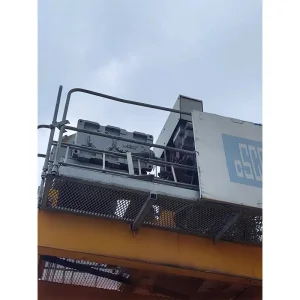
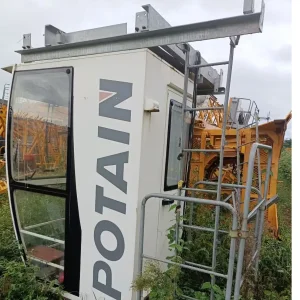
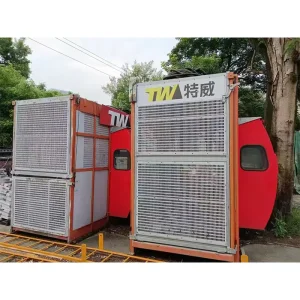
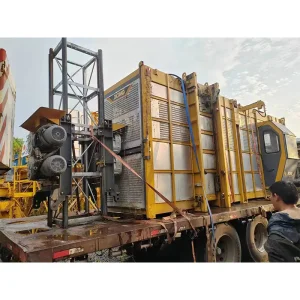
Review additional models available for immediate booking. Shipped globally with full commercial invoices, origin certificates, and customs-cleared documentation.
Direct technical and commercial clarifications addressing your most critical engineering, logistical, and lifecycle management concerns.