Every unit undergoes ultrasonic weld verification, slewing bearing runout benchmarking, and hydraulic pressure decay testing before ocean-grade packaging.
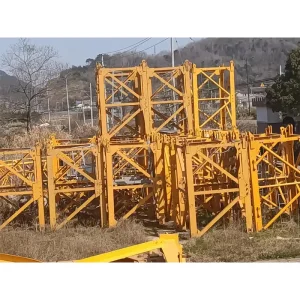
The global construction landscape is navigating a capital re-allocation phase. Soaring interest rates and supply chain bottlenecks for raw structural steel (Q355B and Q460D alloys) have pushed tier-1 general contractors toward vetted, factory-recertified "soldier-class" tower cranes. Characterized by standardized modular pin-connected mast sections (such as 1.6m × 1.6m and 2.0m × 2.0m chord geometries), heavy-duty soldier cranes provide the structural backbone for high-density civil works, infrastructure pylons, and precast assembly.
Brand-new European or domestic tower cranes carry depreciation cycles that penalize long-term balance sheets. Procuring second-hand YOM 2018–2023 certified units slashes upfront capital expenditures by 45% to 65% while delivering identical load charts, tip capacities, and FEM 1.001 lifting classifications.
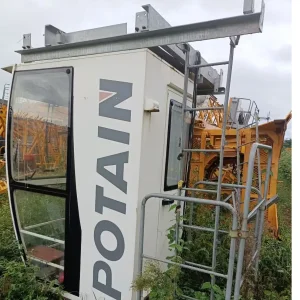
Modern industrialized modular construction (PPVC and precast wall panels) demands cranes capable of lifting 8 to 16-ton modules at extended radii. Soldier-class QTZ and Potain MC configurations feature rigid chord trusses that limit slewing deflection and eliminate wind-induced boom drift during blind blind lifts.
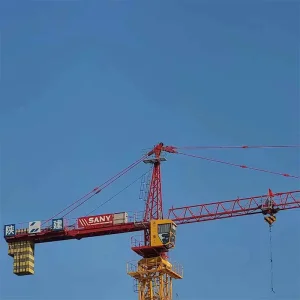
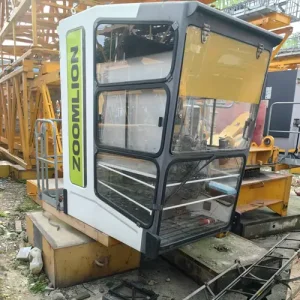
By standardizing on proven lineages (XCMG, Zoomlion, Potain MC, Sany, Dahan), overseas plant superintendents gain access to universally compatible fishplate pins, mast bolts (Grade 10.9 and 12.9), rope sheaves, and hoist brake linings readily available worldwide without vendor lock-in.
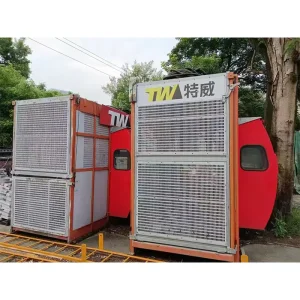
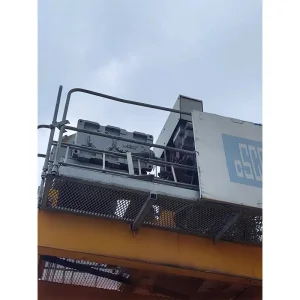
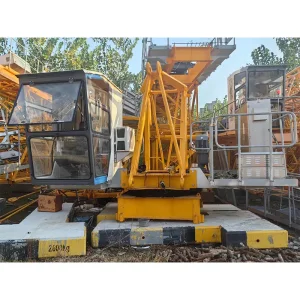
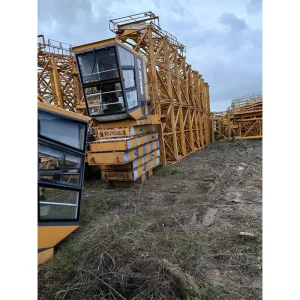
Unlike regional brokers who trade paper certifications without physical machinery, Huaian Zhongqiang International Trade Co., Ltd. operates a centralized 30+ acre facility in Jiangsu, China. Every unit on our manifest is physically present, degreased, ultrasonically scanned, fully assembled for mechanical trial runs, and loaded directly by our dedicated crane handling crews.
Exporting heavy tower cranes across international borders requires absolute structural transparency. Our certified non-destructive testing (NDT) engineers deploy phased-array ultrasonic testing and magnetic particle inspection across critical load-bearing assemblies before granting export clearance.
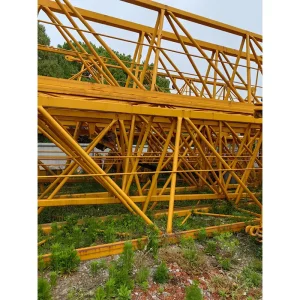
Fishplates, chord seam welds, and diagonal web bracings are inspected for micro-fissures and metal fatigue. Any section displaying permanent plastic deformation exceeding 1/1000th of chord length is discarded.
Dial indicators measure axial runout and radial clearance on the main slewing race (must not exceed 0.20 mm). Pinion gear teeth are checked for root spalling, contact backlash, and case-hardening depth.
PLC cabinets are load-tested. Hoisting limiters, slewing sector restrictors, trolley travel bump stops, and electronic load-moment indicators (LMI) are calibrated with certified test weight blocks.
Jacking cylinders are static pressure-tested at 125% of rated bar for 2 hours with zero rod creep. Counter-jib tie rods, pins, and hoist non-rotating galvanized wire ropes are gauged for diameter loss.
| Evaluation Parameter | New OEM Specimen | Zhongqiang Certified Soldier Crane | Unverified Market Broker Yard |
|---|---|---|---|
| Chord Metallurgy & Yield | Q355B / Q460D (355–460 MPa) | Certified Q355B Verified via Spectrometer | Unknown / Potential Scrap Re-welds |
| Pre-Shipment Trial Run | Factory Dry Test | Full 3-Motion Powered Live Weight Run | As-is Ground Storage (No Power Test) |
| Slewing Backlash Spec | < 0.15 mm | Guaranteed < 0.20 mm or Bearing Renewed | Unmeasured (> 0.45 mm Risk) |
| Delivery Lead Times | 12 to 24 Weeks | 7 to 14 Days Ready for Port Loading | Subject to Third-Party Disputes |
| CapEx Cost Ratio | 100% Baseline | 35% – 45% of OEM Cost | 30% (High Hidden Overhaul Risk) |
Civil projects present unique geotechnical, meteorological, and urban constraints. Soldier tower cranes adapt across specialized configurations to meet regional site kinematics.
In mega-cities like Singapore, Seoul, Dubai, and Manila, multiple cranes must overlap swing radiuses. Our flat-top soldier series (e.g., Zoomlion and Yongmao models) eliminates the tall crane head and tie-rod assemblies, reducing clearance requirements between overlapping jibs to just 3 meters.
Suspension bridges and viaduct pylons demand severe freestanding heights before initial anchor collar installation. With heavy-duty 2.0m mast sections and reinforced anchor frame collars, our Potain MC and Zoomlion QTZ series withstand wind speeds up to 150 km/h in out-of-service conditions.
Thermal power chimney construction, nuclear containment shells, and coastal wind farm pre-assembly require uninterrupted duty cycles under corrosive maritime conditions. We supply cranes re-coated with marine-grade polyurethanes and zinc-rich epoxy primers designed for ISO 12944 C5-M marine exposure.
Exporting heavy equipment from China into the Americas, the European Union, Southeast Asia, or the Middle East involves navigating distinct regulatory hurdles and sea-transit packaging protocols.
We provide comprehensive documentation packages matched to the importer's customs requirements: OEM Nameplate Validation, Year of Manufacture (YOM) Verifications, Mill Test Certificates (MTC) for steel components, Certificate of Origin (Form E, CO, CCVO), and third-party inspection dossiers (SGS, BV, or CCIC).
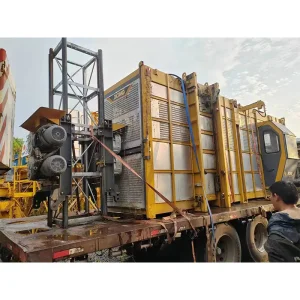
Disassembly is executed by in-house rigging crews. Jibs and counter-jibs are nested and lashed to avoid torsional warping. Mast sections are loaded into 40' High Cube (HC) containers or bundled for Open Top (OT) and Flat Rack (FR) platforms. Sensitive slewing rings and hoisting gearboxes travel in vacuum-sealed moisture-barrier wrapping.
Standard domestic configurations run at 380V/50Hz. For North America (480V/60Hz), the Philippines (220V/440V 60Hz), and select Latin American grids, our factory integrates multi-tap industrial autotransformers and custom-calibrated frequency inverters to guarantee seamless plug-and-play commissioning.
The secondary crane sector is advancing from purely mechanical reconditioning into advanced telemetry and intelligent cyber-physical systems. Here is how our engineering facility upgrades legacy soldier cranes for modern smart construction sites.
Retrofitting fiber-optic strain gauges and triaxial accelerometers on critical mast chords to track real-time fatigue cycle accumulation and warn of gust-induced resonance peaks.
Upgrading traditional cabs with ground-based climate-controlled operator consoles. Multi-camera 4K feeds and haptic feedback joysticks allow operators to steer multiple cranes from ground level.
Installing supercapacitor energy recovery units on 55 kW and 75 kW hoisting winches, capturing kinetic energy during hook-load lowering to slash total diesel generator fuel draw by up to 28%.
Integrating micro-radar hook modules with programmable inverter logic to compute real-time counter-inertia pulses, neutralizing hook oscillation even during high-velocity trolley runs.
Direct yard stock stored in Huai'an, Jiangsu. Inspected, documented, and prepared for immediate sea-freight dispatch with full warranty and spare packages.
Direct answers addressing technical auditing, international sea transport, customs declarations, and operational longevity for pre-owned soldier cranes.
We employ phased-array ultrasonic testing (PAUT) across all critical tension seams and pin ear weldments. In addition, slewing column root welds and jib section chords are checked with high-sensitivity magnetic particle inspection (MPI). Any mast showing localized pitting corrosion or permanent deviation exceeding ISO 4305 limits is rejected and replaced from our dedicated inventory.
A standard 6-ton 60-meter soldier crane (such as the Dahan 6013 or Potain MC120) requires approximately 4 to 5 × 40' High Cube (HC) containers for freestanding configurations. For heavy 12-ton models with 70-meter jibs and reinforced 2.0m mast sections (e.g., Potain MC320 or Zoomlion QTZ250), we typically pack using 6 to 8 × 40' HC containers plus 1 × 40' Flat Rack for the oversized slewing table and cab assembly.
Our engineering division configures step-up or step-down heavy industrial isolation transformers (custom-wound to handle 220V, 440V, or 480V at 60Hz). When frequency alterations affect motor synchronous speeds, we recalibrate the variable-frequency drives (VFDs) and test brake response times to prevent inadvertent slipping during load holding.
Yes. We regularly host independent inspection agencies including SGS, Bureau Veritas, CCIC, and TÜV at our 30+ acre facility in Huai'an, Jiangsu. Auditors can perform live operational testing, metallurgical hardness testing, brake decay measurements, and verify original factory nameplate serial numbers against our export declarations.
Under standard FEM/ISO duty cycles (A4 to A6 classification), tower crane structural steel has a fatigue design threshold of 20 to 25 years. Since our units are selected from YOM 2019–2023 with verified maintenance logs, they offer 12 to 18+ years of remaining operational life, assuming routine preventive maintenance and timely lubrication of slewing mechanisms.
We operate under standard Incoterms 2020 including FOB (Qingdao, Shanghai, or Lianyungang), CIF, and CFR. For established contractors and institutional buyers, we support Irrevocable Letters of Credit (L/C at sight) opened through top-tier international commercial banks, alongside staged T/T deposit and final bill of lading release protocols.