DAHAN OEM
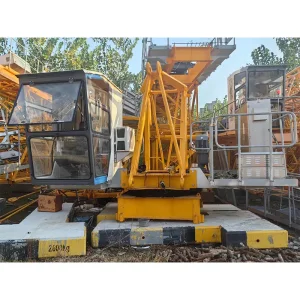
Immediate dispatch available from our 30+ acre logistics hub in Huai'an, China. Complete with structural verification, original OEM nameplates, and export documentation.
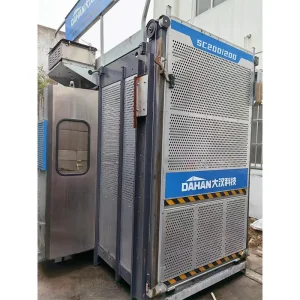
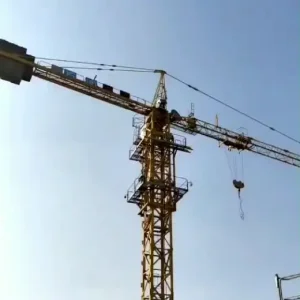
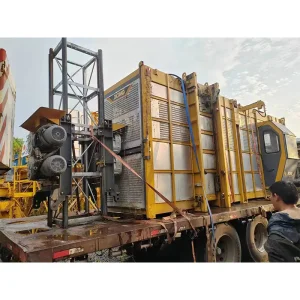
Analyzing capital allocation, structural safety envelopes, and operational paradigms in heavy vertical material transfer.
In modern civil construction, infrastructure expansion, and industrial prefabrication, the procurement of high-tonnage lifting equipment represents one of the most critical capital expenditure decisions for general contractors and plant operators. Finding a verified cheap self erecting crane supplier & factory is no longer just about negotiating the lowest baseline invoice price; it requires a holistic evaluation of the Total Cost of Ownership (TCO), commissioning velocity, civil structural foundation costs, and strict compliance with international crane safety directives such as EN 14439, FEM 1.001, and ASME B30.29.
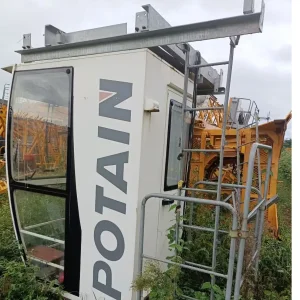
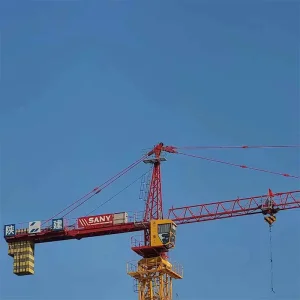
Huaian Zhongqiang International Trade Co., Ltd. operates as a specialized heavy lifting equipment exporter and factory asset consolidator based in Huai'an, Jiangsu Province. Holding Chinese National Level-2 qualifications and sovereign independent import-export rights, the enterprise manages a modern logistics and inspection hub exceeding 30 acres. Rather than relying on intermediary broker chains that inflate CAPEX without adding structural value, our direct-from-source model bridges Tier-1 Chinese manufacturing conglomerates—including Zoomlion, XCMG, SANY, and DAHAN, alongside licensed European marques like Potain—with global engineering contractors across North America, the European Union, Southeast Asia, and the Middle East.
While traditional topkit and hammerhead tower cranes demand extensive mobile crane assists, days of multi-stage assembly, and hefty concrete pad anchors, self-erecting cranes and rapid-deployment climbing systems eliminate foundational overhead. By leveraging telescoping hydraulic mast technology, pre-reeved folding jibs, and intelligent automated rigging sequences, self-erecting designs reduce mobilization schedules from days to a few hours. This makes them indispensable for low-to-medium-rise residential, bridge abutment, and urban infill projects where urban footprint constraints rule out oversized crawler or mobile lattice cranes.
Key technological, economic, and logistical drivers transforming lifting fleet modernization globally.
Global EPC contracts feature tighter liquidated damages (LDs). Self-erecting cranes and integrated climbing units allow contractors to establish on-hook hook height within 4 to 8 hours of site delivery, eliminating conventional assembly backlogs.
In mature metropolitan centers, oversailing rights, strict wind shear boundaries, and tight property borders restrict swing radiuses. Compact flat-top and quick-fold self-erecting models minimize oversail and prevent boundary infringements.
Using 100t-300t all-terrain mobile assist cranes just to erect conventional hammerhead cranes costs thousands of dollars per setup. Self-erecting designs use built-in hydraulic cylinders to cut mobilization assists down to zero.
With Tier-4 Final / Stage V emission policies limiting diesel emissions in urban residential zones, all-electric 380V/480V self-erecting cranes and frequency-inverter hoisting winches yield clean, zero-exhaust job sites with minimal acoustic disruption during night shifts.
Modern fleet management integrates load-moment indicators (LMI) with 4G/5G cloud black boxes. Site engineers monitor cable line-pull, real-time wind speed, slew angle limits, and hoist motor thermal status directly through remote browser dashboards.
Data-driven evaluation of mechanical setup parameters, civil engineering demands, and labor allocation.
| Evaluation Parameter | Self-Erecting Hydraulic Tower Crane | Conventional Hammerhead (e.g., MC120) | Flat-Top Heavy Crane (e.g., QTZ250) |
|---|---|---|---|
| Typical Setup Duration | 2 to 6 Hours (Automated Sequence) | 2 to 3 Working Days | 2 to 4 Working Days |
| Mobile Assist Crane Need | Zero (Self-Contained Rigging) | 80t - 130t All-Terrain Assist | 120t - 220t Heavy Mobile Crane |
| Civil Foundation Spec | Outrigger Pads / Steel Matting (No Pile Anchor) | Reinforced Concrete Slab (40-60m³) | Engineered Piled Concrete Pad (>80m³) |
| Transport Logistical Units | 1 Integral Trailer Chassis / Semi-Bed | 4 to 6 Flatbed / 40HC Containers | 8 to 12 Open-Top / Flat-Rack Containers |
| Optimum Application Scope | Timber Frame, 1-6 Story Prefab, Utility Civil | Mid-to-High Rise Core Frame Works | Heavy Industrial, Mega-Bridge, Power Plants |
| Assembly Rigging Crew | 1 Certified Operator + 1 Rigger | 4 Riggers, 1 Crane Operator, 1 Electrician | 5 Riggers, 2 Crane Operators, 2 Technicians |
Selecting an optimal lifting platform is an exercise in structural efficiency. Where heavy industrial infrastructure requires 12-ton to 25-ton pick loads at a 70-meter radius, units like the Zoomlion QTZ250 7025-12 or Potain MC320-12 are non-negotiable. However, on residential housing projects, decentralized utility developments, or tight bridge repairs, deploying a full-size hammerhead crane adds unnecessary foundational and logistics overhead.
By maintaining a balanced fleet comprising late-model (YOM 2018–2023) high-torque climbing cranes alongside fast-erecting modular systems, Huaian Zhongqiang allows international procurement directors to source reliable, project-matched lifting equipment with verified low hours, crisp gearboxes, and guaranteed structural soundness.
How Huaian Zhongqiang ensures structural fatigue resistance, drive-train precision, and electrical safety before issuing shipping documentation.
Ultrasonic flaw detection (UT) and magnetic particle testing (MT) are executed on mast cord joints, jib pin flanges, and slewing rings to detect micro-fissures or fatigue degradation.
Dial indicator measurements quantify radial and axial play in the slewing race ring. Clearances exceeding OEM thresholds trigger automatic bearing replacement.
VFD frequency convertors undergo step-voltage load cycling to verify torque stabilization, regenerative braking circuits, and current-draw balance on all winch gears.
Load-moment limiters, hoisting height stops, trolley end-buffers, and anemometer cut-offs are dynamically load-tested using calibrated steel test weights.
Seamless customs clearance backed by verified technical documentation, port-marshalling protocols, and secure heavy-lift packing.
Every exported unit ships with authenticated manufacturer serial plates, original load charts, electrical circuit schematics, assembly manuals, and notarized Certificates of Origin (Form E, CO, EUR.1).
Our units are prepared to align with European Machinery Directive 2006/42/EC, CE / EN 14439 stability guidelines, OSHA 29 CFR 1926.1400, ASME B30.29 in North America, and EAC standards for the Eurasian Customs Union.
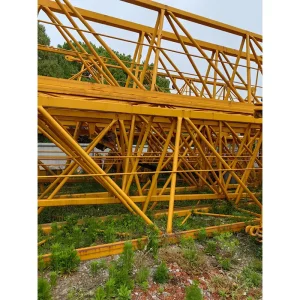
Tower mast sections, jib assemblies, and operator cabs are systematically broken down, color-coded, labeled, and lashed onto 40HC, Open-Top, or Flat-Rack containers using certified heavy-duty steel wire ropes and turnbuckles.
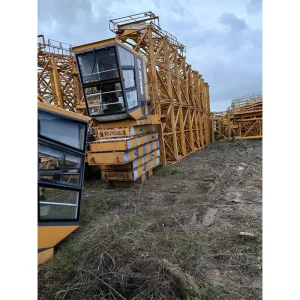
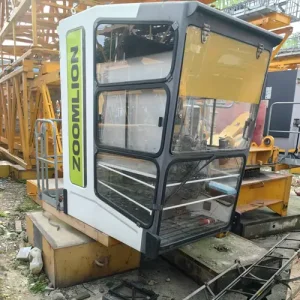
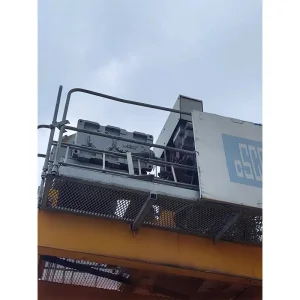
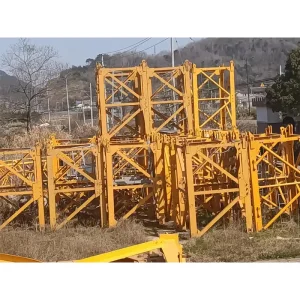
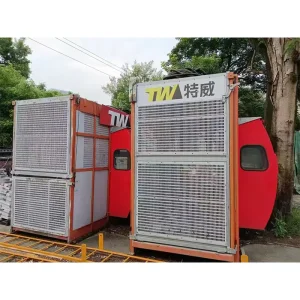
High-capacity lifting machines inspected, rust-inhibited, and pre-rigged for rapid site deployment.
Clear answers to common questions regarding year-of-manufacture verification, customs clearance, and overseas operational guarantees.