Factory-inspected, high-integrity cranes and hoists from world-leading OEM manufacturers including Zoomlion, Potain, SANY, XCMG, and DAHAN with fully documented working hours and non-destructive weld tests.
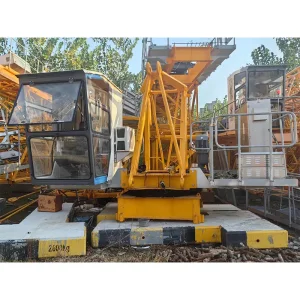
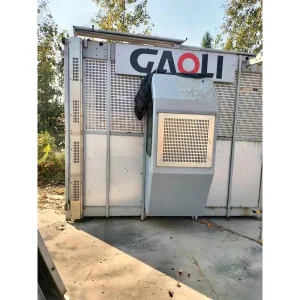
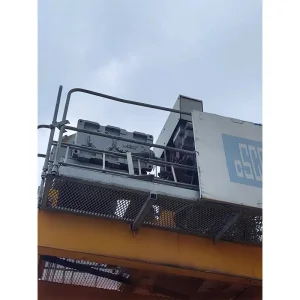
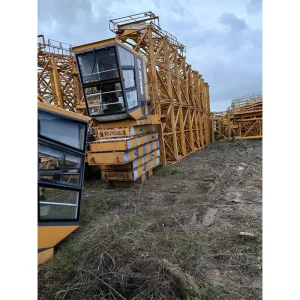
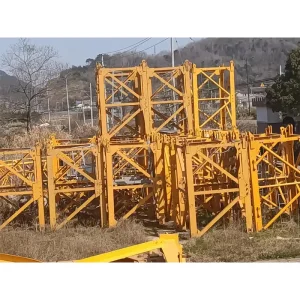
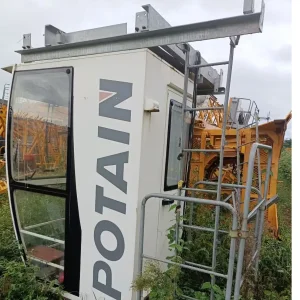
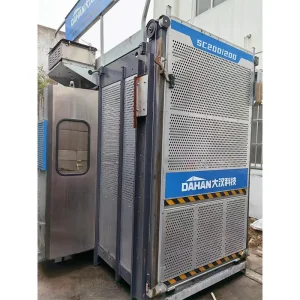
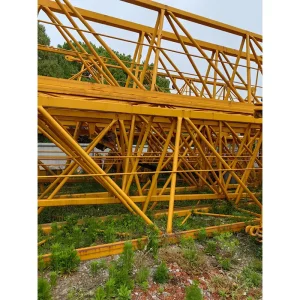
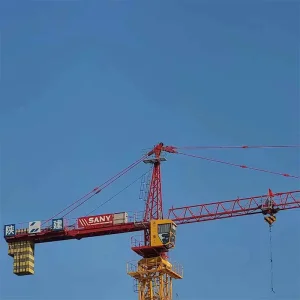
In modern global structural engineering, civil contractors face soaring material inputs, strict site delivery schedules, and tightened liquidity. The procurement term “Cheap Self Assembling Crane” has fundamentally evolved within international procurement semantics. It no longer denotes substandard machinery; rather, it defines an aggressive capital efficiency strategy—procuring late-model, certified self-erecting and self-climbing cranes from top-tier Chinese industrial plants at a fraction of Western OEM list prices.
Traditional static tower cranes incur immense auxiliary costs during installation: external heavy mobile assist cranes (often costing $2,500 to $6,000 per shift), road closure permits, and extended rigging labor. A self-assembling hydraulic climbing crane utilizes internal or external climbing frames driven by calibrated telescopic cylinders. By climbing floor-by-floor with the structural core, it eliminates repetitive heavy mobile crane rentals and slashes assembly labor overhead by up to 74%.
| Technical Dimension | New European OEM | Zhongqiang Factory Direct |
|---|---|---|
| Initial Capital Outlay (Capex) | $320,000 – $650,000+ | $85,000 – $180,000 |
| Manufacturing & Lead Time | 16 to 32 Weeks | Immediate (Ready in Yard) |
| Structural Steel Grade | S355J2 / EN 10025 | Q355B / Q345B High Yield |
| Self-Erecting Jacking Cycle | 2.5 – 4 Hours per Tier | 2.0 – 3.5 Hours per Tier |
| Depreciation Hit (Year 1–3) | High (40%–50% drop) | Minimal (Value Stabilized) |
| Inspection Documentation | Factory QC Stamp | Full NDT Flaw + Load Proof |
Understanding the physics, hydraulic kinematics, and metallurgic stress controls that govern reliable self-climbing crane operations across complex structural projects.
The core of the self-assembling tower crane lies in its telescoping jacking frame. Featuring high-pressure cylinders operating at 25–31.5 MPa with built-in bidirectional hydraulic locks, the cage safely elevates the entire upper structure (jib, counter-jib, and slewing system) to create an aperture through which a new standard mast section is rolled in via trolley guides and pinned permanently.
During the critical telescoping phase, the crane must achieve absolute equilibrium along its center of gravity. Our supplied systems leverage precise balance radius markers. By positioning a dedicated counter-balancing load block on the jib trolley at a predetermined coordinate, the bending moment exerted on the jacking guide rollers is suppressed to near-zero, avoiding structural binding or rail seizure.
Mast chords fabricated from manganese structural alloys (Q355B/Q345B) undergo thermal stress relieving and continuous CO2 gas-shielded automated arc welding. Standardized pin connections are forged from 40Cr quenched and tempered structural alloy steel, ensuring exceptional shear strength, fatigue life across Class A5/A6 working cycles, and resistance to cold-weather brittle fractures.
Zhongqiang operates an independent quality-inspection laboratory at its 30-acre Huai'an yard. Every crane undergoing reconditioning or export export clearance must satisfy our uncompromising non-destructive validation matrix.
100% UT scanning across the slewing bearing raceway, boom transition pins, and mast chord butt welds to discover subsurface micro-cracks or metal fatigue prior to vessel loading.
Hoisting gearboxes, slewing planetary reducers, and frequency inversion (VFD) motors undergo continuous 4-hour dynamic load testing to verify thermal equilibrium and acoustic tolerance.
Complete rewiring verification, Schneider/ABB contactor burn-in testing, IP55 enclosure sealing checks, and recalibration of digital moment load indicators with anemometer cutoffs.
Jacking cylinders are static tested under 125% rated pressure (up to 35 MPa) for 60 consecutive minutes to guarantee zero internal valve bypass or seal leakage on high climbs.
How our self-assembling and climbing crane export packages address concrete hoisting, structural steel installation, and civil infrastructure demands across five continents.
In dense metropolitan districts where neighboring property air-rights or narrow street setbacks forbid external mast anchors, our self-assembling internal climbing cranes sit directly in elevator shafts. Utilizing automated hydraulic floor wedge frames, they ascend alongside the building to heights exceeding 300 meters with minimal foundation expenditure.
Cable-stayed bridge towers and hydroelectric dams require continuous concrete pours and constant crane elevation over water bodies. Our corrosion-protected flat-top and topkit cranes provide smooth self-climbing along vertical or inclined slip-form pylons, maintaining complete operating safety even under heavy marine crosswinds.
Accelerated precast concrete construction demands rapid hoisting of bathroom pods, exterior walls, and pre-stressed slabs weighing up to 8–12 tonnes. Combined with SC200/200 high-speed dual-cage hoists, our crane setups deliver a synchronized vertical supply chain that reduces total residential delivery cycles by 30%.
Transporting multi-ton structural crane assemblies across international shipping lanes demands meticulous maritime packaging protocols. As a licensed export authority with National Level-2 Construction Qualifications, Huaian Zhongqiang ensures every shipment arrives undamaged and ready for immediate erection.
Mast sections are systematically packed into 40ft High Cube containers or open-top shipping units with protective timber Dunnage to safeguard pin ears and drive gear racks. Slewing rings and sensitive VFD electronic cabinets receive multi-layer vapor corrosion inhibitor (VCI) thermal wrapping to withstand salt air across trans-ocean voyages.
How digitalization, IoT structural health sensors, and hybrid power units are reshaping modern self-assembling lifting systems.
Next-generation jacking frames integrate multi-axis digital inclinometers and load cells linked to hydraulic manifold actuators. If wind shear or asymmetric counterweight creates torsional deflection exceeding 0.15 degrees during a climb, the PLC automatically pauses cylinder movement, avoiding mast jam scenarios.
Digital twin telemetry enables multi-crane job sites to synchronize real-time coordinate meshes. Slew stops and hook velocity limiting are dynamically regulated via wireless fleet communication, preventing jib collisions across crowded urban developments.
Emerging self-assembling models harness permanent magnet synchronous motors (PMSM) paired with supercapacitor energy storage. During gravitational load lowering, the system recaptures kinetic energy into clean electricity, cutting job site generator diesel consumption by up to 38%.
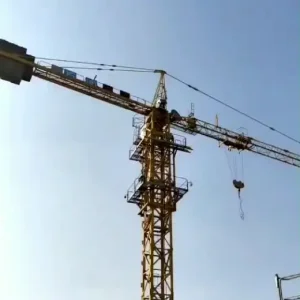
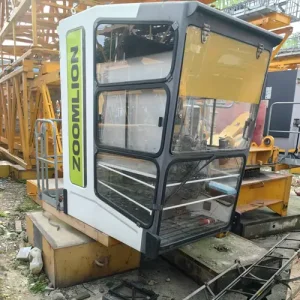
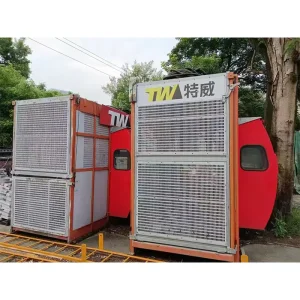
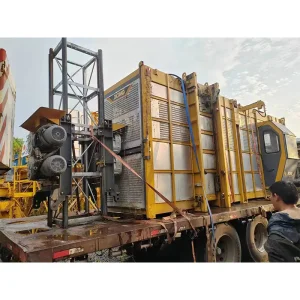
Browse verified machinery listings including heavy-tonnage Potain MC series, high-capacity Zoomlion climbers, and precision TEWEI/XCMG passenger and material hoists.
Authoritative answers curated by our senior structural engineers and logistics specialists regarding self-assembling cranes, climbing procedures, reconditioning standards, and ocean freight.
Secure competitive wholesale rates on certified Zoomlion, Potain, SANY, XCMG, and DAHAN tower cranes. Request an itemized CIF or FOB quotation complete with engineering load curves and inspection dossiers today.