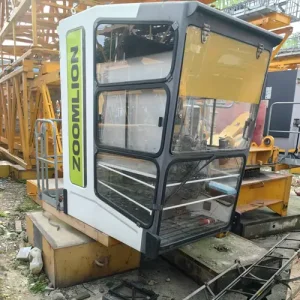
YOM 2019-2023
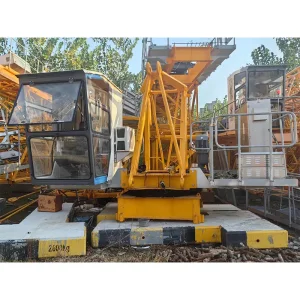
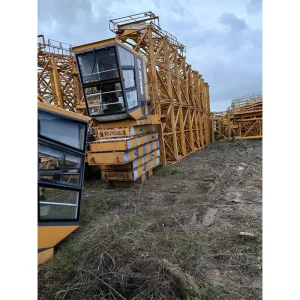
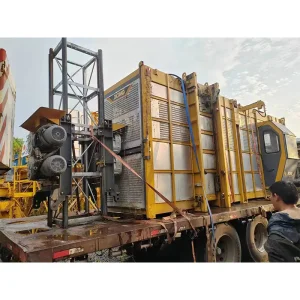
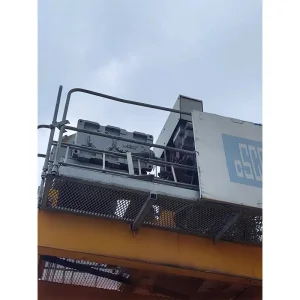
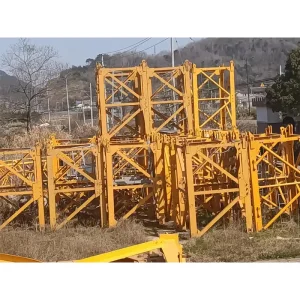
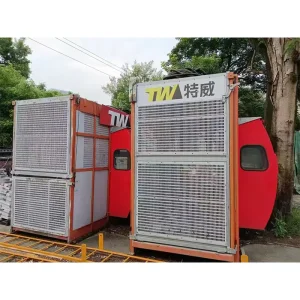
Pre-inspected topkit, flat-top, and construction hoists ready for international export from our Huai'an 30+ acre logistics base.
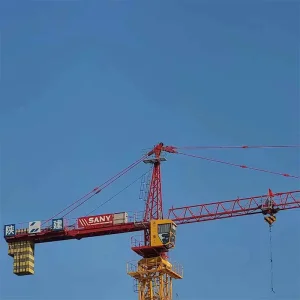
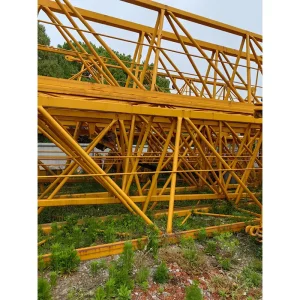
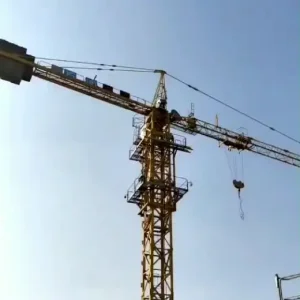
Why Tier-1 global EPC contractors prioritize internal floor-climbing tower cranes to minimize structural steel overhead and slash supertall lifting expenses.
In the competitive landscape of civil infrastructure, high-rise urban development, and mega-bridge construction, the word "cheap" is frequently misunderstood. When seasoned procurement managers search for a cheap internal tower crane manufacturer & supplier, their query is not a quest for compromised quality or sub-standard metallurgy. Within industrial lifting engineering, genuine economy represents an aggressive optimization of the Total Cost of Ownership (TCO), extreme reduction in auxiliary steel consumption, and peak kinematic performance per ton of structural mass.
By anchoring directly inside the core concrete shear walls, an internal climbing crane requires an operational mast length of only 30 to 50 meters, regardless of whether the final building reaches 150 meters, 300 meters, or 500 meters. The resulting fiscal savings are monumental:
Contractors eliminate dozens of expensive standard mast sections, remove heavy external tie-in collar assemblies (which can weigh over 8 to 12 tons each), and completely avoid structural reinforcements otherwise required along external building perimeters. Furthermore, the external curtain-wall facade installation can proceed uninterrupted behind the crane, compressing the overall project delivery timeline by months.
Advanced metallurgical clusters, automated robotic welding cells, and unrivaled industrial density deliver superior lifting capacity at scalable costs.
Chinese OEM giants (Zoomlion, SANY, XCMG, Yongmao, Dahan) utilize certified manganese high-tensile structural steels (Q345B and Q355B). These alloys provide high yield strengths (≥355 MPa) and low-temperature impact resilience (-20°C to -40°C), matching European S355 standards at direct mill-level domestic pricing.
China's smart manufacturing facilities operate 6-axis robotic welding gantries equipped with real-time laser seam tracking. Mast chord welds and pin-connection ears receive continuous deep penetration and automated ultrasonic inspection (UT), eliminating human defect variation and ensuring absolute concentricity during climbing strokes.
From centralized slewing ring forgings and precision planetary gearboxes to inverter-driven variable-frequency (VVVF) hoisting motors, over 94% of the high-rise tower crane value chain is concentrated in East China industrial clusters, eliminating long inter-tier logistics markups and minimizing component lead times.
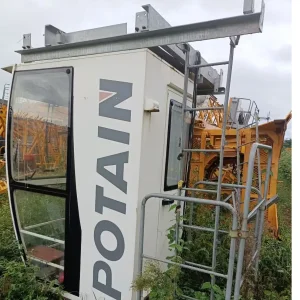
Exporting inspected, late-model (YOM 2018–2023) equipment via verified facilities like Zhongqiang's 30+ acre logistics center allows international buyers to acquire original Potain, Zoomlion, or SANY climbing packages at 40% to 60% below factory new list prices, backed by strict NDT weld validation.
Operating with China National Level-2 qualifications and direct customs clearance licenses removes layers of intermediate brokerage. All cargo is processed, lashed, and documented directly under our corporate umbrella, ensuring 100% transparent provenance and verified nameplate data.
Every internal climbing collar, hydraulic jacking cylinder, and telescopic beam section is pre-engineered for international shipping containerization (40' OT and 40' FR). This design prevents oversized port handling fees and simplifies job-site receipt and staging.
Comprehensive engineering comparison based on a 220-meter urban high-rise commercial core tower.
| Evaluation Parameter | Internal Floor-Climbing System | External Stationary & Tied System | Operational Strategic Advantage |
|---|---|---|---|
| Mast Steel Consumption | Fixed 35m – 45m (7 to 9 mast sections) | 235m+ (45 to 50 mast sections) | Saves 70–80% Structural Steel |
| Foundation Requirements | Temporary internal pit slab or core wall shoes | Massive gravity block (120–180 m³ concrete + steel cage) | Cuts 65% Excavation & Footing Costs |
| Facade Cladding Impact | Zero external penetrations; facade closes smoothly | Requires tie-in openings every 35m; facade gaps delayed | Speeds Curtain Wall Schedule |
| Wind Exposure & Deflection | Low wind sail area; lateral loads absorbed by core walls | Massive external profile subject to high boundary layer wind shear | Higher Operational Stability |
| Dismantling Complexity | Requires rooftop derrick crane disassembly | Dismantled step-down via mobile crane or external jacking cage | Requires Rooftop Derrick Planning |
| Initial Capital Investment (CAPEX) | Substantially lower base machine cost + climbing collars | High total cost due to massive mast package & ties | 35% to 50% Lower Equipment Capital |
How internal climbing cranes resolve dense urban airspace, structural geometry limits, and mega-infrastructure challenges.
In metropolitan financial centers like Tokyo, New York, London, and Singapore, job site footprints rarely extend beyond property boundaries. External tower cranes cannot be grounded without encroaching into pedestrian thoroughfares, subway lines, or neighboring air rights. Internal climbing cranes solve this by operating entirely within the building perimeter.
Core-wall construction utilizes slip-forming or hydraulic self-climbing formwork systems (ACS). Internal climbing cranes rest on landing brackets directly within elevator shafts. As vertical core walls cure, the crane climbs independently of floor slab installations, maintaining hoisting support for reinforcement steel bundles and concrete distribution booms.
Cable-stayed and suspension bridge towers frequently exceed 200 to 300 meters in height, with steep geometric tapering. External tower cranes would require custom, long-reach horizontal strut bracing. Internal climbing variants adapt directly to the hollow interior hollow pylon chambers, lifting materials in restricted marine environments.
Smart telemetry, automated hydraulic climbing synchronization, and low-carbon regenerative power conversion.
Modern Chinese internal climbing cranes are outfitted with 5G-enabled PLC modules that stream hydraulic oil pressures, climbing collar leveling angles, slewing torque, and motor thermals to cloud monitoring platforms, preventing mechanical jams during critical climbing procedures.
Supertall internal operations require lowering heavy formwork components from heights exceeding 200 meters. Integrated regenerative variable-frequency drives (AFE) convert potential gravitational energy back into clean electrical AC power, returning up to 25% of consumed power to the job site grid.
Because multiple internal cranes often overlap coverage radii within tight core geometries, millimetric radar and 3D LiDAR anti-collision systems provide dynamic spatial zoning, automated slewing deceleration, and zone-fencing around climbing formwork edges.
How international project contractors verify structural compliance, metallurgy integrity, and maritime loading safety.
To operate seamlessly across global jurisdictions, exported internal climbing tower cranes must comply with stringent international standards:
Every internal climbing crane package shipped from our Huai'an facility undergoes a thorough 128-point pre-export protocol:
Direct technical answers addressing structural integration, climbing kinematics, and international procurement workflows.
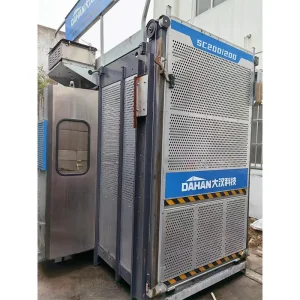
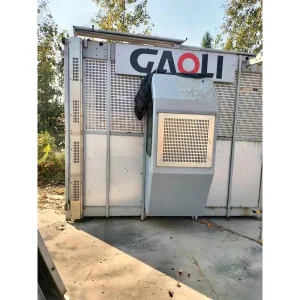
Complete your high-rise logistics configuration with certified vertical passenger/material hoists and heavy topkit tower cranes.