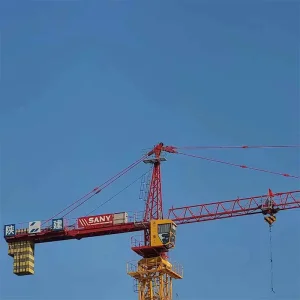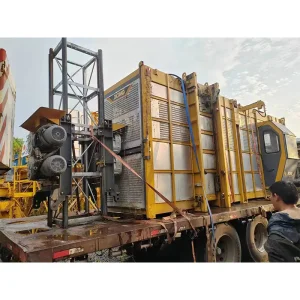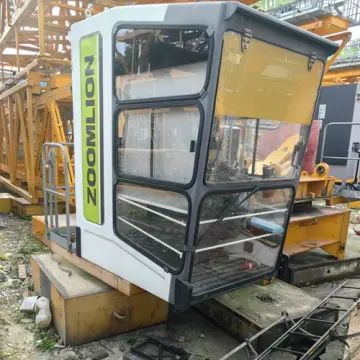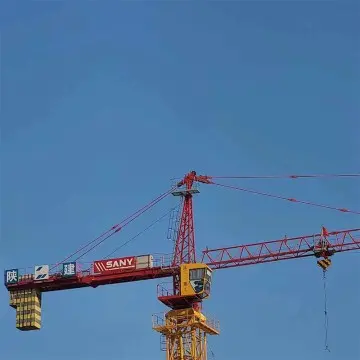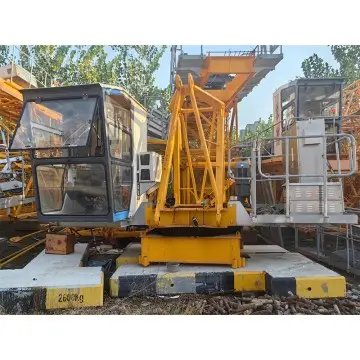
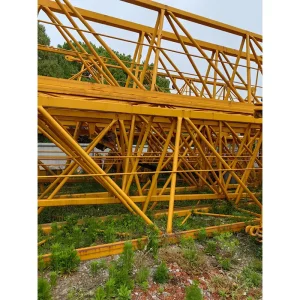
China ZOOMLION QTZ200 7020-12 YOM 2019-2023 Manufacturers, Exporter
Inspect Specifications
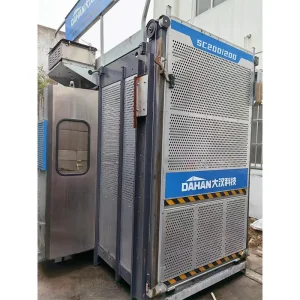
Direct supply lines of precision-certified internal climbing units, hammerhead models, and twin-cage vertical personnel elevators undergoing full NDT crack-testing and operational recertification.
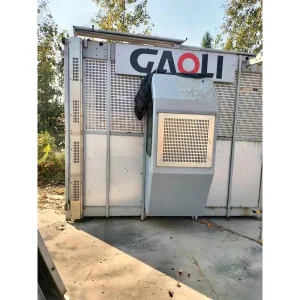
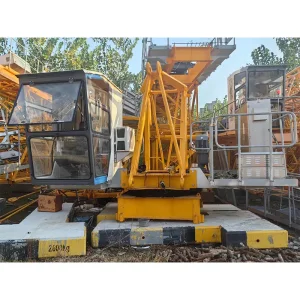
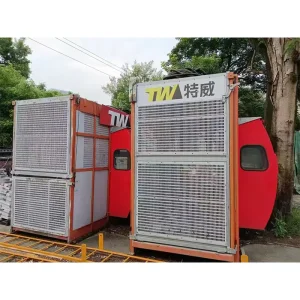
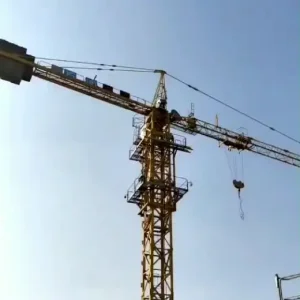
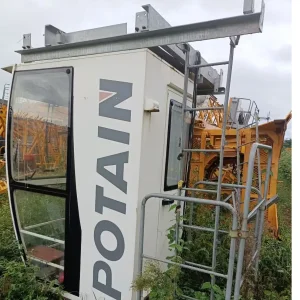
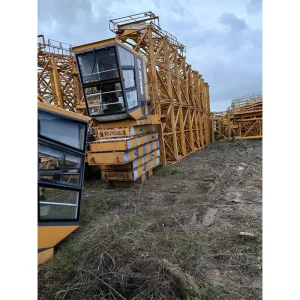
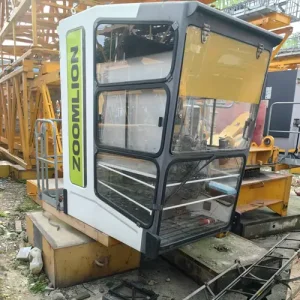
Navigating structural dynamics, shaft integration, wind-load mitigations, and capital expenditure minimization in ultra-high-density urban construction.
Standard external tower cranes require anchor collar ties every 30 to 45 meters, alongside escalating mast sections reaching hundreds of vertical meters. An inside climbing crane (internal floor-climbing unit) operates within a core elevator shaft or dedicated floor apertures, utilizing only 3 to 5 mast sections (typically 20-30 meters in total height). By climbing hydraulically floor by floor via internal climbing frames and wedge supports, structural mast steel procurement costs are slashed by up to 68%.
At altitudes exceeding 150 meters, horizontal wind vectors induce severe cyclic bending moments on external masts. Inside climbing cranes transfer the horizontal slewing shear and overturning moments directly into the robust reinforced concrete core walls (shear walls) of the structure. This structural symbiosis prevents tower deflection, significantly increases high-altitude jib stability, and avoids peripheral façade anchor penetration damages entirely.
Urban infill, historic city downtowns, and tight property-boundary parameters offer zero spatial allowance for heavy external foundations and footprint ballast blocks. Inside climbing tower cranes occupy internal elevator voids that are already structurally designed into the architectural layout. By centralizing the slewing pivot point within the building's geometric center, maximum jib hook reach is maximized across all construction axes.
A look into high-tensile metallurgical sourcing, mature secondary market liquidity, and the comprehensive engineering verification centers based in Jiangsu, China.
China's manufacturing corridors house top-tier manufacturers like Zoomlion, XCMG, Dahan, Sany, and Manitowoc/Potain joint facilities. This regional manufacturing density produces unmatched parts availability, standardized climbing collar cross-sections, and competitive acquisition costs that are simply unattainable in North American or Western European secondary machinery markets.
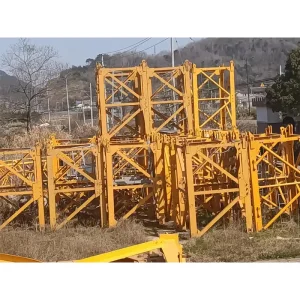
Chinese tower cranes utilize automated carbon-dioxide shielded welding processes combined with Q345B/Q355B low-alloy structural manganese steel. Chord members, diagonal bracings, and climbing frame crossbeams feature precision-machined pin connections that deliver tensile yields resilience under continuous micro-vibrations and multi-ton dynamic hoisting operations.
At our 30+ acre facility in Huai'an, Jiangsu, every pre-owned unit undergoes rigorous non-destructive ultrasonic weld flaw detection, slewing ring backlash tolerance measurement, electrical inverter cabinet recalibration, hydraulic jacking cylinder seal renewals, and high-adhesion marine protective recoating before containerization.
Operating with independent corporate import/export rights and held under national second-level qualification frameworks, Huaian Zhongqiang eliminates middle-tier broker margins. We issue legitimate Certificates of Origin (CO, Form E, Form R), factory inspection logs, load-cell test certificates, and full customs dossiers in-house.
Analyzing real-world scenarios where cheap inside climbing cranes provide the decisive technological and budget edge over conventional crane setups.
High-speed construction cycles in skyscraper builds utilize slipform or self-climbing formwork systems. The inside climbing crane sits securely locked into the reinforced elevator shaft pockets, rising synchronously with every three poured floor slabs. This minimizes hook transit travel distances and facilitates rapid pre-cast wall and steel beam placement without external tie interferings.
Construction of massive reinforced concrete suspension bridge towers often takes place in deep water estuaries or high-wind valleys where ground bases do not exist. Inside climbing cranes ascend within hollow pylon legs, isolating the crane's load-transfer points from extreme tidal currents, river bed scouring, and aerodynamic gale forces.
Modernization within historic metropolises (such as London, Singapore, or Chicago) limits oversailing rights and street-level road closures. Positioning a flat-top or luffing jib inside the internal building courtyard or lightwell keeps the entire slewing counterweight radius strictly within the site's air boundaries, preventing costly urban obstruction fines.
How IoT telematics, energy regeneration drives, modular climbing frames, and intelligent luffing controls are reshaping modern crane fleet procurement strategies.
Traditional internal climbing relied on manual pin switching and labor-intensive multi-stage bracket shucking. Emerging trends favor push-button electro-hydraulic jacking frames integrated with load-cell leveling sensors. This automated balance reduces climbing transition windows from whole shifts to under three hours, substantially compressing structural construction cycles.
Newer generation Chinese-built hoisting drives (from suppliers like Inovance and Schneider integrations) feature four-quadrant VFD energy regenerative modules. Gravitational lowering braking kinetic energy is captured and converted back into electrical power for feeding the site's auxiliary networks, reducing total high-rise hoisting grid dependency by up to 25%.
Modern sites deploy integrated multi-crane zoned anti-collision sensors with real-time BIM linkups. Even when operating blind deep within central core walls, operators receive millimetric cockpit 3D telemetry showing absolute clearance from perimeter scaffolding, surrounding cranes, and adjacent building envelope elements.
A line-by-line engineering and economic evaluation for project directors and equipment asset managers calculating capital expenditures for projects over 120m height.
| Evaluation Parameter | Inside Climbing Tower Crane | External Anchored Tower Crane | Contractor Value Advantage |
|---|---|---|---|
| Mast Sections Required (200m Building) | Total 5–7 standard sections (20-28m overall mast) | 50–65 standard mast sections (215m+ overall mast) | Save ~70% Steel Weight & Freight |
| Foundation Construction Requirements | Internal building shear floor brackets; simple base pad | Massive reinforced external foundation pile cap (150m³+ concrete) | Eliminates ~$80K Substructure Cost |
| Façade Anchor Interference | Zero external wall anchors; internal shaft collars only | Anchor ties every 35-45m penetrating cladding glass & panels | Zero Glazing Delays / Water Ingress |
| Dismantling Complexity | Requires rooftop derrick crane or mobile luffing teardown | Self-telescoping mast retraction downward via mobile crane | External favored if mobile access available |
| Wind Bending Moment Sensitivity | Extremely low; protected within building core boundary | Extremely high; subject to severe high-altitude aero fatigue | Higher Rigidity & Slewing Accuracy |
Clear, direct answers regarding equipment verification, climbing shaft dimensioning, payment milestones, containerization, and post-delivery setup.
Standard inside climbing frames for 6-ton to 10-ton models (like the Potain MC120 or Zoomlion QTZ100) require an internal clear opening of approximately 2.0m x 2.0m up to 2.5m x 2.5m. The building structural engineer must accommodate floor block-outs or shaft openings along with specific floor slab load re-shoring designs according to our climbing reaction forces table.
Every unit at our Huai'an yard undergoes ultrasonic non-destructive testing (NDT) on high-stress weld junctions and mast fishplates. Slewing rings are dialed for axial clearance against OEM tolerances. Electrical contactors, hoisting winches, gearboxes, and safety limiters are bench-tested under load, backed by real video documentation shared directly with the buyer.
Because the crane cannot be lowered down external rails, disassembly is achieved using a specialized compact roof derrick crane (stiff-leg derrick). The roof crane dismantles the main tower crane jib, counterjib, and mast sections into compact bundles lowered to street level, after which the light roof derrick is itself dismantled via the building's permanent goods lift.
A standard climbing crane configuration fits cleanly across 3 to 5 standard 40-foot High Cube (40'HC) containers. Slewing assemblies and hydraulic climbing frames are secured onto dedicated flat-rack containers if dimensional widths exceed standard container door openings. Every component is color-tagged, match-marked, and lash-certified for heavy-sea transits.
Browse inspected, late-model topkit, topless, and passenger/materials hoist options available for worldwide delivery from our East China transport hubs.