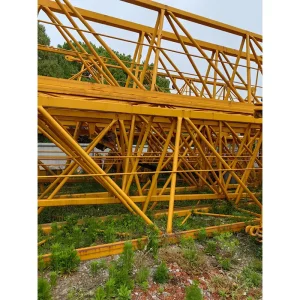
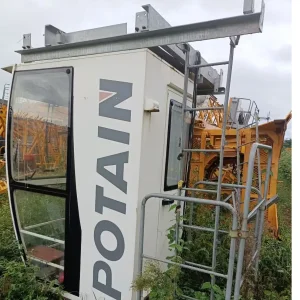
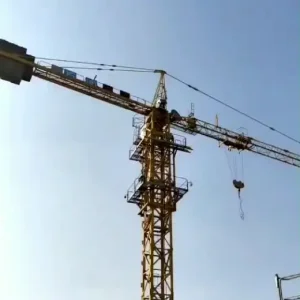
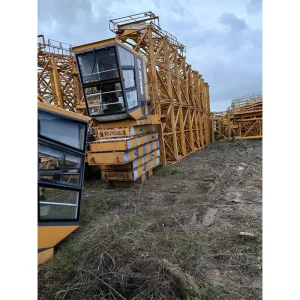
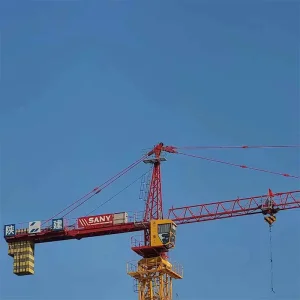
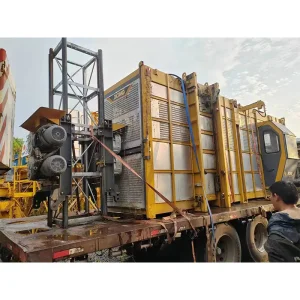
Pre-inspected topkit, flat-top, and vertical hoist configurations ready for ocean charter and intermodal transport. Real nameplates, verified duty hours, and complete mechanical traceability.
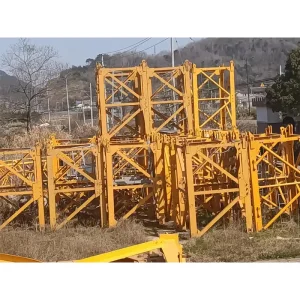
Across emerging mega-metropolises and developed commercial hubs alike, general contractors face simultaneous pressures: tightening project completion deadlines, escalating labor expenditure, and aggressive capital expenditure (CAPEX) scrutiny.
Procuring new European-manufactured tower cranes requires substantial financial reserves and 6-to-12-month delivery schedules. Smart commercial developers are shifting to pre-owned, late-model (YOM 2018–2023) certified units from China, reducing upfront machinery investment by up to 60% without compromising structural integrity or load moments.
Modern building sites utilize modular pre-cast concrete (PPVC) and large structural steel elements. The demand has pivoted sharply away from light 4-ton cranes to robust 6-ton, 10-ton, and 12-ton models such as the QTZ250 and MC320, capable of sustaining high tip loads at 60m–70m working radii under severe wind loading.
In high-stakes civil engineering, "cheap" must never translate to structurally compromised steel. True cost leadership stems from sourcing machines with verifiable operational histories, minimal metal fatigue, precision slewing bearings, and plug-and-play assembly tolerance, driving lowest Total Cost of Ownership (TCO).
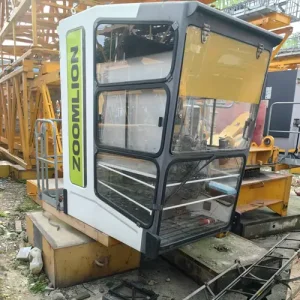
China accounts for over 70% of global tower crane manufacturing volume. Leading OEMs—including Zoomlion, XCMG, SANY, Yongmao, and DAHAN—utilize automated submerged-arc welding, robotic mast fabrication, and premium manganese structural steel (Q345B/Q420B).
Due to cyclical adjustments in the domestic commercial real estate sector, hundreds of immaculate cranes manufactured between 2019 and 2023 with minimal duty cycles are entering the export pipeline. International buyers obtain modern frequency-inverter drives, ergonomic pilot cabs, and state-of-the-art load moment computers at residual pricing.
Chinese tower crane architectures (such as standard 1.6m and 2.0m fishplate pin-connected mast sections) provide cross-compatibility across major brands. Replacement hoist ropes, trolley motors, slewing planetary reducers, and electrical relays are readily accessible at a fraction of bespoke Western maintenance costs.
Operating a dedicated 30+ acre facility in Huai'an, Jiangsu, Huaian Zhongqiang ensures that every machine undergoes non-destructive ultrasonic flaw detection on mast cord welds, gear tooth hardness checks, motor resistance insulation tests, and complete mechanical shot-blasting and re-coating before dispatch.
Understanding model nomenclature, jib moment curves, and cage velocity specifications enables procurement directors to align machine capabilities with site layout restrictions.
| Equipment Category | Representative Model | Max Capacity | Jib Reach / Tip Load | Freestanding Height | Ideal Application Scenario |
|---|---|---|---|---|---|
| Hammerhead Tower Crane | POTAIN MC320-12 | 12 Metric Tons | 70 m / 3.0 t | 50.9 m (Extensible to 200m+) | Heavy civil infrastructure, bridge piers, tall commercial cores requiring massive single-pick load capacity. |
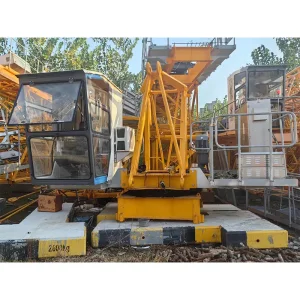
| Topkit Climbing Crane | ZOOMLION QTZ250 (7025) | 12 Metric Tons | 70 m / 2.5 t | 60.0 m | High-rise residential clusters, heavy precast wall panel hoisting, industrial factory framing. |
| Mid-Range Workhorse | SANY / DAHAN QTZ100 | 6 Metric Tons | 60 m / 1.3 t | 40.0 m | Standard multi-family residential, hospital complexes, commercial retail centers with tight logistics footprints. |
| Flat-Top (Topless) Crane | YONGMAO STT153-10 | 10 Metric Tons | 70 m / 1.5 t | 45.0 m | Multi-crane overlapping interference sites, airport flight corridor height-restricted urban developments. |
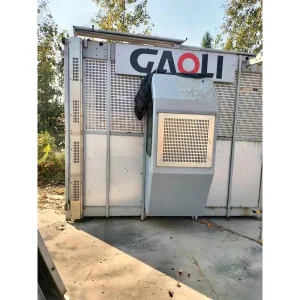
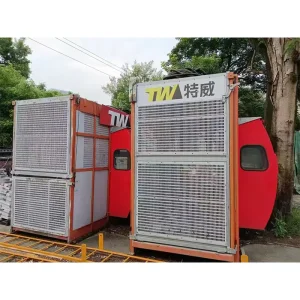
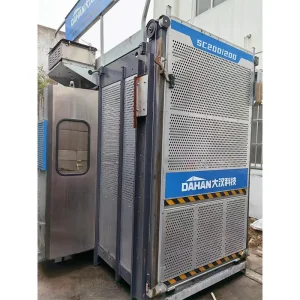
| Twin-Cage Material Hoist | XCMG / GAOLI SC200/200 | 2 × 2,000 kg | Up to 300 m Travel | Freestanding 9.0 m | Vertical transport of building site workforce, drywall, tile, glazing panels with progressive safety brakes. |
Construction environments impose distinct dynamic loads, seismic constraints, and foundation criteria. Here is how our inventory fulfills specialized project criteria worldwide.
Confined downtown jobsites in Manila, Jakarta, and Warsaw require minimal slewing radii and fast erection. Yongmao flat-top models allow jibs to swing over adjacent structures without the overhead clearance required by tie-rod topkits. Combined with Gaoli SC200/200 variable-frequency hoists, vertical personnel flow is optimized without street closure delays.
Projects exposed to maritime winds require reinforced tower anchorages and premium slewing brakes. Heavy-duty Potain MC320 and Zoomlion 7025 cranes deployed in coastal resort towers leverage heavy ballast base configurations and specialized out-of-service weathervaning systems to safely endure gust velocities exceeding 150 km/h.
Bridge pylon erection and power station boiler house fabrication demand constant duty cycles under extreme temperatures. QTZ100 (6013) workhorses provide straightforward mechanical relay systems, resilient thermal motor protections, and straightforward maintenance protocols that regional field mechanics can sustain without proprietary tools.
Purchasing second-hand machinery across borders demands verifiable, empirical proof of structural integrity. Every unit leaving our yard undergoes an exhaustive quality management process.
Structural chord joints, turntable weldments, and jibs are tested for microscopic fatigue cracks and metallurgical stress crystallization. Pin-ear connections and high-strength mast bolt seats are digitally measured with micrometer gauges to ensure zero bore elongation beyond OEM factory tolerances.
The slewing ring is the single most critical structural and rotating interface on a crane. We utilize dial indicators to measure axial and radial deflection under calibrated test loads, replace worn race seals, replenish synthetic high-pressure lubrication, and certify torque-tightening specifications on all slewing ring bolts.
Control cabinets undergo full contactor testing, PLC diagnostic readout, and variable frequency drive (VFD) cycle validation. Hoisting, trolley, and slewing limit switches are calibrated. On construction hoists, centrifugal safety drop devices are drop-tested and re-certified with valid test tags before crating.
The convergence of telematics, autonomous sensor telemetry, and intelligent power management is reshaping how heavy lifting machinery operates on modern job sites.
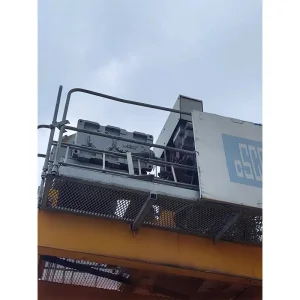
Modern job sites run multiple intersecting cranes. Modernized used cranes are increasingly retrofitted with multi-point radar anti-collision units, virtual zoning systems, and ultra-low-latency 5G cameras mounted at the trolley hook block, feeding high-definition situational feeds to ground-level air-conditioned operator consoles.
Real-time strain gauges installed on mast sections transmit continuous stress data to cloud-based predictive maintenance dashboards. Procurement managers can monitor cumulative fatigue cycles, wind-shear load events, and motor winding thermals remotely, preventing catastrophic mechanical failures before they materialize.
With global site standards demanding lower emissions, hoisting units with regenerative braking systems feed kinetic power back into site micro-grids or battery energy storage systems (BESS). This cuts total generator diesel consumption on remote sites by up to 35%, significantly reducing operating costs.
Essential guidance for international equipment buyers, equipment fleet managers, and structural engineers sourcing cranes and hoists from China.
Pricing is governed by Year of Manufacture (YOM), cumulative operating hours, OEM brand prestige (e.g., Potain vs. domestic brands), motor configuration (VFD vs. pole-changing), and current steel scrap indices. By owning an extensive 30+ acre logistics and inventory facility in Huai'an, we eliminate intermediary trading brokerage costs, passing wholesale savings directly to overseas contractors.
A standard 6-ton to 12-ton crane is systematically dismantled into standard 40-foot High Cube (40HQ) containers for mast sections, trolley components, and small accessories, while oversized jib segments, slewing turntables, and counter-jib balance arms are lashed onto 40-foot Flat Racks (FR) or loaded as Break-Bulk on chartered heavy-lift cargo vessels. Every component is weather-sealed and marked with alphanumeric erection tags.
Yes. We welcome global inspection firms including SGS, Bureau Veritas, TÜV, or buyer-appointed technical representatives to our Huai'an yard. We facilitate live full-motion test runs, motor insulation resistance testing, ultrasonic weld testing, and high-definition video audits of machine nameplates, safety switches, and cab controls prior to container loading.
We provide full commercial export dossiers: Commercial Invoices, detailed itemized Packing Lists, original clean-on-board Ocean Bills of Lading (B/L), Certificates of Origin (Form E, CO, etc.), OEM serial nameplate photos, and comprehensive equipment inspection reports. Custom export documentation requested by specific national regulatory agencies can also be arranged.
Hammerhead cranes utilize a tower top (cat-head) and tie-rods to support the jib, providing exceptional structural stiffness for heavy high-moment picks. Flat-top cranes eliminate the cat-head and tie-rods, enabling faster erection, reduced crane-to-crane clearance heights on crowded multi-crane jobsites, and simplified transport.
Because we supply Tier-1 OEM brands (Zoomlion, XCMG, SANY, Potain, Dahan), mechanical components are standardized. We stock and export complete climbing cages, hydraulic jacking cylinders, mast sections, tie-in frames (wall collars), wire ropes, and brake shoe assemblies via international air express or consolidated sea freight on demand.
Review additional certified heavy lifting assets available for immediate international shipping. Complete refurbishment, structural verification, and crating included.