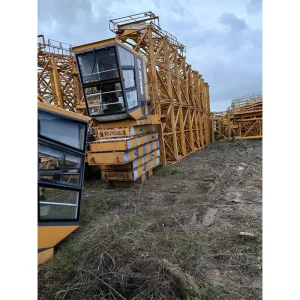
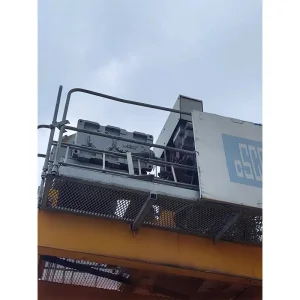
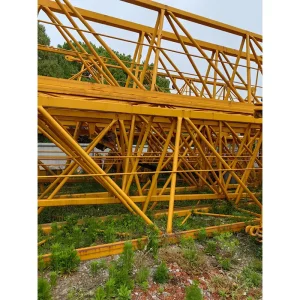
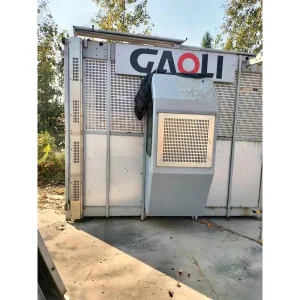
Explore pre-screened, non-destructive tested traveling systems and vertical transport machines available for immediate deployment.
A strategic overview of operational kinetics, footprint minimization, and lifecycle capital utilization in heavy structural lifting.
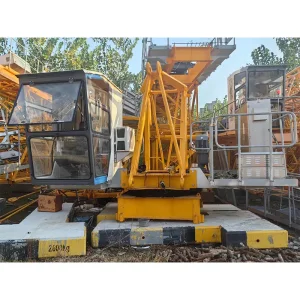
Unlike static foundation cranes constrained to radial operations, traveling tower cranes utilize motorized bogies traversing reinforced ballast tracks. This converts linear yards, expansive precast production facilities, and long-span civil bridges into fully serviceable operational lifting envelopes without requiring secondary tandem cranes.
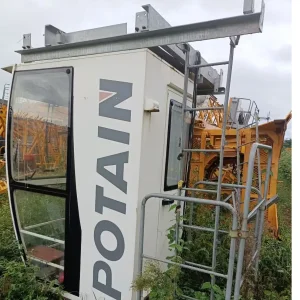
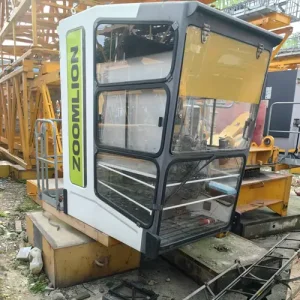
Dynamic movement introduces critical lateral inertial stresses. Global leading manufacturers—including Zoomlion, XCMG, and Potain—integrate closed-loop variable frequency drive (VFD) controls with anti-skew synchronization. This eliminates rail climbing, flange distortion, and torsional fatigue across high-load mast connections during peak acceleration.
Foundational costs for stationary anchors can exceed 15% of total site logistics budgets. Rail-mounted traveling undercarriages disperse high overturning moments over continuous ballast or engineered subgrades, dramatically lowering site rehabilitation expenses and accelerating de-rigging schedules.
Data-driven insights into cross-border crane investment, total cost of ownership (TCO), and fleet modernization strategies.
International general contractors are rapidly pivoting from static crane setups toward traveling assemblies. In massive prefabricated construction sites, a single rail-mounted unit replaces up to three static towers, reducing capital expenditure, mast tie-in labor, and crane-to-crane collision mitigation systems.
Factory lead times for new high-tonnage traveling cranes frequently exceed 9 to 14 months. Verified secondary inventory (YOM 2018–2023) eliminates project schedule drag, delivering fully overhauled, load-tested units to global job sites within weeks of maritime booking.
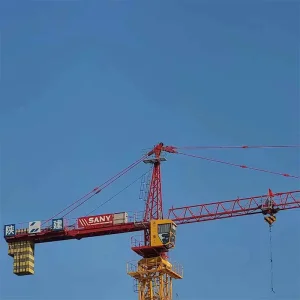
Late-model Chinese machinery (XCMG, Zoomlion, Dahan, Sany) features standardized metallurgical metallurgy and globally interchangeable electrical architectures (Siemens, Schneider). This guarantees reliable residual equity retention and rapid second-cycle redeployment across emerging civil corridors.
Engineered applications where traveling tower cranes unlock significant logistical, structural, and schedule performance.
Handling prefabricated marine modules and superstructures requires ultra-wide radiuses and high point-loading precision. Traveling towers traverse drydock lanes with zero dead-angle zones, integrating with goliath crane workflows for synchronized fabrication.
Longitudinal axis pours for spillways and penstock civil works present severe crane positioning challenges. Rail-traveling hammerhead cranes continuously shuttle high-yardage concrete buckets along linear berm tracks, maximizing cycle speed and reducing plant down-time.
For high-speed rail projects and highway viaduct segments, stockyard traveling cranes manage automated demolding, storage stacking, and outbound flatbed loading in a single continuous linear workflow with minimal ground crew exposure.
Huaian Zhongqiang International Trade Co., Ltd. implements comprehensive testing to safeguard global regulatory acceptance.
Our Huaian inspection base applies ultrasonic weld verification, acoustic emission bearing checks, magnetic particle defect detection, and full pin/bolt clearance testing to confirm mast structural integrity prior to packaging.
Global power grids differ significantly. We configure dual-voltage transformers, switchgears, and isolated earthing configurations adapted to 380V/480V, 50Hz/60Hz supplies, ensuring clean electrical startup in North America, Europe, or APAC.
Export units come complete with verified OEM nameplates, CE compliance certificates where applicable, original maintenance dossiers, calibrated load-moment chart books, and country-of-origin authentications for effortless customs transit.
Traveling crane bogies, curved turntables, and heavy lattice sections require specialized seafreight stowage. Our dedicated rigging staff engineers custom heavy-duty saddles to prevent shipping deflection and micro-fretting.
The convergence of telematics, autonomous load damping, and electric drivetrains across the heavy lifting sector.
Sensors integrated into slewing rings and bogie reducers continuously stream vibration and thermal metrics to site management, detecting metal fatigue and gear wear long before critical failures happen.
Next-generation traveling bases feature LiDAR path monitors that sweep track surfaces for foreign debris, thermal track deflection, or ground ballast subsidence, executing instant safety stop sequences.
Dynamic algorithms automatically calculate trolley acceleration and hook payload pendular harmonics, dynamically adjusting traveling bogie speeds to stabilize heavy structural steel assemblies instantly.
Kinetic energy recovered during rail deceleration and hoist down-haul cycles is redirected into ultra-capacitor storage banks, slashing total site generator energy demand by up to 28%.
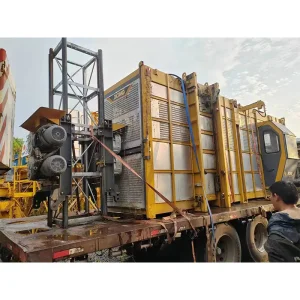
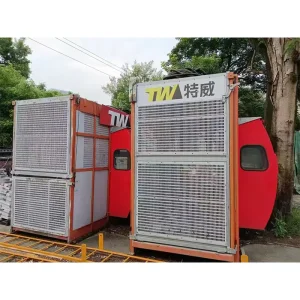
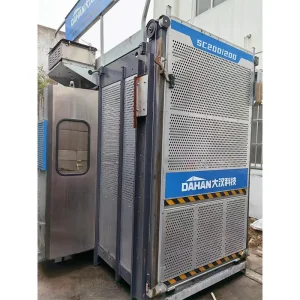
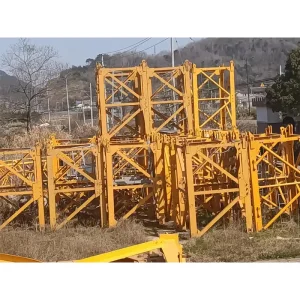
Explore high-tonnage hammerheads, flat-tops, and dual-cage personnel hoists checked for immediate ocean loading.
Comprehensive engineering, operational, and commercial insights for engineering directors and plant managers.