Rigidly inspected, pre-commissioned, and verified late-model inventory (YOM 2018–2023) ready for immediate global port dispatch.
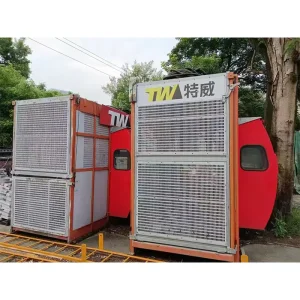
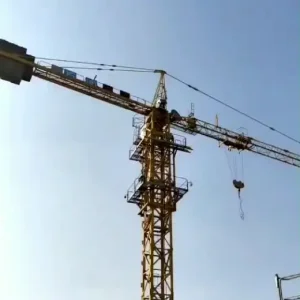
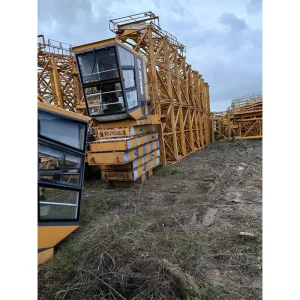
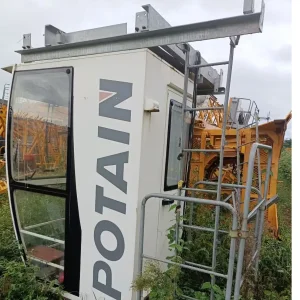
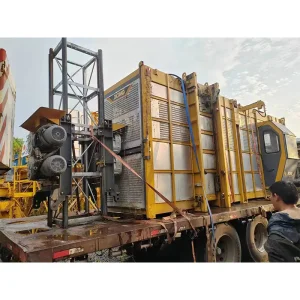
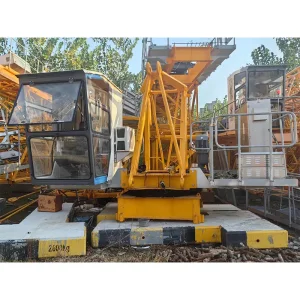
A deep comparative breakdown of capital expenditure optimization, utilization agility, and rapid deployment mechanics across modern civil infrastructure and energy developments.
Selecting the right mobile tower crane manufacturer or specialized supplier requires balancing initial procurement with operational mobilization costs. Traditional static cranes entail significant civil foundation casting, lengthy permitting cycles, and high rigging crew expenses. Modern mobile tower cranes reduce installation downtime by up to 75%.
Urban infill, modular timber construction, and industrial plant maintenance demand cranes that can maneuver tight access roads, negotiate overhead powerlines, and operate within compact radius constraints. Self-erecting mobile tower cranes combine the horizontal reach of a tower crane with the transit flexibility of a multi-axle all-terrain chassis.
Huaian Zhongqiang International Trade Co., Ltd. operates a 30+ acre warehouse base with dedicated mechanical overhaul bays, shot-blasting stations, and load calibration tracks. With a Chinese National Second-Level Qualification and independent direct import/export authority, we supply certified lifting equipment directly to global project sites.
How engineering contractors deploy mobile tower crane systems to solve severe physical, geotechnical, and airspace limitations across mega-scale industrial and infrastructure corridors.
Metropolitan construction faces strict noise curbs and lane occupation rules. Mobile tower cranes operate silently using jobsite 400V grid power, fold their booms over roof ridges, and lift heavy precast glass panels without closing multi-lane streets.
Industrial precast 3D modular concrete pods weigh between 8 to 25 metric tons. Mobile flat-top tower systems offer flat load trajectories, zero trolley pendulum swaying, and millimeter-level micro-inching during pin alignment.
Nacelle assembly and wind hub substation rigging frequently involve remote, rough-terrain staging pads. Heavy crawler-mounted mobile tower cranes provide 120-meter hook heights without requiring auxiliary crawler anchor cranes.
High-speed rail viaducts and cantilever bridge piers demand frequent re-positioning along linear construction rights-of-way. Mobile tower cranes eliminate weeks of dismantle-reassemble cycles, traveling quickly from pier to pier.
| Equipment Category | Rigging & Commissioning | Foundation Requirement | Hook Height Adaptability | Relocation Agility | Primary Economic Benefit |
|---|---|---|---|---|---|
| Mobile Self-Erecting Tower Crane | 15 – 45 Minutes (Hydraulic Auto-Unfold) | Integrated Hydraulic Outriggers (Steel Mats) | 24m – 45m (Telescopic Tower Mast) | Immediate (Highway Speed) | Ultra-low labor overhead; eliminates auxiliary mobile cranes. |
| Traditional Topkit Crane (QTZ Class) | 3 – 5 Days (Requires 100t+ Mobile Crane) | Reinforced Concrete Pad or Ballasted Base | 40m – 220m+ (Tied to Building Core) | Requires Full Disassembly & Transport | Maximum tip capacity and ultimate height for super-tall towers. |
| Flat-Top Modular Tower Crane | 1 – 2 Days (Modular Pin Jib Sections) | Fixed Anchor Stool or Concrete Foundation | 30m – 180m (Climbing Capabilities) | Standard Flatbed Container Transport | Overlapping radius in multi-crane jobsites without interference. |
| All-Terrain Hydraulic Telescopic Crane | 10 – 20 Minutes (Outrigger Extension) | Heavy Outrigger Pads | 30m – 90m (With Heavy Fly Jib) | Immediate (Self-Propelled) | Extreme single-point lifting; higher hourly fuel & rental costs. |
The mobile tower crane manufacturing industry is evolving rapidly toward zero-emission hybrid drives, IoT digital twins, and AI-assisted safety limiters.
Modern mobile cranes integrate multi-axis inertial measurement units (IMUs) and optical hook cameras with neural-network motion algorithms. These systems continuously adjust frequency inverters to neutralize load oscillation caused by wind gusts and operator acceleration.
Contractors face increasing emissions mandates in European, North American, and East Asian metropolitan centers. Next-gen mobile tower cranes feature dual-mode powertrains that travel via Euro 6/Tier 4F diesel engines and operate on-site using 32A/63A electrical grid connections.
At Zhongqiang, exported equipment undergoes structural sensor installation that enables continuous remote health monitoring. Fleet operators can track slewing ring stress, hoist rope wear, and hydraulic pressure profiles through cloud-based telemetry dashboards.
Navigating import tariffs, crane certification codes, and worksite safety compliance across major global markets.
Rigid enforcement of FEM 1.001 design fatigue standards, CE Machinery Directive 2006/42/EC, and out-of-service wind resistance up to 42 m/s. Zhongqiang provides complete calculation packages for EU site safety engineers.
Adherence to ASME B30.3 (Tower Cranes) and ASME B30.29 (Self-Erecting Tower Cranes), alongside OSHA 1926.1400. Export units feature bilingual load charts, imperial unit telemetry, and certified third-party structural sign-offs.
Equipment must withstand ambient working conditions reaching +55°C, high dust concentration, and high coastal humidity. Our stock features heavy-duty tropicalized cooling packs and sand-sealed electrical enclosures.
Rapid industrial expansion across Vietnam, Indonesia, the Philippines, and South Korea demands cost-effective, high-reliability lifting machinery. Short shipping routes from our East China base ensure prompt transit.
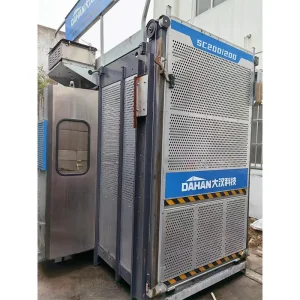
Every used tower crane and construction hoist undergoes rigorous non-destructive testing (NDT), dimensional verification, and dynamic load testing before sea dispatch.
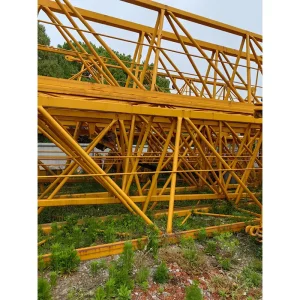
Specialized ultrasonic and magnetic particle testing on critical mast chords, jib root pins, slewing adapters, and turntable weld seams to detect sub-surface metal fatigue or microscopic micro-fractures.
Complete disassembly of winches, planetary gearboxes, slewing rings, and hydraulic folding cylinders. Worn bearings, brake linings, and seals are replaced with original OEM components.
Rewiring of critical electrical control cabinets, calibration of variable frequency drives (VFDs), and testing of load moment indicators (LMI) under both 100% rated and 125% overload static tests.
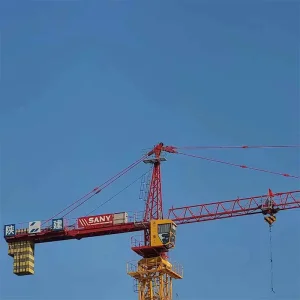
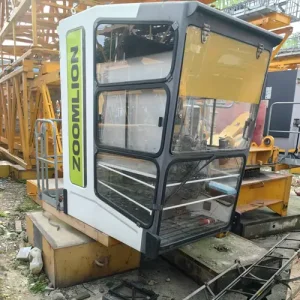
SANY, Zoomlion, Yongmao, and DAHAN lifting systems verified and prepared for heavy-duty industrial project commitments.
Direct answers addressing procurement, customs verification, sea freight packing, on-site commissioning, and regulatory certifications.
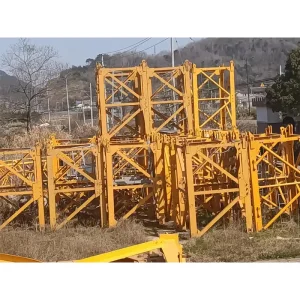
Mobile self-erecting tower cranes feature all-in-one folding designs mounted on wheeled or crawler chassis. They erect via automated electro-hydraulic rams in under 45 minutes using outriggers, eliminating poured concrete footings. In contrast, standard topkit cranes (like QTZ100 or MC120) use modular pin or bolt lattice mast sections assembled by auxiliary cranes, designed for higher static heights and permanent multimonth installations.
Every machine features verified original OEM metal nameplates indicating the authentic Year of Manufacture (YOM 2018–2023). Our in-house technical department carries out a 128-point inspection: ultrasonic flaw testing on main chords and slew bearing mounts, hydraulic cylinder drift checks, wire rope gauge verification, and electrical PLC testing before generating a comprehensive photo/video dossier for client review.
Tower crane components are disassembled into optimized transport parcels. Standard mast sections (1.6m x 1.6m or 2.0m x 2.0m panels), counter-jibs, and hoist winches are loaded into 40ft High Cube (40HC) or Open Top (40OT) shipping containers. Oversized slewing assemblies, climbing cages, or one-piece mobile undercarriages are lashed to Flat Rack containers or booked via Breakbulk vessels through Shanghai or Qingdao ports.
Zhongqiang holds independent national export qualification. We supply an international Commercial Invoice, Packing List with piece marks, Clean on Board Ocean Bill of Lading, Certificate of Origin (COO / Form E / Form A), Factory Electrical Schematics, Load Test Performance Certificates, and third-party inspection sign-offs (SGS / BV / CCIC) as requested by the destination country's customs office.
Yes. Buyers or their designated engineering auditors can visit our 30+ acre facility in Huai'an, Jiangsu, China. We facilitate hands-on inspection of mast chords, slew ring play, motor insulation resistance, and hoist operations. For clients unable to travel, our engineers conduct interactive high-definition live video test runs demonstrating slewing, trolleying, and hoist braking under full load.
We maintain extensive stock of critical wear parts: brake pads, contactors, encoders, load sensors, wire ropes, and mast fixing pins compatible with Potain, Zoomlion, XCMG, and SANY models. We can include emergency maintenance kits inside the crane container and dispatch air-freight replacement components within 48 to 72 hours worldwide.