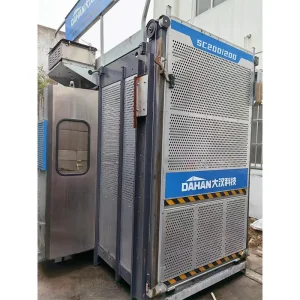
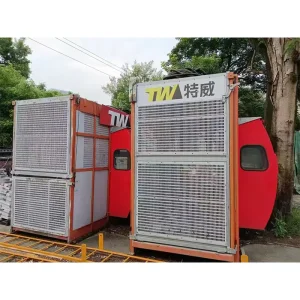
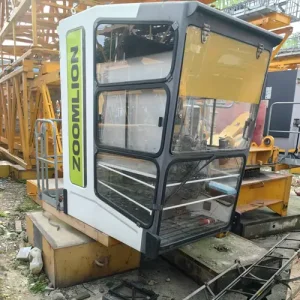
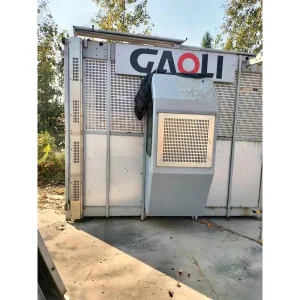
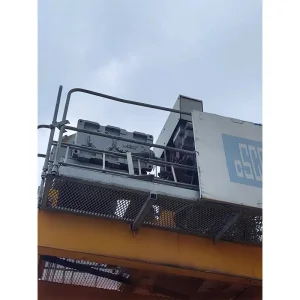
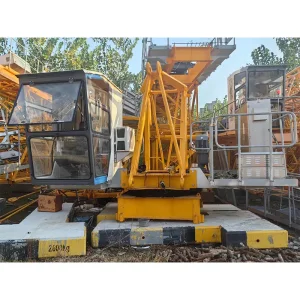
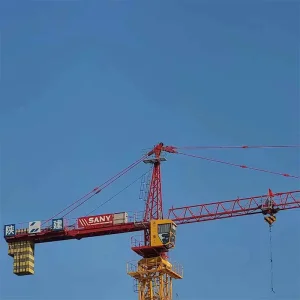
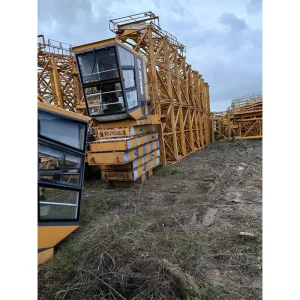
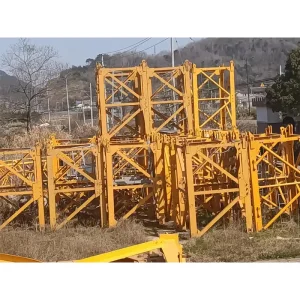
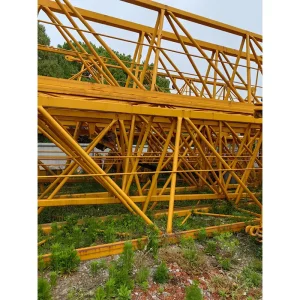
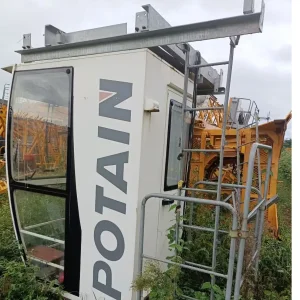
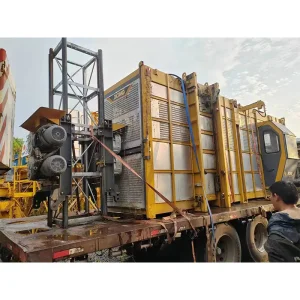
Pre-inspected self-climbing crane assemblies and dual-cage hoists ready for international logistics deployment.
Strategic analysis of urban high-density construction, vertical architectural ascendancy, and specialized hoisting engineering.
As tier-one and megacity skylines expand vertically within hyper-restricted envelopes, conventional mobile cranes reach absolute geometrical limits. Self-climbing tower cranes eliminate ground footprint interferences by anchoring directly inside structural lift shafts or executing external bracket crawls along shear walls.
Modern off-site modular construction mandates exceptional high-tonnage load moments at excessive hook radii. Top-tier engineering contractors demand self-raising climbing apparatuses capable of safely handling bulky 15-to-30-ton precast concrete units without structural mast deflection.
Global EPC contractors reduce structural overhead through audited second-hand procurement. Procuring late-model (YOM 2018–2023) equipment cuts capital outlays by 50–65% compared to new factory purchases while preserving total structural safety and factory-grade mechanical tolerances.
A structural comparison to help project directors select optimal climbing kinematics based on core layout, wind shear resistance, and structural costs.
Positioned inside the reinforced concrete elevator shaft. Utilizes hydraulic climbing ladders and beam pawls supported across three designated working levels. Eliminates external tie-in collar costs and minimizes total mast section consumption. Best suited for ultra-tall symmetrical towers exceeding 200 meters with limited site boundaries.
Erected beside the building exterior on a dedicated foundation pad. As height increases, rigid horizontal tie-in struts anchor the mast to floor slabs at set vertical intervals (typically 18m–36m). Accommodates asymmetric architectural facades and facilitates higher tip-load operations without stressing internal elevator shafts.
Both climbing methods rely on heavy hydraulic jacking cylinders paired with counterbalance valves and mechanical anti-drop pawls. Climbing procedures require absolute boom balancing (jib deadweight calibrated with balance trolleys or ballast adjustments) to prevent bending moments on the climbing cage guide rollers.
In-depth technical review of structural metallurgy, control systems, and lifting mechanics across premier global brands.
Flagship: MC320, MC120 series.
Highlights: Global industry benchmark for mast interchangeability, pin-connected jib sections, and smooth LVF frequency-inverter hoisting winches. Features the Vision Cab and precision slewing control.
Flagship: QTZ250 (7025-12), QTZ200.
Highlights: High-grade structural steel chords (Q345B/Q420B) designed for rigorous wind fatigue resilience. Integrated ETI human-machine intelligent diagnostic systems and zero-speed torque hold.
Flagship: SFT series & QTZ100 (6013-6).
Highlights: Intelligent anti-sway algorithms, millimeter-level jog positioning, and high-safety hydraulic telescoping cages with anti-slip auto-locking pins and high-pressure seals.
Flagship: XCMG QTZ100, DAHAN SC200/200.
Highlights: Robotic automatic welding, structural electrophoretic dip-coating against marine atmospheric corrosion, reliable dual-drive rack-and-pinion transmission hoists.
How IoT telematics, AI anti-collision, and autonomous jacking systems are reshaping vertical transport safety.
Next-generation self-climbing cranes integrate digital load cells, multi-axis tilt sensors, and wind anemometers directly into CAN-bus telematics. Structural stress anomalies are transmitted in real time to cloud dashboards, alerting engineers to localized fatigue before micro-fractures develop.
Modern job sites feature multiple overlapping jibs. Advanced edge computing nodes calculate three-dimensional spatial coordinates, automatically decelerating slewing or trolley movement whenever a crane approaches blind spots, static structures, or adjacent crane envelopes.
Hydraulic climbing transitions from manual manual valve control to multi-point sensor-governed jacking systems. Micro-displacement sensors monitor mast verticality during telescoping, adjusting hydraulic pressure across cylinders to prevent mast binding or guide roller pinching.
Operating a dedicated 30+ acre logistics hub in Huai'an, Jiangsu, every machine is subjected to rigorous quality verification before port delivery.
Ultrasonic flaw detection and magnetic particle testing are performed across mast chord butt welds, slewing platform seams, and high-tensile connection pins. Eliminates metal fatigue and micro-cracking risks prior to sea container loading.
Slewing bearings undergo axial play clearance micrometer checks. Hoist gearboxes, electromagnetic disc brakes, frequency inverters, and wire ropes are bench-tested under simulated dynamic loads to confirm OEM performance parameters.
Our direct export department provides complete traceability: original manufacturer nameplates, Certificates of Origin (Form E, CO, etc.), CE Conformity documentation, certified loading plans, and third-party inspection dossiers (SGS, BV, TÜV upon request).
Direct technical and operational answers to common inquiries from international project directors and equipment managers.
Direct supply from leading manufacturers including XCMG, Yongmao, Potain, and Zoomlion.