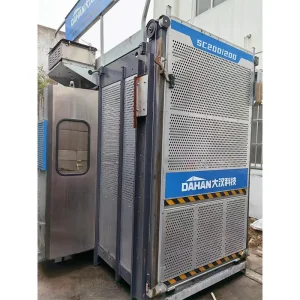
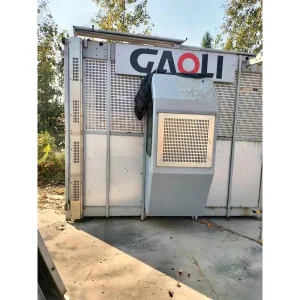
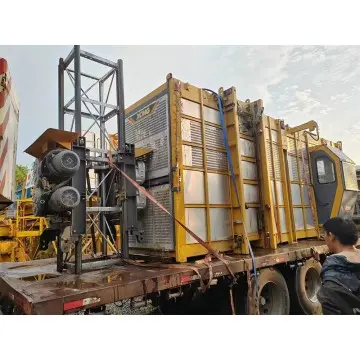
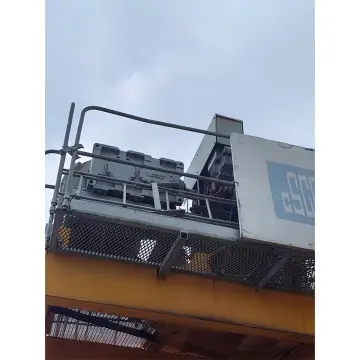
DAHAN SC200/200 Twin-Cage Construction Hoist (YOM 2019-2023)
View Specifications
Every piece in our inventory is audited under stringent structural weld analysis, load-moment limiter calibration, and complete dynamic load verification before overseas shipment.
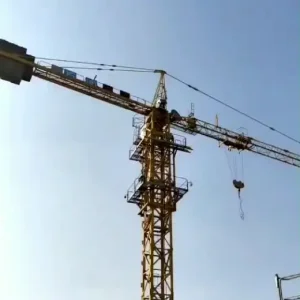
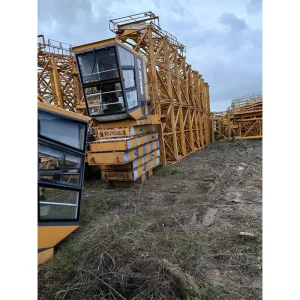
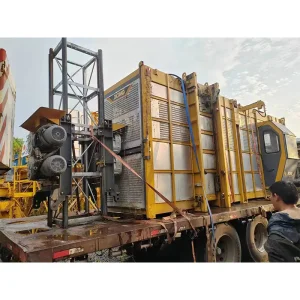
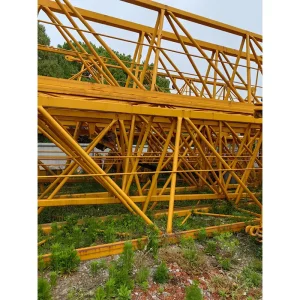
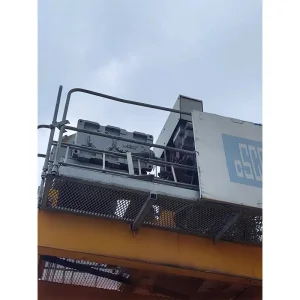
Analyzing operational efficiency, urban spatial constraints, and modular building methodologies shaping next-generation lifting equipment procurement worldwide.
Traditional tower cranes require days of assembly, auxiliary mobile cranes, and extensive street permits. Modern mobile tower cranes integrate telescoping lattice masts and fold-out articulated jibs, completing setup within 20 to 45 minutes on congested city sites without external rigging machinery.
With prefabricated precast panels and pod housing growing across Europe and Southeast Asia, lifting systems require higher hook tip capacities at steep operational angles. Hybrid mobile lifting rigs bridge the gap between static hammerhead cranes and heavy hydraulic mobile cranes.
Next-generation fleets deploy CAN-bus sensor networks delivering millisecond-interval slew angle, hook radius, wind velocity, and structural stress telemetry directly to site engineers and asset managers across remote cloud dashboards.
Evaluating Total Cost of Ownership (TCO), mobilization cycles, footprint requirements, and structural lifespans for engineering procurement executives.
| Evaluation Parameter | Self-Erecting Mobile Tower Crane | Stationary Topkit / Hammerhead Crane | Flat-Top Modular Crane |
|---|---|---|---|
| Assembly Window | 20 – 60 Minutes (Fully Hydraulic) | 2 – 4 Days (Requires Assist Crane) | 1 – 2 Days (Interchangeable Jibs) |
| Site Footprint Required | Minimal (Outriggers with Self-Leveling) | Large Concrete Foundation Anchor Base | Compact In-Situ Mast Footprint |
| Mobility & Transfer | Integrated Highway Trailer Chassis | Multi-Flatbed Truck Component Haulage | Containerized Shipping / Multi-Truck |
| Tip Load Reach Ratio | Optimal for 30m–50m Low-to-Mid Rise | Superior for >100m High-Rise Megaprojects | Flexible for Congested Airspace Sites |
| Labor Allocation | Single Operator / Remote Radio Control | Operator + Rigging Crew + Signal Teams | Operator + Site Rigger Specialists |
Authorized Sourcing From Premier Heavy Machinery Manufacturers
Addressing structural stabilization, zero-clearance boundaries, and harsh climatic environments with bespoke engineering configurations.
Navigating restricted street access where standard mobile crane outriggers block traffic veins. Our compact self-folding cranes erect within their own perimeter, utilizing elevated 360-degree clear-slewing radiuses to avoid adjacent historical architecture without line-of-sight obstruction.
Linear transport projects require lifting assets that shift position continuously along highway sections or bridge decks. Rubber-tired and crawler mobile tower units eliminate continuous teardown cycles, speeding up girder placement and reinforcement cage delivery by 40%.
Coastal installations face corrosive marine salt fogs and unpredictable gust loads. Our selected units incorporate specialized zinc-rich polyurethane coatings, sealed marine-grade IP67 drive motors, and automated dynamic anemometer-triggered wind-weathervaning modes.
Holding Chinese National Level-2 Qualification and autonomous import/export licenses, Huaian Zhongqiang eliminates intermediary risks through rigorous standardized physical audits.
Every chord splice, mast diagonal, and jib heel pin assembly is tested with ultrasonic crack flaw detectors and magnetic particle inspection to guarantee zero internal metal fatigue or microscopic shearing before export clearing.
We measure raceway play, axial deflection, and gear tooth flank wear utilizing dial gauges under simulated moment loads, ensuring slewing rings strictly abide by factory ISO/FEM tolerance metrics.
All PLC control systems, inverter drive cabinets, electromagnetic braking coils, and dual-axis hoist limiters undergo high-voltage insulation tests and simulated overspeed tripping procedures under full load conditions.
Seamless execution from our central 30+ acre facility in Huai'an, Jiangsu, through sea routes to ports across North America, Europe, the Middle East, and APAC.
Tower mast segments, telescoping cages, and counter-jib sections are disassembled, laser-coded with matching pin numbers, anti-corrosion cosmoline wrapped, and strapped using certified marine tension bindings for ocean transit.
We supply full dossiers compliant with local port regulations: Original Manufacturer Certificate of Origin (CO), CE Directives, EAC certification dossiers for CIS regions, SASO compliance documentation for Saudi Arabia, and notarized English third-party SGS/TÜV inspection reports.
Our multilingual commissioning engineers provide on-site foundation bolt anchoring supervision, initial self-erection monitoring, and AR-assisted remote diagnostics to ensure your team achieves immediate, safe operational tempo.
Anticipating the technological disruptions redefining global lifting machinery through 2030 and beyond.
Elimination of diesel particulate emissions in residential urban centers. Battery-buffered 400V grid-tie systems that capture regenerative braking power during load lowering, slashing worksite power consumption by 35%.
LiDAR integration and computer vision tracking creating dynamic 3D exclusion zones around scaffolding, adjacent cranes, and overhead utility lines with automated hook dampening to cancel centrifugal swing.
Strain-gauge telemetry fed into AI structural models calculating the exact cumulative structural fatigue life of high-tensile steel chords, scheduling micro-refurbishment prior to mechanical failure risks.
Explore late-model units verified by serial number nameplates, complete maintenance logs, and certified pre-shipment testing dossiers.
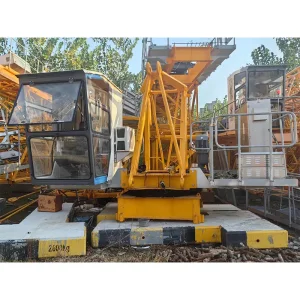
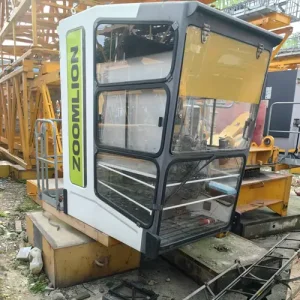
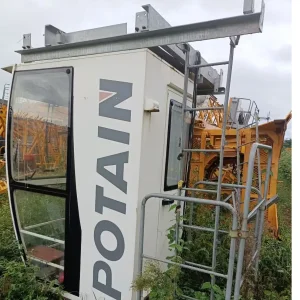
In-depth responses covering nomenclature, export verifications, customs protocols, and mechanical lifecycle maintenance.
Connect with our senior logistics and lifting engineers to access certified machinery stocklists, arrange live video yard walk-throughs, or obtain CIF port quotations within 24 hours.