Explore late-model, rigorously audited tower cranes and hoist machinery certified for elevated rooftop mounting, internal climbing, and complex building-top operational envelopes.
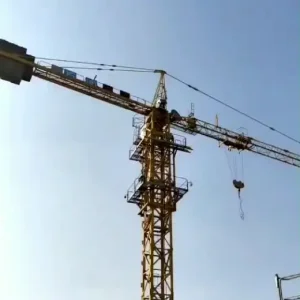
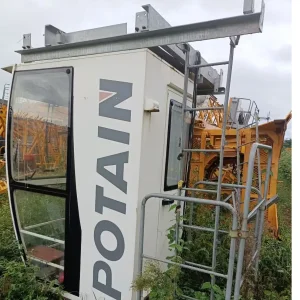
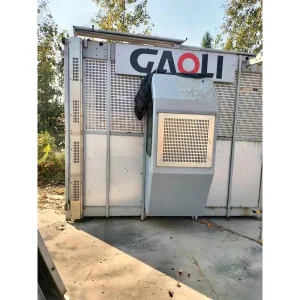
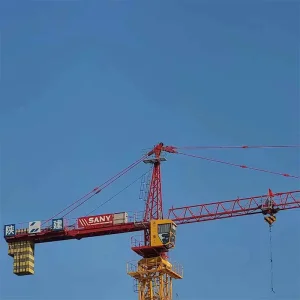
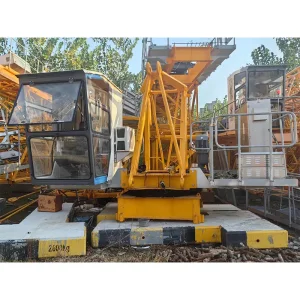
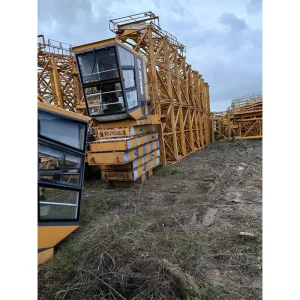
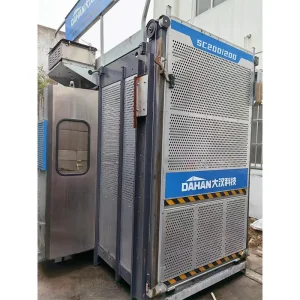
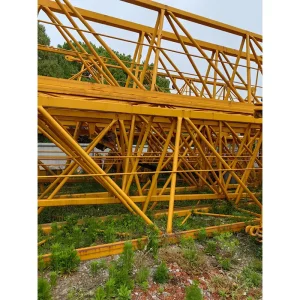
Urban density, architectural height escalation, and strict boundary lines necessitate top-of-structure lifting solutions where ground-based mobile cranes are logistically unfeasible or cost-prohibitive.
Global metropolitan centers are constrained by zero-lot-line zoning. Conventional high-tonnage crawler or all-terrain cranes cannot occupy city arterials for extended construction lifecycles. Mounting high-performance topkit or luffing jib cranes directly onto concrete elevator cores or rooftop structural transfer slabs resolves urban traffic congestion while keeping the hook radius directly over the structural envelope.
Contractors operating supertall development programs face acute supply chain lead times of 12 to 18 months for virgin European machinery. Sourcing inspected, late-model (YOM 2018–2023) equipment engineered by world-class OEMs—such as Zoomlion, SANY, XCMG, and Potain—slashes equipment procurement expenditure by up to 55% while delivering immediate job site delivery readiness.
Once a skyscraper achieves structural topping-out, the primary tower crane cannot simply lower itself down without complex structural ties. Modern rooftop crane applications extensively deploy specialized dismantling roof derricks—compact, stiff-legged recovery cranes that dismantle the primary heavy crane sections and lower them down the building envelope before self-disassembling into service elevator footprints.
Securing heavy-duty lifting hardware hundreds of meters above grade demands rigorous structural interaction modeling, dynamic moment mitigation, and synchronized load distributions.
Positioned inside the reinforced concrete elevator shaft, the crane utilizes hydraulic climbing frames and hydraulic cylinders to climb vertically every 3–4 floors, transferring massive overturning moments directly into shear walls via engineered steel climbing collars.
For cranes mounted on top of finished structural roof slabs, fabricated H-beam structural steel grillages distribute concentrated vertical reactions, slewing torques, and horizontal shear forces across primary structural building columns.
At elevations exceeding 150 meters, turbulent boundary layers generate extraordinary high-altitude wind pressure. Rooftop-mounted cranes require precision out-of-service weathervaning mechanisms and reinforced slewing ring bolts to resist extreme aerodynamic vortex shedding.
Where external mast sections extend past the roofline, specialized triangular tie-in struts with high-strength tension rods bind the crane mast to the crown slabs, mitigating P-Delta second-order moments under dynamic full-hook operating loads.
| Mounting Methodology | Structural Footprint | Maximum Working Height | Primary Load Transfer Mechanism | Decommissioning Strategy |
|---|---|---|---|---|
| Internal Floor Climbing | Inside Elevator Core (approx. 2.2m x 2.2m) | Unlimited (Tied to building height) | Dual or triple hydraulic collar floor wedges | Disassembled by Rooftop Derrick Crane |
| Roof Transfer Grillage | Structural Roof Slab (8m x 8m footprint) | Freestanding on roof (30m - 50m mast) | Engineered structural I-beam load spreaders | Mobile crane (if lower) or modular roof derrick |
| External Wall-Attached | Perimeter Foundation + Wall Ties | Up to 300m+ with periodic anchorage | Horizontal anchor frames tied to floor slabs | Self-climbing down via telescoping cage |
| Stiff-Leg Rooftop Derrick | Compact Rooftop Slab Anchor Footprint | Fixed to finished building crown | Direct tie-downs to structural concrete columns | Manually segmented via internal hoist/elevator |
Operating out of our expansive 30+ acre logistics base in Huai'an, Jiangsu, Huaian Zhongqiang International Trade Co., Ltd. enforces uncompromising quality verification benchmarks on every exported asset.
Every chord, diagonal brace, and pin connection plate across our Potain, Zoomlion, and SANY mast sections undergoes ultrasonic flaw detection (UT) and magnetic particle testing (MT). We verify that structural steels maintain complete structural continuity free from micro-fissures, internal embrittlement, or corrosion thinning.
Slewing bearings undergo dial indicator measurement to calculate axial play and radial tooth backlash clearance. Reduction gears, oil baths, and hydraulic fluid systems are chemically sampled to detect microscopic metallic wear particles, guaranteeing long-cycle reliability under peak hoist loads.
Prior to disassembling for export transit, crane control consoles, variable-frequency drives (VFD), moment limiters, maximum load cut-offs, trolley limit switches, and anemometers are energized and dynamically calibrated against certified test weights under real operational conditions.
Transporting 100-meter jibs, counter-jibs, massive winches, and multiple mast sections from Huai'an to international seaports demands precision container stowage, flat-rack lashings, and customs document integrity.
Our veteran in-house riggers tag every pin, electrical cable junction, jib section, and counterweight assembly with color-coded, stamped stainless tags. This meticulous marking structure guarantees that your domestic assembly technicians can reconstruct the machinery smoothly on site without alignment confusion.
Depending on destination port facilities and crane component geometries, we optimize consignments utilizing 40ft High Cube (HC) containers, Open Top (OT) units for oversized slewing assemblies, and Heavy-Duty Flat Racks for large winches. Breakbulk (BB) vessels are chartered directly for extensive multi-crane project shipments.
Zhongqiang holds independent national level-2 qualifications and self-managed import/export rights. We provide complete commercial invoices, packing lists, clean on-board marine bills of lading, Certificates of Origin (CO/Form E/Form A), and original OEM technical passports for swift customs processing.
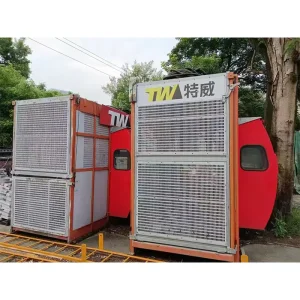
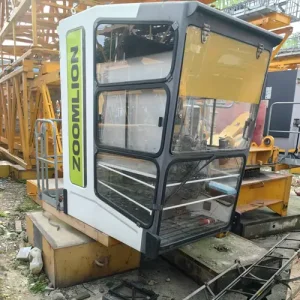
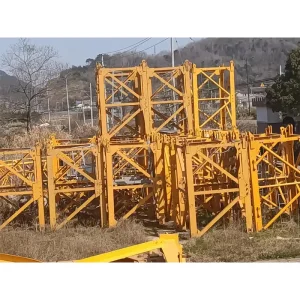
Explore our heavy-tonnage tower cranes, high-capacity passenger/material construction hoists, and long-jib configurations engineered for major industrial developments.
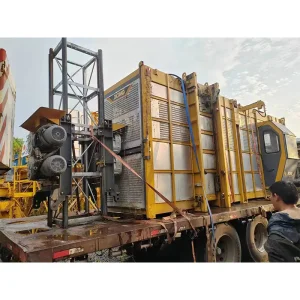
Comprehensive engineering, operational, and commercial insights addressing structural loads, shipping constraints, and machine verification.
An internal climbing tower crane does not rest on the foundation once climbing commences. Instead, it is suspended through vertical openings (typically elevator shafts) using engineered climbing collars on three distinct floor levels. Overturning moments and deadweight loads are transferred directly into the building's reinforced concrete shear walls through structural steel floor beams and hydraulic wedge blocks.
Skyscrapers rely on a staged disassembly procedure. The main crane erects a small, modular recovery roof derrick crane near the building edge. The roof derrick dismantles the large crane's boom, counter-jib, and slewing assembly, lowering them down the exterior facade. The derrick itself is then dismantled into micro-components light enough to descend via the building's permanent service elevator.
Huaian Zhongqiang ensures total machine provenance transparency. Every crane in our inventory retains its original OEM stamped nameplate verifying the true Year of Manufacture (YOM). Our engineering team conducts ultrasonic flaw testing on main steel chords, replaces degraded bushings, measures slewing play, tests motor megohmmeter insulation resistance, and films comprehensive dynamic operation videos prior to shipment.
A standard topkit tower crane with a 60-meter jib (e.g., Potain MC120 or SANY QTZ100) typically requires five to six 40ft High Cube containers. This safely stows the pinned jib sections, counter-jib, counterweight brackets, mechanism winches, cab, and 40 to 50 meters of standard mast sections. Massive one-piece slewing assemblies or oversized base chassis are stowed on specialized flat-racks or open-top units.
High-altitude building installations encounter substantial wind shear forces. Cranes configured for building tops feature specialized weathervaning brake releases that permit the jib to rotate freely 360 degrees like a wind vane when out of service, preventing violent torsional twisting. Furthermore, crane mast anchoring intervals and tie-in beam calculations are structurally designed based on 50-year maximum local wind gust return periods.
Absolutely. We encourage overseas buyers or their appointed third-party inspection agencies (such as SGS, Bureau Veritas, or TÜV) to visit our 30+ acre warehouse base in Huai'an, Jiangsu, China. We can fully assemble components, connect 380V industrial test power, cycle hydraulic climbing frames, and perform live load testing on site prior to finalizing contract releases.