Global Engineering & Equipment Verification Authority

Best Crane Heavy Equipment Manufacturer & Factories

Precision-engineered lifting machinery, verified structural fatigue ratings, and strategic OEM equipment procurement solutions engineered for Tier-1 civil infrastructure and commercial construction projects worldwide.

Verified Industrial Fleet Solutions

Pre-inspected, ready-to-deploy topkit, flat-top tower cranes and dual-cage passenger/material hoists from leading manufacturers worldwide.
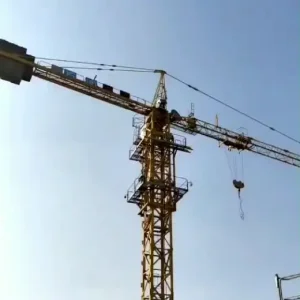
XCMG QTZ100 6013-6 Crane
XCMG · YOM 2019-2023

XCMG QTZ100 6013-6 Tower Crane

View Technical Specs
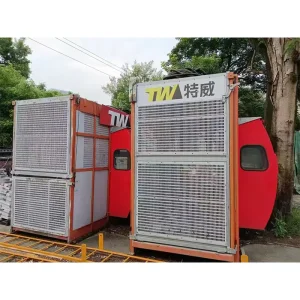
TEWEI SC200/200 Construction Hoist
TEWEI · Twin Cage Hoist

TEWEI SC200/200 Industrial Hoist

View Technical Specs
YONGMAO STT153 7015-10 Flat-Top Crane
YONGMAO · 10t Max Load

YONGMAO STT153 7015-10 Crane

View Technical Specs
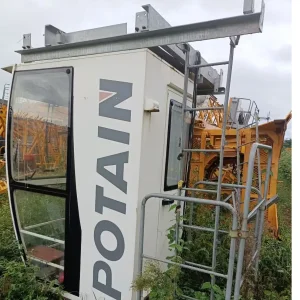
POTAIN MC320-12 Hammerhead Crane
POTAIN · Topkit Series

POTAIN MC320-12 Hammerhead Crane

View Technical Specs
DAHAN QTZ100 6013-6 Crane
DAHAN · 60m Jib Length

DAHAN QTZ100 6013-6 Tower Crane

View Technical Specs
DAHAN SC200/200 Construction Elevator
DAHAN · High-Speed Mast

DAHAN SC200/200 Building Hoist

View Technical Specs
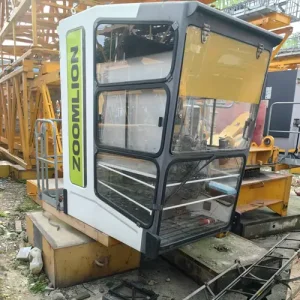
ZOOMLION QTZ200 7020-12 Crane
ZOOMLION · 12t Capacity

ZOOMLION QTZ200 7020-12 Crane

View Technical Specs
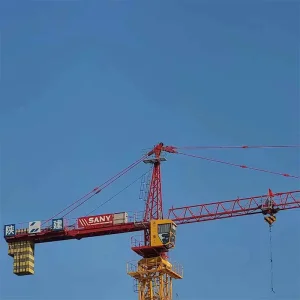
SANY QTZ100 6013-6 Crane
SANY · VFD Hoisting Unit

SANY QTZ100 6013-6 Tower Crane

View Technical Specs

Macro Trends & Strategic Sourcing Paradigms

Evaluating Capital Expenditure (CAPEX), Operational Flexibility, and Equipment Longevity in Heavy Construction Sectors.

The contemporary lifting equipment sector is characterized by profound structural shifts driven by global mega-infrastructure initiatives, rapid urbanization across emerging markets, and an aggressive industry pivot toward decarbonization. Engineering contractors, EPC conglomerates, and equipment rental providers operate under increasingly volatile macroeconomic environments where supply chain bottlenecks for brand-new manufacturing assets can extend procurement lead times from 10 to over 18 months. As a consequence, procurement directors are aggressively turning to verified, late-model (Year of Manufacture 2018–2023) heavy cranes and lifting platforms to maintain project delivery milestones while optimizing total capital outlay.

Choosing an equipment supplier or certified remanufacturing exporter requires navigating complex mechanical engineering criteria, non-destructive testing benchmarks, and dynamic localized regulatory compliance frameworks. The total cost of ownership (TCO) calculus is no longer restricted to upfront acquisition fees; rather, engineering teams scrutinize residual resale value, component interchangeability, frequency-inverter electrical efficiencies, and immediate site availability. Certified pre-owned OEM units from globally renowned manufacturers—such as XCMG, Zoomlion, Potain, SANY, and Yongmao—deliver between 45% and 60% CAPEX savings relative to direct-from-factory new assets, without compromising structural integrity, load-moment compliance, or operational uptime.

128+
Inspection Checkpoints Passed
55%
Average CAPEX Reduction
30+
Acre Physical Staging Base
100%
OEM Metallurgy Traceability

Engineering Architecture & Evolutionary Standards

Dissecting modern mechanical configurations, high-tensile steel metallurgy, and intelligent drive technologies.

Modern tower cranes have evolved past static, heavy mechanical configurations into precision-calibrated robotic apparatuses. High-tensile low-alloy structural steels, such as Q355B and Q460D, have universally replaced legacy carbon steels across mast cord and boom chords. This structural enhancement provides dramatically superior yield strength (up to 460 MPa) while significantly curbing deadweight, effectively optimizing the crane's load chart radius and resilience to torsional seismic moments. Concurrently, closed-loop variable frequency drive (VFD) hoisting, slewing, and trolley mechanisms deliver micro-inching precision down to 5 millimeters per second, preventing shock loads on critical pin junctions and gearboxes.

Equipment Classification Structural Metallurgy Kinematic Drive Subsystems Safety Limiters & Telematics Primary Industrial Sector
Hammerhead / Topkit Crane (e.g., Potain MC320, XCMG QTZ100) Q345B / Q355B Square Hollow Section chord pin joints Stepless VFD Hoist with mechanical spring fail-safe braking Electronic load moment limiter (LML), anti-collision sensors Heavy civil foundations, bridge piers, general commercial vertical builds
Flat-Top / Topless Crane (e.g., Yongmao STT153) Q355B / Q460 Welded High-Tensile angle chords Integrated frequency slewing with eddy-current control systems Multi-crane collaborative spatial zone interference avoidance Congested urban environments, multi-crane overlapping airspaces
Construction Hoist (e.g., SC200/200 Twin Cage) Hot-dip galvanized welded tubular mast sections Tri-motor rack & pinion engagement with progressive safety devices Centrifugal drop arrestor, overspeed governor, limit gates High-rise facade installation, passenger transfer, bulk materials

IoT-Enabled Dynamic Telematics

Real-time black-box data logging capturing dynamic stress amplitudes, slew cycle counts, hook travel velocities, and thermal limits across high-demand gear trains for predictive maintenance.

Progressive Safety Redundancy

Dual-circuit hoist rope anti-slack limiters, calibrated anemometers executing automated storm parking protocols, and fail-safe electro-hydraulic disk brakes preventing free-fall contingencies.

Eco-Kinematic Energy Recovery

Next-generation inverter configurations channeling dynamic lowering energy back into the auxiliary power grid, trimming operational kilowatt consumption by up to 28% during heavy cycles.

Comprehensive 128-Point Non-Destructive Testing (NDT)

Zero-defect verification framework implemented prior to oceanic transit and custom clearance clearance.

Exporting heavy mechanical lifting equipment requires uncompromising diligence. Huaian Zhongqiang International Trade Co., Ltd. operates a proprietary 30+ acre testing and staging facility in Huai'an, Jiangsu, where every single machine undergoes exhaustive technical re-qualification. Unlike brokers who act as mere commercial intermediaries, our licensed mechanical and welding engineers evaluate all load-bearing structural members under loaded and unloaded static conditions.

Ultrasonic & Magnetic Particle Inspection

Crucial chord welds, boom pinholes, mast connecting bolts, and slew-ring raceways undergo magnetic particle (MPI) and ultrasonic non-destructive testing (UT) to verify absolute freedom from subsurface fatigue fissures or micro-cracking.

Slewing Bearing Tolerance Analysis

Measurement of axial and radial mechanical play using dial indicator gauges against original OEM tolerance ceilings. Any bearing exceeding fractional millimeter variances is fully rebuilt or fitted with brand-new high-tensile fasteners.

Global Certification & Paperwork Integrity

Every exported unit matches its official OEM metal nameplate. Machines are delivered with factory serial certificates, comprehensive export dossiers, customs commercial invoices, packing lists, and certified load-test logs.

End-to-End International Logistics & Field Commissioning

Engineered packaging configurations, multi-modal oceanic freight, and turnkey reassembly support across 50+ ports.

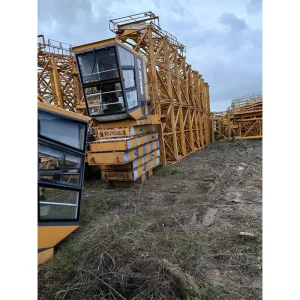
Overseas delivery of heavy lifting apparatus demands professional logistical orchestration. Huaian Zhongqiang eliminates middle-tier shipping uncertainties through its dedicated in-house heavy freight logistics unit. Cranes are methodically disassembled into modular sub-assemblies: mast sections, slewing platforms, counter-jibs, operator cabins, and electrical control cabinets are color-coded, labeled, and inventoried.

Depending on final geographic destination and port unloading facilities, transit methods leverage customized 40-foot High Cube (40HC) containers, open-top units for oversized slewing assemblies, flat-racks for extra-wide boom bases, or specialized breakbulk vessels. Moisture-barrier shrink wrapping, vapor corrosion inhibitor (VCI) oils, and heavy-duty steel wire lashing ensure zero transit corrosion or physical shifting across oceanic passages to North America, Europe, the Middle East, and Southeast Asia.

PHASE 01

Precision Dismantling

Systematic disassembly by factory-certified riggers, labeling every pin, bolt, and hydraulic line with photographic documentation.

PHASE 02

Protective Preservation

Application of marine-grade rust inhibitors, electrical terminal sealing, and structural cushion-blocking to withstand high salt-spray conditions.

PHASE 03

Customs Clearance

Processing Form E, Certificates of Origin, EUR.1, and bilateral trade compliance protocols in strict alignment with destination laws.

PHASE 04

Field Commissioning

Providing remote digital engineering support, assembly CAD schematics, foundation bolt templates, and on-site expert supervision.

Future Technology Roadmap (2025–2035)

Pioneering autonomous heavy lift mechanics, AI vision systems, and hybrid alternative powertrains.

The construction machinery sector stands on the precipice of an autonomous transformation. Heavy lifting equipment is transitioning from operator-dependent machinery to smart, cognitive construction nodes. By 2030, standard tower crane configurations will natively incorporate real-time LiDAR point-cloud mapping, digital twin BIM alignment, and automated anti-sway algorithms that eliminate hook oscillation independently of wind gusts.

Furthermore, as ESG mandates tighten globally, diesel-powered generator reliance on remote sites is being replaced by onboard lithium iron phosphate (LFP) energy storage buffers and zero-emission hydrogen fuel-cell range extenders. Factory engineering departments across major OEM brands are actively patenting universal plug-and-play retrofit kits, enabling existing crane fleets to seamlessly adopt semi-autonomous tele-operation modules via 5G private networks.

Featured Inventory: High-Capacity Cranes & Hoists

Select specialized equipment from verified industrial yards, engineered for demanding structural lifecycles.
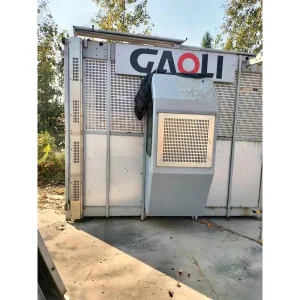
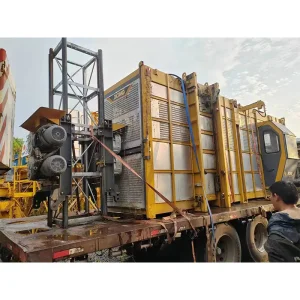
GAOLI SC200/200 Hoist
GAOLI · Dual Cage System

GAOLI SC200/200 Construction Hoist

View Technical Specs
XCMG SC200/200 Hoist
XCMG · YOM 2019-2023

XCMG SC200/200 Building Hoist

View Technical Specs
POTAIN MC120-6 Crane 2018
POTAIN · YOM 2018 Edition

POTAIN MC120-6 Tower Crane

View Technical Specs
ZOOMLION QTZ250 7025-12 Crane
ZOOMLION · Heavy Duty 12t

ZOOMLION QTZ250 7025-12 Crane

View Technical Specs
POTAIN MC120-6 2013-2014 Crane
POTAIN · Field-Proven Classic

POTAIN MC120-6 (YOM 2013-2014)

View Technical Specs
XCMG QTZ100 Crane Series
XCMG · Verified High Uptime

XCMG QTZ100 6013-6 (Certified)

View Technical Specs
POTAIN MC320 Heavy Crane
POTAIN · High Civil Projects

POTAIN MC320-12 (Inspection Pass)

View Technical Specs
YONGMAO STT153 Crane
YONGMAO · Flat Top Excellence

YONGMAO STT153 7015-10 Series

View Technical Specs

Authoritative Equipment Engineering & Procurement FAQ

In-depth responses to critical technical, operational, and customs clearance questions posed by global procurement managers.
How do Chinese QTZ model designations translate into standardized ISO / FEM load moment metrics?
Under the national Chinese mechanical standard GB/T 5031, "QTZ" denotes a self-erecting, climbing tower crane (Q: Qizhongji / Crane; T: Taishi / Tower; Z: Zishengshi / Self-raising). The numerical suffix immediately following QTZ indicates the nominal rated overturning load moment measured in kilonewton-meters (kNm) or metric ton-meters. For instance, a QTZ100 represents an asset class rated at approximately 1000 kNm (~100 t·m). The subsequent numbering system, such as 6013-6, specifies the maximum horizontal jib radius and capacities: "60" represents a 60-meter working jib length; "13" signifies a tip lifting capacity of 1.3 metric tons at maximum 60-meter outreach; and "-6" designates the maximum double/four-fall hook lifting limit of 6.0 metric tons. This directly corresponds to FEM 1.001 Class A4/A5 operating duty criteria.
What exact criteria govern your 128-point pre-export non-destructive testing (NDT)?
Our engineering inspection framework covers five critical domains: (1) Structural Integrity: Visual, ultrasonic, and magnetic particle inspection across all mast welds, jib chords, counter-jib stays, and climbing frames to detect micro-cracks or metal fatigue; (2) Mechanical Tolerances: Clearance measurement of the slewing ring raceway using micrometer dial indicators (tolerances must remain within 0.2mm to 0.4mm depending on diameter), pin-joint bore ovality checks, and gearbox tooth backlash analysis; (3) Safety Device Calibration: Functional testing of load moment limiters, overload cutouts, trolley end-stop switches, hoisting height limiters, and automated slewing wind-release brake systems; (4) Electrical & Drives: Insulation resistance testing (≥ 1.0 MΩ) of all three-phase AC motors, variable frequency drive calibration, contactor condition, and cable sleeve integrity; (5) Corrosion & Coatings: Ultrasonic thickness gauging of steel members and high-adhesion industrial recoating where rust degradation exceeds factory specification thresholds.
How does Huaian Zhongqiang ensure compliance with regional safety codes like CE, OSHA, or EAC?
Because our fleet is selected exclusively from tier-one international manufacturers (Potain, XCMG, Zoomlion, SANY), the base structural engineering natively complies with harmonized ISO, EN 14439 (European standard for tower cranes), or ASME B30.3 (North American standards). Prior to delivery, our engineering team reconfigures control interfaces, warning alarms, electrical safety interlocking gates, and voltage transformers (e.g., converting standard 380V/50Hz units to 480V/60Hz or 415V/50Hz depending on site infrastructure). We furnish verified factory nameplates, CE certificates of conformity where applicable, and complete technical manuals translated into the client's working language to ensure unhindered third-party site sign-off by local safety authorities (such as OSHA in the US, TÜV in Europe, or MOM in Singapore).
What are the logistical methods and container requirements for intercontinental crane freight?
A standard 60-meter topkit tower crane (e.g., QTZ100 or MC120) with a freestanding height of 40 meters generally requires five to six 40-foot High Cube (40HC) containers, or a combination of 40HC and Flat Rack/Open Top containers if the slewing assembly exceeds 2.45 meters in width. Mast sections of standard dimensions (e.g., 1.6m × 1.6m or 2.0m × 2.0m pinned or bolted panels) are efficiently nested to optimize container cubic utilization. Delicate electrical cabinets, operators' cabs, and wire rope drums are wrapped in vapor-corrosion inhibitor (VCI) film and securely timber-chocked. For mega-capacity cranes (over 12 tons, like the Zoomlion QTZ250), we frequently coordinate dedicated Breakbulk (BB) or Roll-on/Roll-off shipping to East China export hubs (such as Shanghai, Qingdao, or Lianyungang).
Why is sourcing late-model (2018–2023) equipment financially superior to buying new or aging inventory?
Machinery manufactured between 2018 and 2023 occupies the ideal economic efficiency window. First, it avoids the steep initial 35–45% asset depreciation curve experienced in the first two years of a machine's service life. Second, unlike units aged 10+ years, machines from 2018–2023 incorporate modern variable frequency control drives, ergonomic insulated cabins, and intelligent programmable logic controllers (PLCs), ensuring that replacement components remain in full production across global distribution hubs. The residual resale value of a late-model crane after a 36-month construction project frequently matches 80–90% of its initial acquisition cost from our yard, vastly decreasing the net equipment cost per working month compared to expensive rental contracts.
Can international buyers perform physical on-site or real-time remote inspections before dispatch?
Yes. We enforce complete transparency. International buyers or their designated third-party inspection agencies (such as SGS, Bureau Veritas, or TÜV) are welcomed directly at our 30+ acre logistics center in Huai'an, Jiangsu. Clients can review raw metallurgy data, supervise static and dynamic test lifts, verify slewing play with micrometers, and observe motor insulation tests. Alternatively, for remote clients, our technical directors arrange high-definition live multi-angle video inspections, walk through every weld, demonstrate limiter functionality, and supply raw, unedited 4K video documentation along with serialized photos of nameplates and electrical panels prior to loading.